Wearable Tech for RP: OrCam, Luna, and Smart Glasses
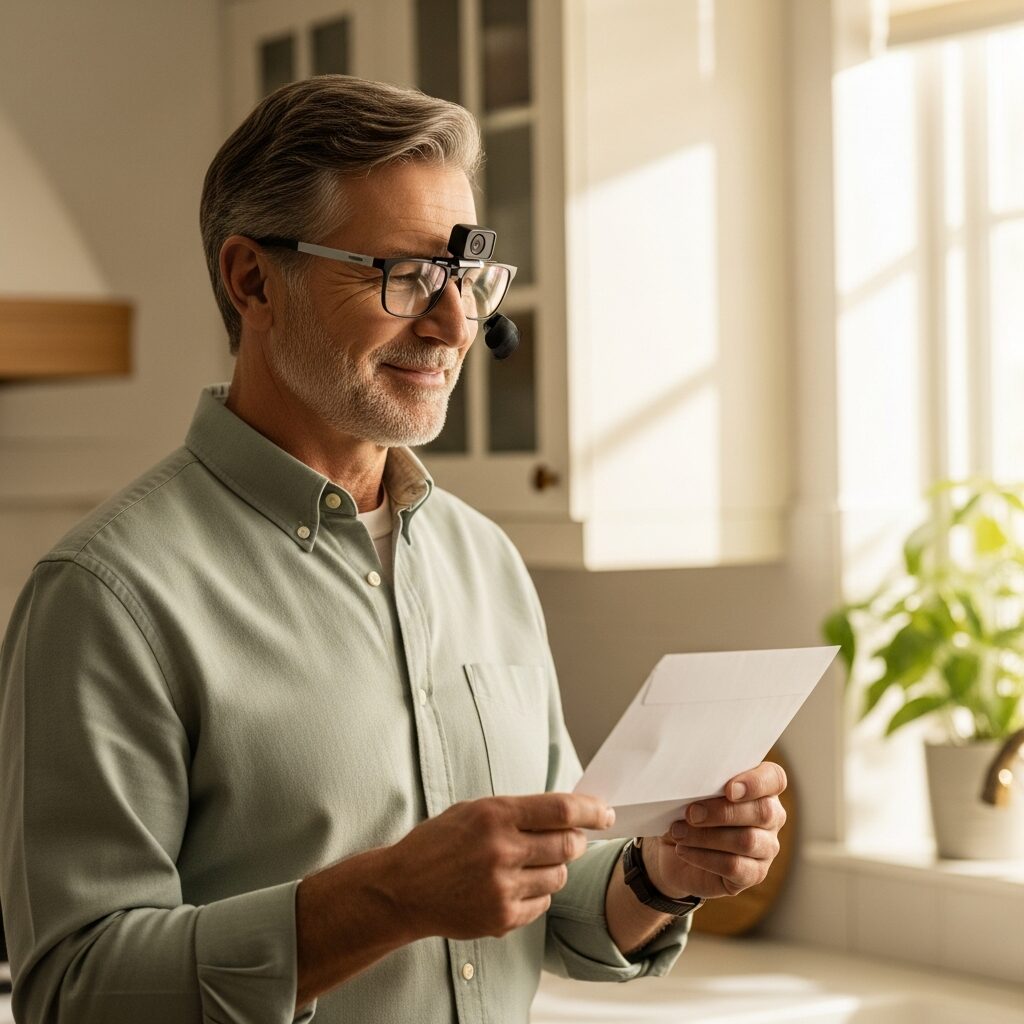
If you are exploring wearable technology for retinitis pigmentosa, the choices can feel overwhelming—and the marketing rarely tells you what actually works for RP. The truth is that these devices can be genuinely life-changing for reading, recognizing faces, and getting around. The trick is matching the right device to your vision and your daily life.
This guide compares the major options—Luna Glass, OrCam, eSight, and Envision—with honest assessments of what each does well and where it falls short for RP specifically. Because RP affects peripheral vision and night vision first, some devices fit better than others. For the bigger picture, start with our complete guide to retinitis pigmentosa and low vision.
How Wearable Tech Helps with RP
Wearable devices generally do one or more of a few things, and knowing which job you need most helps you choose.
They can read text aloud—signs, menus, mail, and labels in the real world. They can recognize faces, which makes social situations easier. They can enhance your remaining vision, including in low light, and some can describe a scene to help with orientation. Because RP changes over time, wearables are especially valuable: a device you learn now can keep serving you as your needs shift.
OrCam MyEye
OrCam MyEye is a small camera that clips onto your glasses and speaks into your ear. Point it at text and it reads aloud; look at a person and it can recognize familiar faces; aim it at a product and it can identify it.
For RP, its strengths are real-world text reading and face recognition—both common pain points. The honest limitations: it does not enhance your remaining vision, and it works best when you still have enough vision or steadiness to aim it at what you want to read. Cost is significant, though funding and vocational programs sometimes help.
Luna Glass
Luna Glass Night Vision Glasses take a different approach from the reading-focused AI devices: they’re built specifically to address night blindness, often one of the earliest and most limiting symptoms of RP. An integrated low-light camera captures available light, then an image-enhancement system boosts brightness, contrast, and color before displaying a clearer view directly within the lenses.
For RP, Luna Glass targets a challenge that shows up long before central vision is affected—difficulty seeing in dim restaurants, at evening events, in unlit parking lots, or on a walk after sunset. Its strength is restoring confidence for exactly those situations, since it presents a real-time, full-color enhanced image rather than requiring the user to interpret or aim at anything specific. The honest limitations: it’s not designed or approved for driving, the current version is not a medical device, and because it’s a newer product produced in limited pilot runs, it’s currently available through a waitlist rather than off the shelf. Pricing is in line with other vision-enhancement headsets.
eSight Go
These are vision-enhancement headsets rather than readers, designed for people with specific vision profiles. eSight Go captures live video through an HD camera and projects it onto twin OLED displays with up to 24x magnification, built primarily for central vision loss from conditions like macular degeneration and diabetic retinopathy.
For RP, one advantage is that eSight Go preserves peripheral vision so users can still move around safely—but its own field of view (about 37.5 degrees) is enhancing a view an already-narrowed visual field has to look through, so the benefit shrinks as field loss advances. It works best for people who still have usable central vision, so a trial is especially important. The cost is high—often several thousand dollars—though some funding options may be available.
Envision Glasses and Other AI Wearables
Envision Glasses run on a lightweight glasses platform and use AI to read text aloud and describe scenes—similar in spirit to OrCam, with a hands-free design. Mainstream smart glasses, like Ray-Ban Meta, are also adding accessibility-adjacent features, and the category is evolving quickly.
The key distinction to keep in mind: AI-based reading and recognition devices (OrCam, Envision) interpret text and faces automatically, while vision-enhancement devices (eSight, Luna Glass) amplify the vision you still have—whether that means central vision or, in Luna Glass’s case, specifically low-light and night vision. Many people use more than one device, since each solves a different problem. Because the market changes fast, treat any specific model as a snapshot in time.
Choosing the Right Wearable for Your RP Stage
Matching a device to where you are now—and where you are heading—saves money and frustration.
- Early RP, night vision difficulty: Luna Glass for low-light and night-vision enhancement may help most, since night blindness is often the first symptom to appear.
- Early RP, good central vision: eSight for vision enhancement may help most.
- Moderate RP, tunnel vision: OrCam or Envision for text reading and face recognition tend to fit well.
- Advanced RP, minimal vision: A combination of reading devices, low-light enhancement, and mobility training typically offers the most complete support.
Two rules apply at every stage: cost is real (devices range from a few hundred to many thousands of dollars, with funding sometimes available), and trying before buying is essential. Our overview of the best assistive devices for RP puts wearables in context with mobility and reading tools, and our mobility aids guide covers the navigation side.
Frequently Asked Questions
Does OrCam work for retinitis pigmentosa?
Yes, for many people. OrCam reads text aloud and recognizes faces, which addresses common RP challenges. It does not enhance your remaining vision and works best when you can aim it, so a trial helps you judge fit—especially as your visual field narrows. NELVB also carries the OrCam MyEye Smart, so you can compare both models side by side at a demonstration.
Does Luna Glass work for retinitis pigmentosa?
Many people with RP experience night blindness as an early, disruptive symptom, and Luna Glass was built for exactly that—its camera and image-enhancement system brighten low-light scenes in real time, which can make evening activities like walking, socializing, or navigating unfamiliar places more manageable. It’s not suitable for driving and isn’t a medical device, and since it’s a newer product available through a waitlist, a consultation is the best way to judge fit.
What is the difference between AI reading devices and vision-enhancement glasses?
AI reading devices like OrCam and Envision interpret text and recognize faces automatically. Vision-enhancement glasses like eSight and Luna Glass instead amplify the vision you still have—eSight for central vision, and Luna Glass specifically for low-light and night vision. Many people use more than one type, depending on which challenge they’re addressing.
How much do wearable low vision devices cost?
It varies widely—from a few hundred dollars for some options to several thousand for vision-enhancement headsets like eSight Go and Luna Glass, which is currently available through a waitlist due to limited pilot production. Funding through vocational rehabilitation and other programs is sometimes available, which is one more reason to try before you buy.
Take the Next Step
The best wearable for RP is the one that fits your vision today and grows with you—and the only way to know is to try it in a real situation. NELVB offers demonstrations so you can compare devices side by side before investing.
Schedule your no obligation consultation to match the right wearable technology to your RP stage and your daily life.