White Canes and Mobility Aids for Progressive Vision Loss
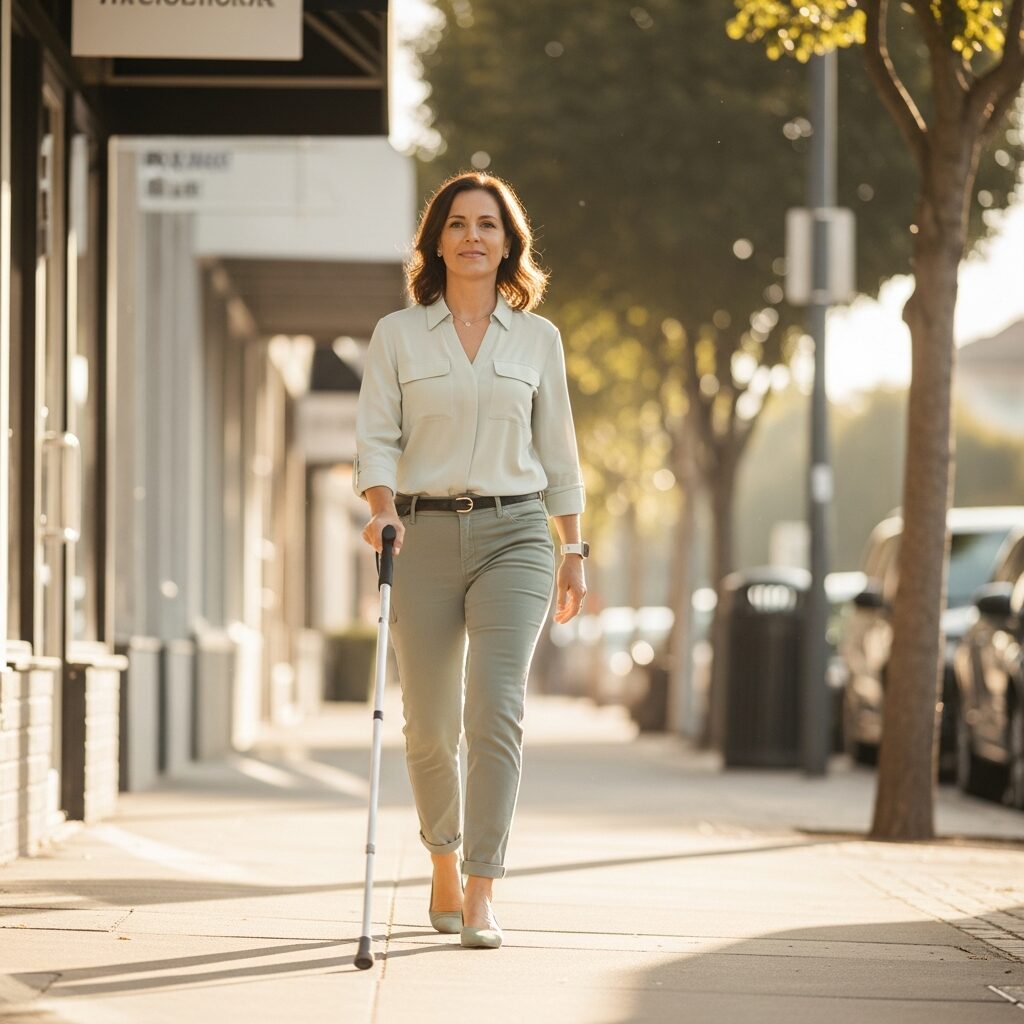
If you are living with progressive vision loss, getting around safely is probably one of your biggest concerns—and one of the most natural fears to have. The good news is that the most effective mobility tool is also one of the simplest and most affordable: the white cane. Paired with training and a few other aids, it can keep you moving through the world with real confidence.
This guide walks through when to start using a cane, the different types, how to get proper training, and how to move past the stigma that stops many people from starting sooner. The single most important idea here: you do not have to wait until you “need” a cane to benefit from one. For the bigger picture, see our complete guide to retinitis pigmentosa and low vision.
When to Start Using a White Cane
One of the most common misconceptions is that a cane is only for people who are totally blind. In reality, you do not have to be fully blind to benefit. If you have usable vision but bump into things, trip on curbs, or feel anxious in unfamiliar places, a cane can help right now.
A few signs suggest it may be time: missing steps or curbs, colliding with people or objects at your sides, or hesitating to go places alone. These are exactly the situations a cane is built for. Our guide to RP symptoms and progression can help you recognize where you are in the process.
Here is the key advantage: learning to use a cane while you still have vision is far easier than learning in a crisis. Skills develop with practice, so starting early means the cane feels natural by the time you rely on it more. A cane also signals to others that you have a visual impairment, which keeps you safer in traffic and crowds.
Types of White Canes
Not all white canes are the same. Knowing the three main types helps you choose what fits your needs.
Long Cane (Mobility Cane)
This is the classic navigation cane. You sweep it ahead of you to detect obstacles, curbs, and surface changes before you reach them. Sizing matters—a long cane should generally reach from the floor to about your sternum. Folding versions are easy to carry, while rigid ones give slightly more feedback.
Support Cane
A support cane provides physical stability if you also need help with balance, while still signaling your visual impairment to others. It is important to know this is not the same as a mobility cane and uses a different technique—it is not designed to detect obstacles.
Identification (ID) Cane
The ID cane, or symbol cane, is shorter and lighter. It is carried mainly to let others know you have a visual impairment, which is helpful if you have some usable vision but want people to be aware in crowds or at crossings. It is not used for obstacle detection.
Orientation and Mobility Training
A cane works best with proper training, and that training is taught by certified orientation and mobility (O&M) specialists. They teach far more than how to hold a cane.
O&M training covers cane technique, safe street crossings, using public transit, and navigating both indoor and unfamiliar spaces. Most people work through somewhere around ten to twenty sessions depending on their goals, often practicing in the real places they travel—their neighborhood, workplace, and local shops.
You can find an O&M specialist through your state services for the blind, or through national organizations like the National Federation of the Blind and the American Foundation for the Blind. Professional training is significantly safer and more effective than teaching yourself, and it builds confidence quickly.
Overcoming the Stigma
For many people, the hardest part of using a cane is not the technique—it is the feeling that carrying one changes how others see them. That is a completely normal and understandable reaction.
It helps to reframe what the cane really is: a tool, not a label. It does not announce limitation; it creates freedom and independence. Many people who resisted a cane for years describe feeling liberated once they started, because they could finally move without constant worry.
There is a useful idea here from the disability community: the real barrier is often other people’s attitudes, not the cane itself. Carrying it with confidence tends to change how others respond, and disclosure usually brings helpfulness rather than pity. You are not giving something up—you are taking back your mobility.
Other Mobility Aids and Technology
The white cane is the foundation, but it works alongside other tools that fit different situations.
Guide dogs are an option for some people, offering both mobility and companionship, though they involve an application process and a real lifestyle commitment. GPS navigation apps designed for low vision, like BlindSquare and Soundscape, give audio guidance as you travel. Newer obstacle-detection devices use sensors to warn of objects nearby.
Sighted-guide technique—taking a companion’s elbow—is another reliable option for unfamiliar or crowded places. Most people end up combining tools: a cane for daily travel, GPS for directions, and a sighted guide when it helps. Our guide to the best assistive devices for RP covers how these fit together.
Frequently Asked Questions
When should I start using a white cane?
You do not have to be totally blind to benefit. If you bump into things, trip on curbs, or feel anxious traveling alone, it may be time. Learning while you still have usable vision makes the skills easier to develop and the transition far smoother.
Do I need professional training to use a white cane?
It is strongly recommended. Certified orientation and mobility specialists teach cane technique, street crossings, and travel skills far more safely and effectively than self-teaching. You can find one through your state services for the blind or national blindness organizations.
How do I get over feeling self-conscious about a cane?
Reframe the cane as a tool for freedom rather than a label. Most people feel more independent once they start, and carrying it with confidence changes how others respond. The barrier is usually attitudes, not the cane—and that includes your own, which softens with time.
Take the Next Step
Mobility does not have to shrink as your vision changes. With a white cane, good training, and the right mindset, you can keep traveling confidently and independently—and the earlier you start, the smoother every transition becomes.
Schedule your no obligation consultation to talk through your mobility needs and training options.