Managing Night Blindness in RP: Strategies That Help
If you have retinitis pigmentosa, night blindness is often the first change you notice—and one of the most disruptive. Dim restaurants, evening events, and walking after dark can suddenly feel daunting. If that is where you are right now, take heart: while night vision itself cannot be restored, the right strategies make low-light situations far more manageable.
This guide is practical and specific. It covers what to do at home, how to handle social settings, how to stay safe outdoors, and how to think through the driving question. None of it requires giving up the activities you love—just going in with a plan. For the full picture of living with the condition, see our complete guide to retinitis pigmentosa and low vision.
Why Night Blindness Happens in RP
The light-sensing rod cells in your retina handle vision in dim conditions, and in RP they are usually affected first. That is why low light causes trouble before anything else.
One of the hardest parts is dark adaptation. When you move from a bright space into a dim one, your eyes take much longer to adjust than they used to—sometimes so long that the moment has passed before you can see. Even lighting that feels fine to the people around you can feel nearly dark to you. Understanding this helps you explain your needs and plan ahead. Our guide to RP symptoms and progression covers the bigger picture of how this develops.
Home Lighting Strategies
Your home is the easiest place to make an immediate difference, and good lighting is the foundation.
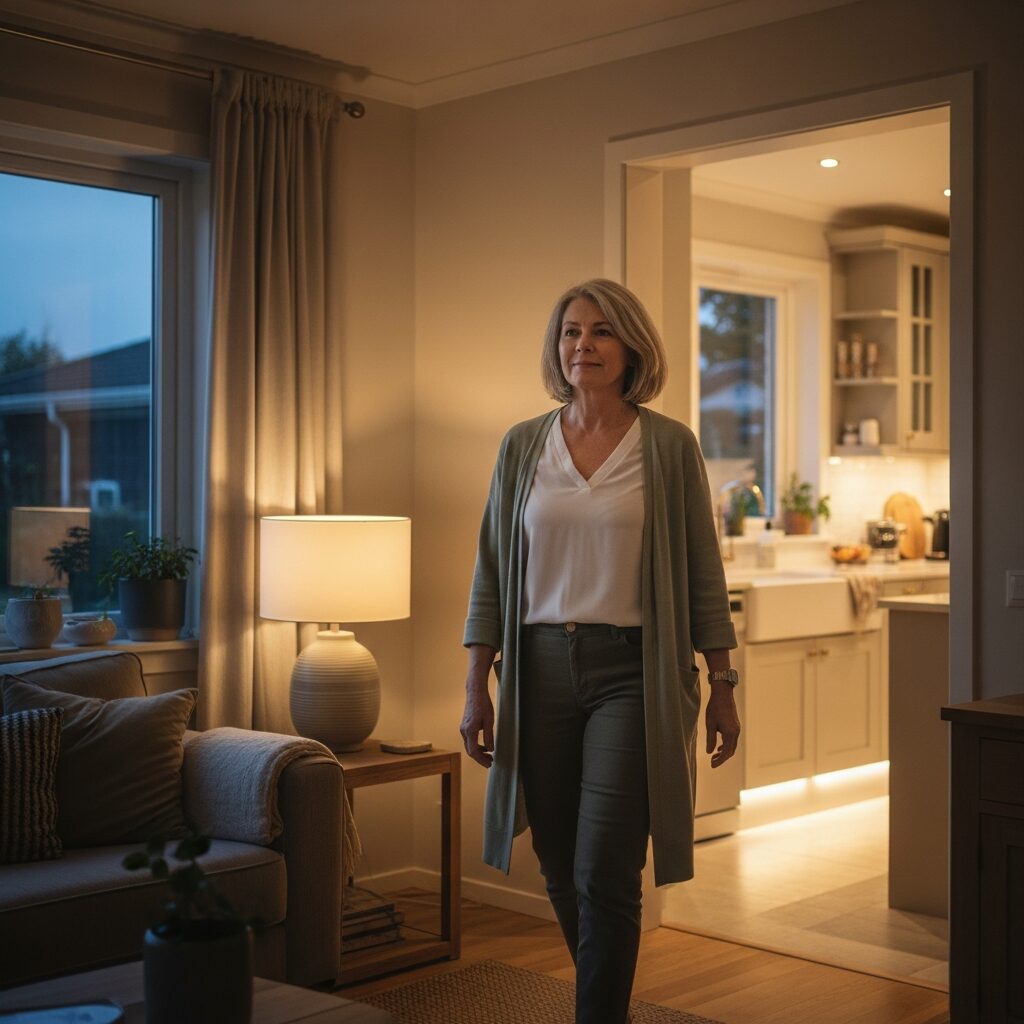
Consistent, even illumination matters more than raw brightness. Dark spots and sudden changes from bright to dim are what trip people up, so aim for steady light throughout a room. A few changes go a long way:
- Motion-sensor night lights in hallways, bathrooms, and stairwells.
- Under-cabinet lighting in the kitchen, where tasks need detail.
- LED strip lighting along baseboards and stair edges.
- A flashlight kept in every room as reliable backup.
Smart lighting is especially helpful. Bulbs and switches you control by voice mean you never have to fumble for a switch in the dark—just ask, and the lights come on before you enter a room.
Navigating Social Situations
Social settings are where night blindness is felt most, but a little planning keeps you in the room and enjoying yourself.
In restaurants, ask to be seated at a well-lit table, and use your phone’s flashlight to read the menu without a second thought. In theaters, arrive early while there is still light to find your seat, and use your phone to navigate the aisle.
For evening events, arriving before dark makes orientation much easier, and a sighted guide—a friend’s elbow to hold—removes the stress entirely. Most of all, telling the people you are with what helps takes the pressure off. Disclosure is not a burden; it usually makes the whole evening smoother for everyone.
Outdoor Safety at Night
Getting around outside after dark calls for a few reliable habits.
Carry a bright flashlight or wear a headlamp so your path is lit and your hands stay free, with your phone’s light as backup. Reflective clothing or accessories help drivers and others see you. Stick to familiar, well-lit routes when you can, and save unfamiliar terrain for daylight.
Walking with a companion adds both safety and confidence, and in very dark settings a white cane helps you detect curbs and obstacles your eyes cannot. None of this means staying home—it means stepping out prepared.
The Driving Question
For many people with RP, night driving is the first activity that becomes unsafe, and facing that honestly is one of the most important decisions you will make.
Warning signs are worth taking seriously: missing turns you used to know, not seeing pedestrians until they are close, or feeling anxious behind the wheel after dark. If any of these sound familiar, it may be time to stop driving at night, even if daytime driving still feels comfortable for now.
This is an emotional decision, not just a practical one, and it deserves care rather than guilt. Daytime-only driving can be a reasonable intermediate step, and ride services, public transit, and rides from family fill the gap. Talking openly with the people close to you makes the transition easier. Our complete guide to driving with low vision walks through this decision in depth.
Devices and Tools That Help
A handful of tools make night blindness more manageable day to day.
The simplest are often the best: a dependable flashlight and your smartphone’s torch handle most situations. Glow-in-the-dark or high-contrast markers on keys, remotes, and switches help you find essentials by touch and sight. Talking GPS apps guide you by audio when visual landmarks disappear in the dark.
Dedicated night vision devices, like clip-ons and monoculars, exist too. They can help in specific cases, but they are bulky and not right for everyone—so set expectations accordingly. Our guide to the best assistive devices for RP covers these honestly.
Frequently Asked Questions
Can night blindness from RP be cured?
Night vision itself cannot be restored, because the rod cells that handle low-light vision are affected. The good news is that lighting changes, planning, and simple tools make low-light situations much more manageable, so you can keep doing the things you enjoy.
What is the easiest first step for managing night blindness?
Start at home with lighting. Add motion-sensor night lights and even, consistent illumination, and keep a flashlight in every room. These low-cost changes make an immediate difference and build confidence for handling situations outside the home.
How do I handle restaurants and evening events?
Ask for a well-lit table, use your phone’s flashlight for menus, and arrive before dark when you can. Letting the people you are with know what helps—and not hesitating to use a sighted guide—takes the stress out of social settings.
Take the Next Step
Night blindness does not have to shrink your world. With the right lighting, a few habits, and simple tools, most people keep enjoying evenings out, time with family, and their independence.
NELVB helps people with RP build personalized strategies for low-light living. No obligation consultation to assess your needs and find the solutions that fit your daily life.