Fall Prevention for Seniors with Low Vision
If you or someone you love is living with vision loss, the fear of falling can feel like it follows you from room to room. That fear is real, and it is valid. Here is what matters most: most falls happen at home, and most of them are preventable.
Fall prevention for seniors with low vision comes down to a few focused changes you can make in the spaces you use every day. You do not need to remodel your house or memorize a long checklist. You just need to start with the rooms where you spend the most time. Let us walk through it together.
Why Low Vision Raises Your Fall Risk
When your vision changes, your home does not change with it. The same step, rug, or dim hallway that felt safe for years can become a hazard almost overnight. That is why falls are more common for people with low vision, not because of anything you are doing wrong.
A few specific changes tend to make the difference. Reduced contrast sensitivity makes it harder to tell where one surface ends and another begins. Lower depth perception makes steps and curbs hard to judge. And many eyes adapt more slowly when moving between bright and dark spaces, so a sunny doorway into a shaded hall can leave you briefly unable to see.
Conditions affect people differently. Glaucoma often narrows side vision, so you may not notice an obstacle until it is underfoot. Macular degeneration affects central vision, which can blur the detail you rely on to spot a single step. Knowing how your own vision works helps you target the right fixes.
There is also a cycle worth naming. One fall can lead to a fear of falling. That fear leads to moving less, moving less weakens the muscles that keep you steady, and weaker muscles make the next fall more likely. Breaking that cycle early is one of the most powerful things you can do.
A Room-by-Room Fall-Prevention Check for Seniors With Low Vision
The most reliable way to prevent falls is to walk through your home one room at a time. Start with the spaces you use most. Here is what to look for in each.
Entryways and Hallways
Keep pathways clear of shoes, bags, and clutter. Add motion-sensor lighting so a space lights up the moment you enter. Either secure loose rugs with non-slip backing or remove them. Mark the edge of any threshold or step with high-contrast tape so it stands out.
Kitchen
Add under-cabinet task lighting over counters and the sink. Use contrast tape along counter edges so you can see where the surface ends. Keep the items you reach for daily at easy heights, and place non-slip mats near the sink and stove.
Bathroom
This is the highest-risk room in most homes, so give it extra attention. Install grab bars near the toilet and inside the shower or tub. Use non-slip bath mats and tub strips, add lighting that reaches every corner, and consider a raised toilet seat if standing is difficult.
Bedroom
Create a lit path from your bed to the bathroom with a nightlight or two. Keep the route between your bed and the door clear, and place a lamp within arm’s reach of the bed. Avoid low furniture that is easy to miss and easy to trip over.
Stairs
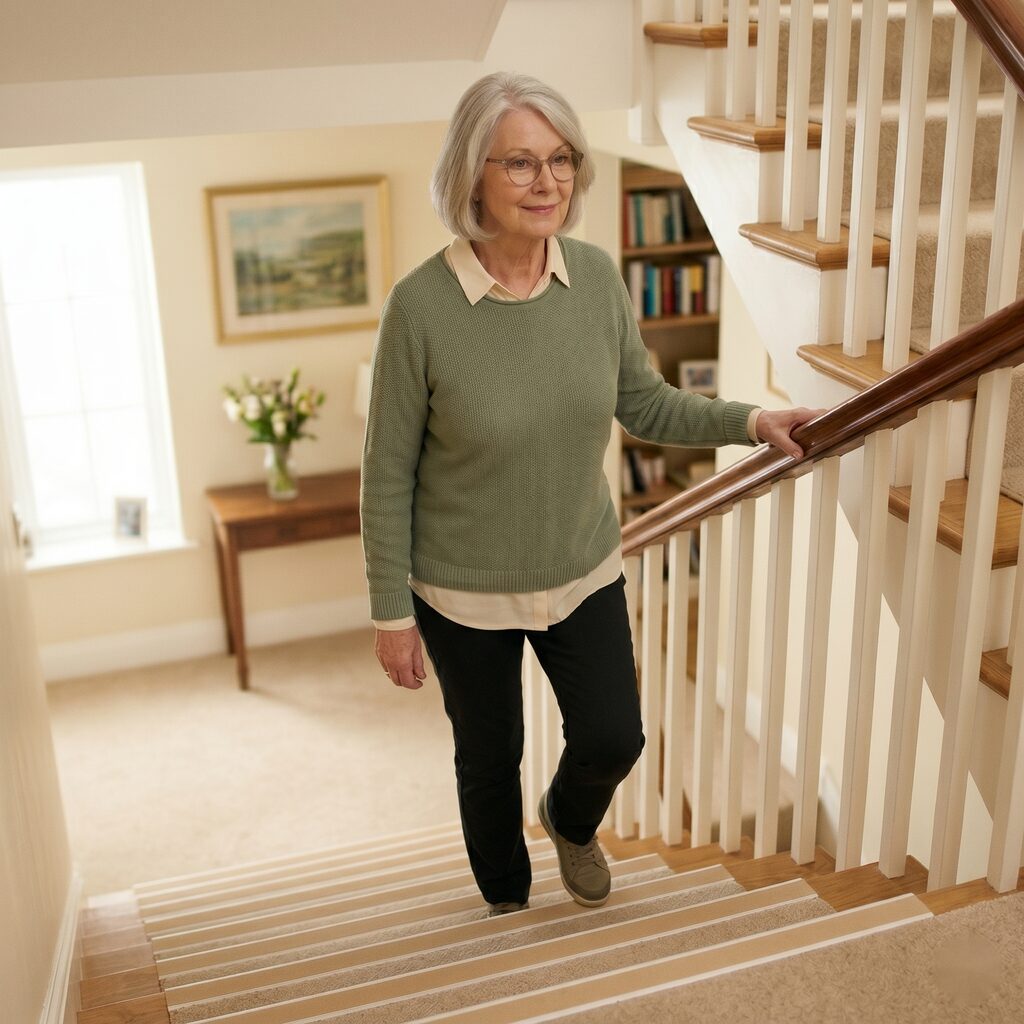
Put high-contrast tape on the edge of every step, top and bottom. Make sure there are handrails on both sides and good lighting at each end. Stairs should stay completely clear, every single time.
Lighting Strategies That Prevent Falls
Lighting may be the single most important factor in fall prevention for seniors with low vision. Good, consistent light helps you see edges, judge distances, and move with confidence.
Aim for even lighting throughout your home. Sharp jumps from a bright room into a dark one force your eyes to adjust, and that adjustment takes longer with vision loss. Steady light levels from space to space reduce those risky moments.
Add nightlights in the hallway, bathroom, and bedroom, and use motion-sensor lights so you are never reaching for a switch in the dark. Full-spectrum bulbs can improve contrast and make details easier to pick out. It also helps to cut glare from polished floors and glossy surfaces, since glare can be as disorienting as darkness. For a deeper look at choosing fixtures and bulbs, see our guide to home lighting for vision impairment.
Mobility and Balance That Keep You Steady
Your home setup matters, and so does how you move through it. A few habits and supports can make every trip across the house safer.
Orientation and mobility training teaches you to navigate familiar spaces using touch and memory, such as trailing a hand along a wall or using furniture as landmarks. Wearing non-slip, well-fitting shoes, rather than loose slippers, gives you a more stable base. Simple strength and balance exercises help your body catch itself when you start to slip.
If standing or walking feels unsteady, a cane or walker can add real security, and there is no reason to wait until after a fall to use one. A physical therapist can build a balance-focused routine for your needs, and the right magnifiers and visual tools can help you spot hazards before you reach them. You can compare options in our overview of low vision aids.
What to Do After a Fall
Even with the best preparation, falls can still happen. Knowing what to do next protects you and helps prevent the next one.
First, stay still for a moment and check yourself for injury before trying to get up. If you are hurt or cannot get up safely, call for help right away. If you are not injured, roll to your side, push up onto your hands and knees, crawl to a sturdy chair, and use it to rise slowly.
Tell your doctor about any fall, even one that did not hurt. A fall can signal a change worth looking into, and a quick review can uncover the cause and help you avoid a repeat. A medical alert device or fall-detection tool can also give you, and your family, real peace of mind.
Take the Next Step Toward a Safer Home
You do not have to figure all of this out on your own. The most effective fall prevention plan is one built around your specific home and your specific vision.
NELVB offers in-home safety assessments for seniors with low vision. We will walk through your home with you, identify the hazards that matter most, and create a personalized plan to help you stay safe and independent. Schedule a no-obligation consultation to get started.