Support for Teens with Low Vision: Building Confidence and Independence Through Adaptive Skills Training
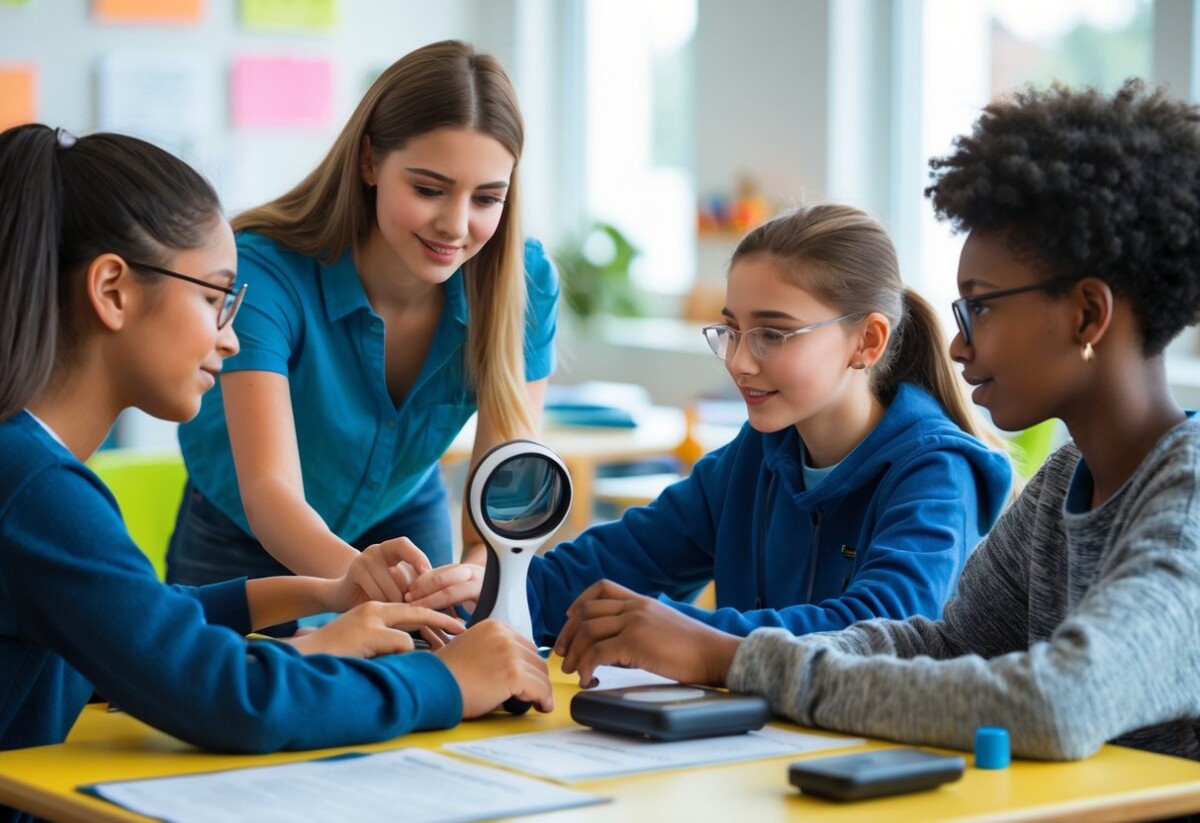
Teens with low vision face unique challenges as they navigate adolescence and prepare for independence. The transition from childhood to adulthood involves developing essential life skills, building confidence, and learning to advocate for themselves. Support for teens with low vision requires a comprehensive approach that combines assistive technology training, skill development, and community resources to build lasting confidence and independence.
During the teenage years, students with visual impairments must master daily living skills while maintaining their academic progress and social connections. We understand that parents want their teens to develop self-reliance without compromising safety or opportunities. The right combination of tools, training, and support systems can empower visually impaired teenagers to achieve their goals and transition successfully into adult life.
At New England Low Vision and Blindness, our Assistive Technology Specialists work with families to identify specific needs and develop personalized strategies. We focus on practical solutions that teens can implement in school, home, and community settings. Our approach emphasizes building skills progressively while fostering the confidence needed for long-term success.
Key Takeaways
- Comprehensive support systems combining assistive technology and skill training help teens with low vision develop essential independence skills for adult life
- Building confidence requires hands-on practice with adaptive tools and techniques in real-world environments like school and community settings
- Early preparation with appropriate resources and professional guidance enables smooth transitions from high school to college or career paths
Understanding Low Vision and Its Impact on Teens
Low vision affects approximately 12 million Americans, with teenagers facing unique developmental challenges as they navigate adolescence while managing visual impairments. Understanding the specific types of vision loss and recognizing how these conditions impact teenage development helps parents provide more targeted support during this critical transition period.
Defining Low Vision and Visual Impairments
Low vision describes vision impairment that cannot be corrected with standard glasses, contact lenses, medication, or surgery. Unlike total blindness, individuals with low vision retain some usable sight.
Key characteristics of low vision include:
- Visual acuity of 20/70 or worse in the better eye
- Significant visual field restrictions
- Difficulty with contrast sensitivity
- Problems with glare or light adaptation
Visual impairments in teens range from mild to severe. Some teenagers may read large print with magnification, while others rely primarily on non-visual methods.
The condition affects daily activities differently for each person. One teen might struggle with reading but navigate independently, while another may have good central vision but limited peripheral awareness.
Common Causes and Types of Vision Loss in Adolescence
Congenital Conditions often become more apparent during teenage years as academic and social demands increase. These include albinism, congenital cataracts, and inherited retinal disorders.
Progressive Conditions may worsen during adolescence, including:
- Stargardt disease
- Juvenile macular degeneration
- Usher syndrome
- Retinitis pigmentosa
Acquired Vision Loss can result from trauma, infections, or medical treatments. Sports injuries, car accidents, and complications from diabetes represent common causes in this age group.
Cortical Visual Impairment (CVI) affects how the brain processes visual information. Teens with CVI may have healthy eyes but struggle with visual interpretation and recognition.
Each type of vision loss creates different functional challenges. Understanding your teen’s specific condition helps identify the most effective assistive technology and training approaches.
Recognizing Unique Needs of Teens with Low Vision
Teenagers with visual impairments face distinct challenges beyond those experienced by younger children with low vision. Their developmental stage creates specific social, emotional, and practical considerations.
Social Development Challenges:
- Building peer relationships without visual cues
- Navigating dating and romantic interests
- Participating in group activities and sports
- Managing social media and digital communication
Academic Pressures intensify during high school years. Teens need efficient methods for completing increased homework loads, taking standardized tests, and preparing for college or career transitions.
Independence Skills become crucial as teenagers prepare for adulthood. This includes transportation options, money management, personal care routines, and household responsibilities.
Emotional Impact varies significantly among teens. Some experience anxiety about their future, while others focus on immediate challenges like driving restrictions or career limitations.
Technology Adaptation requires ongoing support as teens encounter new devices, software, and digital platforms essential for modern communication and learning.
We recognize that each teenager’s experience with vision loss differs based on their specific condition, family support, and personal resilience. Early intervention with appropriate assistive technology training helps build the foundation for lifelong independence and success.
Building Confidence and Fostering Independence
Developing confidence and independence in teens with low vision requires strategic approaches that strengthen self-esteem while building practical skills. Effective strategies include nurturing positive self-image, teaching advocacy techniques, creating balanced support systems, and establishing achievable milestones.
Promoting Positive Self-Esteem and Resilience
Focus on Abilities Framework
- Highlight what your teen can accomplish rather than limitations
- Celebrate daily achievements and skill mastery
- Document progress through photos or journals
- Share success stories with family members
Building resilience in children with low vision starts with recognizing their unique strengths. We encourage parents to create environments where teens feel valued for their contributions.
Resilience Building Activities
| Activity Type | Example | Confidence Benefit |
| Independent tasks | Making breakfast alone | Self-sufficiency |
| Problem-solving | Finding alternative routes | Adaptability |
| Creative expression | Music or writing projects | Personal identity |
| Social engagement | Joining clubs or teams | Peer connection |
Establish regular check-ins where your teen can express frustrations without judgment. This creates emotional safety while building communication skills.
Encouraging Self-Advocacy Skills
Core Advocacy Components
- Teaching teens to articulate their specific needs
- Practicing requests for accommodations
- Role-playing challenging social situations
- Developing assertiveness without aggression
Self-advocacy begins with helping your teen understand their vision loss and available options. We work with families to develop age-appropriate explanations teens can share with teachers and peers.
Self-Advocacy Development Checklist
- Teen can explain their visual condition clearly
- Knows specific accommodations needed
- Practices polite but firm communication
- Understands legal rights and protections
- Can demonstrate assistive technology use
Model advocacy behavior by showing how to request services professionally. Teens learn more from watching respectful interactions than from lectures.
Balancing Support with Opportunities for Growth
Graduated Independence Approach
| Support Level | Teen Age | Activities | Parent Role |
| High guidance | 13-14 | Basic mobility, simple tasks | Direct supervision |
| Moderate support | 15-16 | School navigation, social activities | Available backup |
| Minimal intervention | 17-18 | Job preparation, college planning | Consultant role |
Create opportunities for your teen to experience controlled challenges. This might include navigating new environments with backup support available.
Growth Opportunity Strategies
- Start with familiar settings before expanding boundaries
- Allow natural consequences for minor mistakes
- Provide emotional support without solving every problem
- Encourage peer relationships and social independence
Setting Realistic and Achievable Goals
SMART Goals for Teens with Low Vision
- Specific: Use assistive technology for homework completion
- Measurable: Complete assignments independently 4 days per week
- Achievable: Based on current skill level and available tools
- Relevant: Supports academic and future employment success
- Time-bound: Accomplish within 3-month timeframe
Break larger objectives into smaller milestones. This prevents overwhelm while maintaining motivation through regular achievements.
Goal-Setting Framework
| Timeline | Focus Area | Sample Goals |
| Daily | Basic skills | Use a screen reader for 30 minutes |
| Weekly | Social connection | Attend one social activity |
| Monthly | Independence | Complete grocery shopping alone |
| Quarterly | Academic/vocational | Master new assistive technology |
Regular goal review sessions help teens track progress and adjust expectations. We recommend monthly family meetings to celebrate successes and identify areas needing additional support.
Essential Tools and Adaptations for Daily Life
Daily life becomes more manageable when teens with low vision have access to the right assistive technology and home adaptations. These solutions range from advanced screen-reading software to simple tactile markers that transform how students navigate their environment.
Utilizing Assistive Technology and Screen Readers
Screen readers serve as the primary gateway to digital independence for teens with low vision. NVDA and JAWS represent the most widely used Windows-based solutions, while VoiceOver comes built into Mac and iOS devices.
Key Screen Reader Features:
- Text-to-speech conversion for documents and web content
- Navigation shortcuts for quick content browsing
- Braille display compatibility
- Customizable speech rates and voices
Magnification software works alongside screen readers to enlarge on-screen content. ZoomText and Windows Magnifier offer zoom levels up to 36x magnification with enhanced contrast options.
Mobile assistive technology includes built-in accessibility features like iOS VoiceOver and Android TalkBack. Third-party apps such as Be My Eyes connect users with sighted volunteers for visual assistance through video calls.
Smart home devices like Amazon Echo and Google Home provide voice-controlled access to information, entertainment, and home automation without requiring visual interfaces.
Introduction to Braille and Tactile Solutions
Braille literacy opens doors to independent reading and writing that no audio solution can fully replace. Learning braille early provides teens with critical spelling awareness and formatting comprehension.
Braille Technology Options:
| Device Type | Examples | Best For |
| Refreshable Displays | Focus Blue, BrailleSense | Computer integration |
| Braille Notetakers | BrailleNote Touch | Portable note-taking |
| Embossers | Index Basic-D | Hard copy documents |
Tactile solutions extend beyond braille to everyday navigation. Bump dots mark frequently used buttons on appliances and electronics. Liquid level indicators beep when liquids reach the rim of containers.
Tactile Marking Systems:
- Hi-marks for raised line drawing
- Puffy paint for custom tactile graphics
- Velcro dots for removable markers
- Braille labels for permanent identification
Slate and stylus remain essential tools for quick braille note-taking. These portable devices require no batteries and work in any environment.
Adaptations for Home, School, and Social Activities
Home modifications create safe, navigable spaces that promote independence. Consistent organization becomes crucial when teens cannot rely on visual scanning to locate items.
Essential Home Adaptations:
- Talking thermostats and smoke detectors
- Large print or braille labels on household items
- Motion-activated lighting for safety
- High-contrast tape on stair edges
- Organized storage systems with designated spaces
School Environment Solutions:
- Portable task lighting for residual vision use
- Desktop magnifiers for textbook reading
- Audio recording devices for lecture capture
- Ergonomic seating positioned for optimal lighting
Social activities require different adaptive strategies. Restaurant apps with menu reading capabilities help teens order independently. GPS navigation apps provide turn-by-turn walking directions with haptic feedback.
Social Navigation Tools:
- Smartphone apps for object recognition
- White cane training for mobility confidence
- Public transit apps with accessibility features
- Video calling for visual assistance when needed
Sports and recreation adapt through audio cues and modified equipment. Goalball uses audible balls, while tandem cycling allows participation in group rides.
Recreational Adaptations:
- Board games with braille markings
- Audio description services for movies
- Tactile art supplies for creative expression
- Modified sports equipment with audio feedback
Supporting Social Skills and Community Participation
Teens with visual impairments need targeted support to develop communication skills and build meaningful peer relationships. Accessing community resources creates opportunities for social growth and independence.
Developing Effective Communication Techniques
Verbal Communication Strategies
Strong verbal skills become primary communication tools for teens with vision impairment. Clear speech, active listening, and appropriate conversation timing help establish connections with peers and adults.
Practice these essential techniques:
- Use descriptive language to share experiences
- Ask clarifying questions during conversations
- Maintain appropriate voice volume and tone
- Learn to recognize vocal cues and emotions
Non-Visual Social Cues
| Communication Element | Alternative Method | Practice Activity |
| Facial expressions | Voice tone changes | Audio drama exercises |
| Hand gestures | Physical touch cues | Handshake practice |
| Body language | Spatial awareness | Positioning exercises |
| Eye contact | Voice direction | Turn-taking games |
Technology-Enhanced Communication
Leading-edge assistive technology supports social interactions. Screen readers enable participation in group chats and social media. Voice recognition software helps with quick messaging.
Communication apps with accessibility features allow teens to stay connected with friends through multiple channels.
Navigating Social Situations and Peer Relationships
Peer Interaction Strategies
Building friendships requires understanding social dynamics without visual cues. Teens learn to interpret tone, timing, and conversation flow through practice and guidance.
Key relationship-building skills:
- Initiating conversations appropriately
- Recognizing when others want to end interactions
- Participating in group activities effectively
- Managing social boundaries and personal space
School and Community Integration
| Environment | Challenge | Solution Strategy |
| Cafeteria | Finding friends | Establish meeting spots |
| Hallways | Navigation | Memorize routes |
| Group projects | Participation | Request role clarification |
| Social events | Inclusion | Arrange transportation |
Practice sessions help teens prepare for common scenarios. Role-playing builds confidence before real-world applications.
Conflict Resolution Skills
Social conflicts require different approaches when visual impairments affect communication. Teens learn to address misunderstandings directly and advocate for their needs clearly.
Finding Community Resources and Support Networks
Local Support Organizations
Community programs provide socialization opportunities specifically designed for teens with visual impairments. These environments offer peer connections and skill development in supportive settings.
Resource categories include:
- Youth leadership programs
- Recreational sports leagues
- Arts and music groups
- Volunteer opportunities
- Career exploration programs
Transportation Solutions
| Transportation Type | Benefits | Considerations |
| Public transit | Independence building | Route planning needed |
| Rideshare services | Flexible scheduling | Cost management |
| Family coordination | Reliable access | Limited spontaneity |
| Peer networks | Social connections | Reciprocal arrangements |
Professional Support Networks
Our assistive technology specialists help families identify appropriate community resources. We connect teens with programs that match their interests and skill levels.
Orientation and mobility instructors teach safe travel techniques for accessing community activities independently.
Building Independence Gradually
Start with familiar locations and trusted companions. Expand social circles through structured activities before pursuing independent social opportunities.
Regular practice in low-stakes environments builds confidence for more challenging social situations.
Abstract
- Effective communication for teens with visual impairments relies on verbal skills, technology integration, and understanding non-visual social cues
- Peer relationships develop through practice in school environments, group activities, and conflict resolution training
- Community resources include specialized youth programs, recreational activities, and professional support networks
- Transportation planning enables independent access to social opportunities and community participation
- Gradual skill building in supportive environments creates confidence for independent social navigation
Glossary
Active Listening: Fully concentrating on and responding to what others are saying through verbal feedback and appropriate questions
Assistive Technology Specialist: Professional who provides training on devices and software that help people with visual impairments access information and communicate
Orientation and Mobility: Training that teaches safe and independent travel skills for people with visual impairments
Screen Reader: Software that converts digital text to speech or braille, enabling access to computers and mobile devices
Social Cues: Signals people use to communicate emotions, intentions, or responses during interactions
Spatial Awareness: Understanding of one’s position in relation to objects and people in the surrounding environment
Turn-Taking: Social skill involving appropriate timing for speaking and listening during conversations
Voice Recognition Software: Technology that converts spoken words into text or computer commands
Troubleshooting Matrix
| Problem | Possible Cause | Solution |
| Difficulty joining conversations | Missing visual entry cues | Practice verbal conversation starters |
| Feeling excluded from activities | Lack of accommodation awareness | Educate peers about needed supports |
| Transportation barriers | Limited planning resources | Research multiple travel options |
| Technology communication issues | Insufficient device training | Contact assistive technology specialist |
| Social anxiety in groups | Limited practice opportunities | Start with smaller, structured settings |
Frequently Asked Questions
Parents often have specific questions about accessing resources, educational support, and preparing their teens with low vision for independence. These common concerns address practical solutions for daily challenges and long-term planning.
What resources are available to help teens with low vision enhance their confidence and independence?
Multiple organizations provide specialized programs designed to build confidence in teens with visual impairments. The National Eye Institute offers comprehensive guides for living with low vision that include practical strategies for daily activities.
Assistive technology training programs help teens master tools like screen readers, magnification software, and mobile accessibility features. These skills directly translate to increased independence in academic and social settings.
Teen-specific programs focus on orientation and mobility training, which teaches safe navigation techniques. This training builds confidence for traveling independently to school, work, and social activities.
Support groups connect teens with peers who share similar experiences. These connections often lead to lasting friendships and reduced feelings of isolation.
How can visually impaired teenagers access educational support and accommodations?
Students with visual impairments qualify for services under the Individuals with Disabilities Education Act (IDEA). These services include individualized education programs (IEPs) that outline specific accommodations and goals.
Accommodations typically include enlarged print materials, digital textbooks, extended time for assignments, and preferential seating. Some students also receive assistive technology devices through their school district.
Teachers of the Visually Impaired (TVIs) provide specialized instruction in areas like braille, technology use, and study skills. They work directly with classroom teachers to ensure proper implementation of accommodations.
Transition planning begins at age 16 and focuses on post-secondary education and career preparation. This planning includes identifying college disability services and vocational training opportunities.
What types of social groups and activities exist for teenagers with low vision?
Many communities offer youth programs specifically for teens with visual impairments. These programs focus on building social skills, participating in adapted sports, and developing leadership abilities.
Summer camps provide opportunities for independence-building in a supportive environment. Campers learn daily living skills while participating in traditional camp activities like swimming, hiking, and arts and crafts.
Peer mentorship programs connect teens with successful adults who have visual impairments. These mentors provide guidance on navigating challenges and achieving personal goals.
Recreation centers often offer adapted programs for activities like goalball, beep baseball, and tandem cycling. These sports build confidence while promoting physical fitness and teamwork.
How can parents and guardians encourage independence in their teens with visual impairments?
Parents should gradually increase expectations for independent task completion. Start with simple household chores and progress to more complex responsibilities like meal preparation and money management.
Allowing teens to experience natural consequences builds problem-solving skills. This approach requires balancing safety concerns with opportunities for growth and learning.
Teaching self-advocacy skills helps teens communicate their needs effectively. Practice scenarios where they must request accommodations or explain their visual impairment to others.
Encouraging participation in age-appropriate activities with sighted peers promotes social integration. This includes school clubs, community volunteering, and part-time employment opportunities.
What financial assistance options are available for families of teens with low vision seeking aids and equipment?
State vocational rehabilitation agencies provide funding for assistive technology and training services. Eligibility requirements vary by state, but most teens qualify for services during their transition years.
Private foundations and nonprofit organizations offer grants for specific equipment purchases. These organizations often focus on educational technology or mobility aids.
Insurance coverage varies significantly for assistive technology. Some policies cover magnification devices and screen reading software under durable medical equipment benefits.
Equipment loan programs allow families to try devices before purchasing. These programs help determine which technologies work best for individual needs and preferences.
What are the best practices for helping teenagers with low vision prepare for transitioning to adulthood?
Career exploration should begin early and include informational interviews with professionals who have visual impairments. These connections provide realistic perspectives on various career paths.
Post-secondary education planning requires researching disability services at potential colleges. Students should understand available accommodations and support systems before making enrollment decisions.
Independent living skills training covers areas like cooking, cleaning, personal care, and money management. These skills require consistent practice and gradual complexity increases.
Transportation planning includes learning public transit systems, ride-sharing apps, and pedestrian safety techniques. Some teens may also explore opportunities for driver training with adaptive equipment.
You’re Not Alone — We’re Here to Help Your Family Take the Next Step
Our caring specialists at New England Low Vision and Blindness are here to help you and your family take the next steps with confidence. Schedule a Free Consultation or Contact Us today to learn how early intervention and the right assistive technology can empower your child to thrive.