Hacks and Hints for Living with Glaucoma
A glaucoma diagnosis can feel like a slow fade at the edges of your world—but it doesn’t have to mean losing your independence. More than 3 million Americans are living with glaucoma, and many maintain active, fulfilling lives by learning practical strategies that work with their changing vision.
This guide shares proven hacks and hints for living with glaucoma, gathered from low vision specialists, occupational therapists, and people who’ve navigated this journey successfully. These aren’t generic suggestions—they’re targeted strategies that address the unique challenges of peripheral vision loss. Whether you’re newly diagnosed or looking for fresh approaches to improve your daily life, you’ll find actionable tips you can start using today.
According to the National Eye Institute, glaucoma is a leading cause of irreversible blindness worldwide. But with proper treatment, adaptive strategies, and the right support, most people with glaucoma can maintain significant independence. Our comprehensive Living with Glaucoma resource guide provides additional support for your journey.
Understanding Glaucoma and Your Vision
How Glaucoma Affects Daily Activities
Glaucoma damages the optic nerve, typically causing gradual peripheral (side) vision loss while central vision remains intact until advanced stages. This creates unique challenges:
- Bumping into objects on either side becomes common as peripheral awareness decreases
- Navigating crowds and busy environments feels overwhelming and unsafe
- Driving difficulties arise from inability to see cars or pedestrians approaching from the sides
- Tripping hazards multiply because obstacles outside your central field go unnoticed
- Finding objects requires systematic scanning instead of natural peripheral awareness
The Glaucoma Research Foundation explains that glaucoma progresses differently for each person, making personalized adaptation strategies essential.
The Critical Importance of Treatment Adherence
Unlike some vision conditions, glaucoma progression can often be slowed or halted with consistent treatment. The American Academy of Ophthalmology confirms that eye drops, laser treatments, and surgeries effectively lower eye pressure when used as prescribed.
However, studies show that 40-60% of glaucoma patients don’t use their eye drops correctly or consistently. Many of the strategies below focus on making treatment adherence easier—because the best daily living hack for glaucoma is preventing further vision loss.
Medication Management: Your First Line of Defense
Creating a Fail-Proof Eye Drop Routine
Consistent medication use is foundational for living well with glaucoma. These systems help:
Timing and Reminders
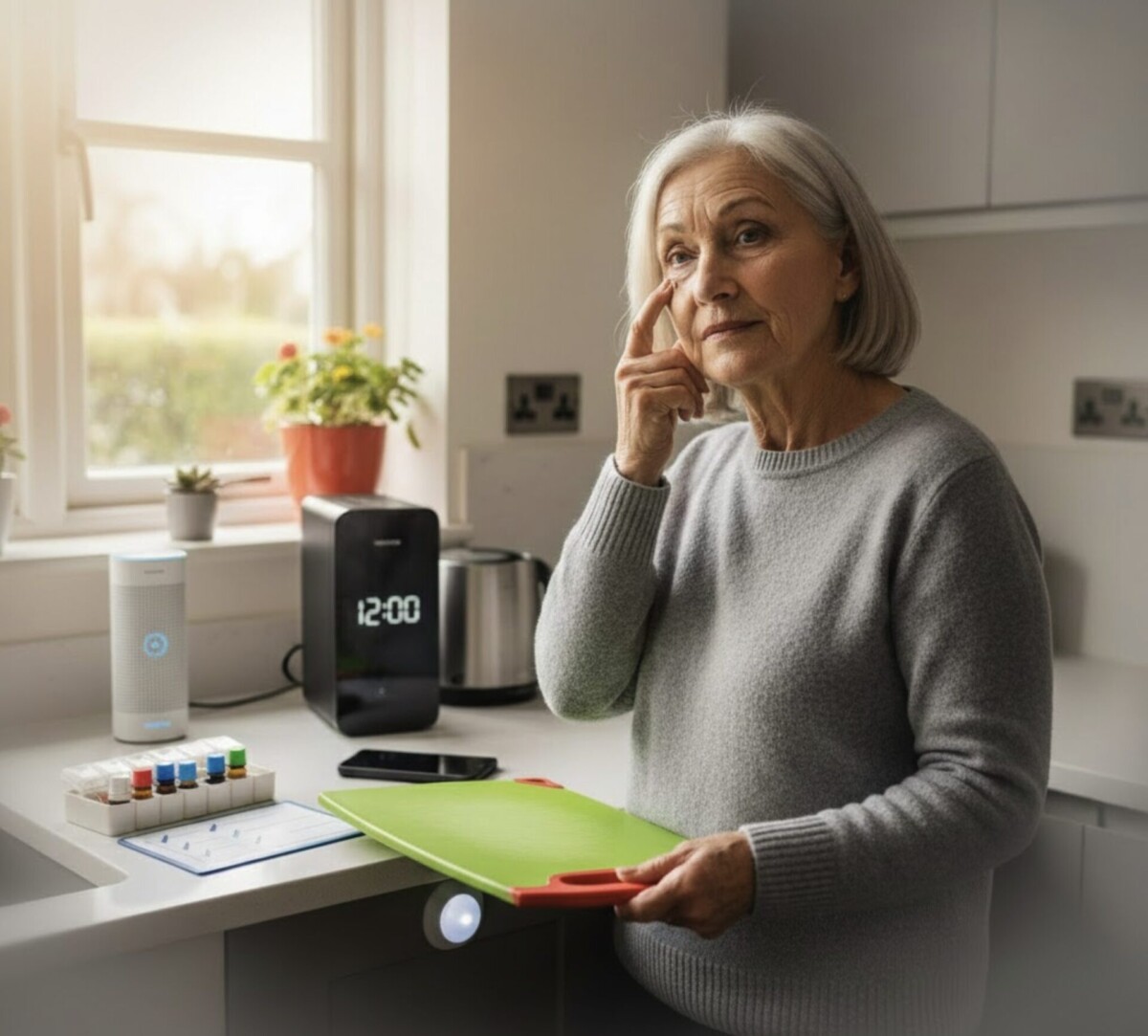
- Set phone alarms with specific labels (“LEFT EYE DROP – Timolol”)
- Use smart speakers: “Alexa, remind me to use eye drops at 8 AM and 8 PM”
- Place eye drops next to something you use at that time (coffee maker, toothbrush)
- Use medication tracking apps that confirm doses and alert missed ones
- Keep a simple paper log if technology feels overwhelming
Proper Administration Technique
- Tilt head back and look up at ceiling
- Pull down lower eyelid to create a pocket
- Hold bottle close to eye without touching it
- Squeeze one drop into the pocket, not directly on eyeball
- Close eye gently for 2-3 minutes (don’t blink rapidly)
- Press finger gently against inner corner of eye to prevent drainage
- Wait 5-10 minutes between different drops
Organization Systems
- Weekly pill organizers adapted for eye drop bottles
- Color-coded caps or rubber bands for multiple medications
- Refrigerator storage with designated, consistent spot
- Travel kits with backup supplies always packed
When Drops Are Difficult
If physical limitations make eye drop administration challenging:
- Autodrop devices guide the bottle and stabilize your hand
- Family training ensures someone can assist when needed
- Ask your doctor about alternative delivery methods or longer-lasting treatments
- Consumer training services teach adaptive techniques for medication management
Scanning Techniques: Compensating for Peripheral Loss
The Systematic Scanning Method
When peripheral vision is reduced, you must consciously scan to gather visual information your eyes no longer capture automatically. The Cleveland Clinic recommends developing habitual scanning patterns.
The Clock Scan
- Look straight ahead at your target area
- Slowly turn your head (not just eyes) to scan left to far left
- Return to center, then scan right to far right
- Look down toward the floor, especially for obstacles
- Repeat this pattern when entering any new space
Practice Makes Automatic
- Start practicing in familiar environments
- Time yourself scanning a room until it becomes quick
- Use verbal cues initially: “left, center, right, down”
- Gradually increase speed while maintaining thoroughness
Scanning for Specific Situations
Walking and Mobility
- Scan the ground 2-3 steps ahead continuously
- Check doorways fully before walking through
- Scan both directions at every intersection, even familiar ones
- Look behind you before stepping backward
Shopping and Public Spaces
- Pause at store entrances to scan the layout
- Check both sides of aisles before walking down them
- Scan low shelves and floor displays that might be trip hazards
- Use shopping carts as mobility guides that bump obstacles first
Social Settings
- Scan the room when entering to locate people and furniture
- Turn your head toward speakers during conversation
- Position yourself with your back to walls when possible
- Explain your scanning to friends so head-turning isn’t misunderstood
Home Safety Modifications
Preventing Falls and Collisions
Falls are a serious concern when peripheral vision is compromised. The National Eye Institute emphasizes that home modifications significantly reduce accident risk.
Clear Pathways
- Remove area rugs, electrical cords, and floor clutter
- Establish consistent walking paths through each room
- Keep furniture in fixed positions—don’t rearrange frequently
- Install handrails on all stairs, both sides if possible
- Mark stair edges with bright, contrasting tape
Furniture and Obstacles
- Round corners on coffee tables and counters
- Push chairs fully under tables when not in use
- Remove low furniture like ottomans from walkways
- Use contrasting furniture colors against flooring
- Pad sharp corners with protective covers
Lighting Strategies
- Install motion-sensor lights in hallways and bathrooms
- Use nightlights along paths from bedroom to bathroom
- Eliminate dark corners and transition areas
- Keep flashlights in multiple locations
- Our home lighting guide covers optimal setups
Kitchen Safety
Cooking Adaptations
- Use back burners preferentially to reduce reach across hot surfaces
- Install automatic stove shut-offs for safety
- Use timers for everything—voice-activated works well
- Keep pot handles turned inward
- Avoid loose sleeves that could catch fire
Organization
- Consistent placement for all items—always return to same spot
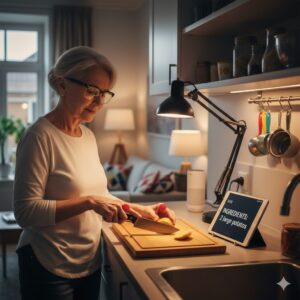
- Contrasting cutting boards and dishes
- Mark appliance settings with bump dots or bright tape
- Use talking or large-display kitchen tools
- Group items by function in accessible locations
Bathroom Modifications
- Grab bars near toilet, tub, and shower
- Non-slip mats everywhere
- Contrasting toilet seat color
- Good lighting, especially nightlights
- Organized, consistent toiletry placement
- Lever faucet handles instead of knobs
Contrast and Visual Enhancement
Why Contrast Matters for Glaucoma
Even with peripheral vision loss, enhancing contrast helps you use your remaining vision more effectively. High contrast between objects and backgrounds makes items easier to locate within your functional visual field.
Throughout the Home
- Dark switch plates on light walls (or vice versa)
- Contrasting outlet covers
- Bright tape on stair edges and step-downs
- Different colored towels for bathroom versus kitchen
- Contrasting placemats under dishes
Personal Items
- Bright cases for phones, glasses, remotes
- Key rings with large, colorful tags
- Contrasting wallet against purse or pocket interior
- Light-colored items against dark surfaces (and vice versa)
Lighting for Glaucoma
Many people with glaucoma experience light sensitivity. Balance adequate illumination with glare control:
- Avoid harsh overhead lights—use multiple softer sources
- Adjustable lighting—different activities need different levels
- Anti-glare coatings on eyeglasses reduce discomfort
- Transition lenses adapt automatically between indoor and outdoor
- Brimmed hats and visors for outdoor activities
- Smart home technology allows voice-controlled adjustments
Assistive Technology for Glaucoma
Mobility and Orientation Aids
White Canes
- Detect obstacles before you collide with them
- Signal to others that you have vision impairment
- Range from identification canes (held visible) to long canes for navigation
- Professional training maximizes effectiveness—training services can help
Electronic Mobility Devices
- Ultrasonic sensors that detect obstacles and provide audio/vibration warnings
- GPS navigation apps with voice guidance
- Smartphone apps that describe surroundings
Magnification and Reading Aids
While glaucoma primarily affects peripheral vision, many people develop central vision issues or have coexisting conditions. Low vision products help with:
- Portable for reading labels, menus, mail
- Illuminated versions for better contrast
- Range of magnification powers
- Large screen viewing for extended reading
- Adjustable contrast and magnification
- Writing capability while magnified
- Hands-free magnification
- Adjustable zoom and contrast
- See our top low vision wearable glasses guide
Smart Home Technology
Voice-controlled systems reduce dependence on vision:
- Smart speakers: Control lights, timers, reminders, information access
- Smart thermostats: Adjust temperature by voice
- Video doorbells: Identify visitors without opening the door
- Voice-controlled TVs: No searching for remote buttons
- Smart appliances: Voice commands for common tasks
Screen Reading and Magnification Software
For computer use, software products provide:
- Screen magnification: Enlarge portions of display
- High contrast modes: Easier visual processing
- Screen reading software: Audio output of screen content
- Keyboard navigation: Reduce mouse dependence
Maintaining Independence Outside the Home
Safe Mobility Strategies
Walking
- Use consistent, familiar routes initially
- Practice new routes during good lighting conditions
- Stay alert and scan continuously
- Consider orientation and mobility training for challenging areas
- Wear light-colored or reflective clothing for visibility to others
Transportation Options
- Many people with glaucoma eventually stop driving—plan alternatives early
- Rideshare apps work entirely by voice and don’t require driving
- Paratransit services for people with disabilities
- Public transit with audio announcements
- Walking and mobility training for navigating independently
When Driving Is Still Possible
- Know your state’s vision requirements
- Use extra caution at intersections
- Expand head-turning when checking mirrors and blind spots
- Consider bioptic telescopes if recommended by specialist
- Reassess regularly and honestly as vision changes
Social and Community Engagement
Vision loss doesn’t mean isolation:
- Support groups: Connect with others facing glaucoma—resources available
- Glaucoma Foundation support: GRF patient support offers education and connection
- Community programs: Libraries and senior centers often offer low vision services
- Hobby adaptation: Many activities work well with peripheral vision loss
- Family education: Help loved ones understand how to assist effectively
Professional Support and Training
Low Vision Evaluation
A comprehensive low vision evaluation provides:
- Functional vision assessment: How vision loss affects daily life
- Remaining vision optimization: Maximize what you can still see
- Assistive technology recommendations: Tools matched to your needs
- Orientation and mobility referrals: Professional training for safe travel
- Training referrals: Learn adaptive techniques effectively
Schedule a consultation to begin your evaluation process.
Working with Assistive Technology Specialists
Training services from certified specialists provide:
- Scanning technique instruction: Systematic methods for peripheral loss compensation
- Technology training: Getting the most from assistive devices
- Home modification guidance: Safety and efficiency improvements
- Ongoing support: Adapting strategies as vision changes
Research shows assistive technology abandonment rates reach 30-40% without proper training. Professional instruction ensures you actually benefit from adaptive strategies.
State and Regional Resources
New England State Resources
- Connecticut resources
- Maine resources
- Massachusetts resources
- New Hampshire resources
- Rhode Island resources
- Vermont resources
Veterans Services
Veterans with vision loss have access to comprehensive VA benefits including equipment, training, and rehabilitation services.
Comparison: Daily Living Strategies by Glaucoma Stage
| Vision Stage | Priority Strategies | Technology Needs | Professional Support |
| Early (Mild peripheral loss) | Medication adherence systems, begin scanning practice, home safety audit | Smartphone reminders, basic lighting improvements | Low vision evaluation, learn scanning basics |
| Moderate (Noticeable field loss) | Systematic scanning habits, mobility modifications, transportation planning | Handheld magnifiers, mobility aids, smart home devices | 3-5 training sessions, orientation and mobility assessment |
| Advanced (Significant field loss) | Comprehensive scanning, professional mobility training, reliance on non-visual cues | Screen readers, white cane, electronic mobility aids, full smart home integration | Ongoing training relationship, occupational therapy, orientation and mobility specialist |
Glossary
| Term | Definition |
| Glaucoma | Group of eye diseases that damage the optic nerve, usually due to elevated intraocular pressure, causing progressive peripheral vision loss |
| Intraocular Pressure (IOP) | The fluid pressure inside the eye; elevated IOP is the primary risk factor for glaucoma and the target of most treatments |
| Peripheral Vision | Side vision—the ability to see objects outside your direct line of sight; the area first affected by glaucoma |
| Visual Field | The entire area visible when the eye is focused on a central point; glaucoma causes progressive visual field loss |
| Scanning Technique | Systematic head and eye movement to gather visual information across the full visual field, compensating for peripheral loss |
| Optic Nerve | The nerve that transmits visual information from the eye to the brain; damage to this nerve causes glaucoma vision loss |
| Orientation and Mobility (O&M) | Professional training that teaches people with vision loss to travel safely and independently |
| White Cane | Mobility aid used by people with vision loss to detect obstacles and navigate safely; also signals vision impairment to others |
| Low Vision Evaluation | Comprehensive assessment by a specialist to determine functional vision capabilities and recommend adaptive strategies |
| Assistive Technology | Devices, software, and equipment that help people with visual impairment perform daily tasks independently |
Troubleshooting Common Challenges
| Challenge | Solutions | When to Seek Help |
| Forgetting eye drops consistently | Multiple alarm systems, medication tracking apps, link to existing habits, family reminders | If missed doses persist despite systems, discuss with ophthalmologist about alternative treatments |
| Bumping into objects despite scanning | Practice scanning more slowly and thoroughly, improve lighting, consider orientation and mobility training | Training services can refine technique |
| Falls or near-falls at home | Clear all pathways, improve lighting, add grab bars, remove trip hazards, consider occupational therapy assessment | Any fall warrants professional home safety evaluation |
| Difficulty with glare and light sensitivity | Anti-glare eyeglass coatings, adjustable lighting, brimmed hats, transition lenses | Discuss options with eye care provider; may need prescription changes |
| Feeling isolated or depressed | Connect with support groups, maintain social activities, consider counseling | Depression affects outcomes—professional mental health support is valuable |
| Unsure when to stop driving | Honest self-assessment, discuss with ophthalmologist, consider driving evaluation | Any accidents, near-misses, or anxiety while driving indicates need for evaluation |
Frequently Asked Questions
Q: What’s the most important thing I can do for living well with glaucoma?
A: Take your prescribed medications exactly as directed—every single day. Consistent treatment is the only proven way to slow glaucoma progression and preserve your remaining vision. All the adaptive strategies in the world can’t replace the vision lost from untreated glaucoma. After medication adherence, learning systematic scanning techniques provides the biggest functional improvement.
Q: How do I know if my glaucoma is getting worse?
A: You often won’t notice gradual peripheral vision loss until it’s significant—that’s why regular eye exams with visual field testing are essential. Your ophthalmologist can detect changes before you’re aware of them. Between appointments, pay attention to increased difficulty with mobility, more frequent collisions with objects, or any sudden vision changes (which require immediate medical attention).
Q: Should I tell people I have glaucoma?
A: In many situations, yes. Explaining that you have peripheral vision loss helps others understand why you scan frequently, why you might bump into things, or why you need extra time in crowded spaces. It also helps people know how to assist appropriately. You’re not obligated to share medical information, but strategic disclosure often makes life easier.
Q: Can I still exercise and stay active with glaucoma?
A: Yes, and you should—physical activity supports overall health and may even benefit eye pressure. Some modifications may be needed: choose well-lit exercise environments, be cautious with activities that involve fast-moving objects from the sides, and consider activities like swimming, walking, or stationary cycling that don’t require rapid peripheral awareness. Always discuss exercise plans with your eye care provider.
Q: Will I eventually go blind from glaucoma?
A: Not necessarily. With proper treatment and monitoring, many people maintain useful vision throughout their lives. The Glaucoma Research Foundation emphasizes that early detection and consistent treatment are key. Even those who experience significant vision loss can maintain independence with proper training and adaptive strategies—training services exist specifically for this purpose.
Key Takeaways
- Medication adherence is foundational—consistent eye drop use is the most important thing you can do; use reminder systems, proper technique, and organized routines to never miss a dose
- Systematic scanning compensates for peripheral loss—develop the habit of moving your head to scan left, center, right, and down every time you enter a new space or situation
- Home safety modifications prevent falls—clear pathways, remove trip hazards, add grab bars, improve lighting, and keep furniture in consistent positions
- Professional training accelerates adaptation—assistive technology specialists teach scanning techniques, mobility skills, and technology use that would take years to learn alone
- Community and support make a difference—connect with resources, support groups, and others living with glaucoma to learn strategies and maintain quality of life
“Glaucoma takes peripheral vision gradually, but it doesn’t have to take your independence. The people who adapt best aren’t those with the mildest cases—they’re the ones who learn scanning techniques, modify their environments, and get proper training early. Hope comes from action, and there’s always something you can do to live better with glaucoma.”
— Scott Krug, President, New England Low Vision and Blindness
Take the Next Step Toward Independence
New England Low Vision and Blindness helps you move from uncertainty to confidence. Our Assistive Technology Specialists provide personalized evaluation, hands-on training, and ongoing support tailored to your specific vision and lifestyle goals.
Ready to explore your options?
- Download our comprehensive Living with Glaucoma resource guide with practical strategies for daily living
- Call 888-211-6933 to schedule a consultation and discuss which strategies might help most
- Visit our showroom to try assistive technology hands-on before making decisions
- Explore our Low Vision Products to see solutions at every budget level
- Learn about training services that help you use adaptive strategies effectively