Beyond Sight: A Group’s Journey to Independence with Blindness Aids and Innovative Support

Understanding Blindness and Visual Impairments
Blindness and low vision affect people of all ages, but older adults are especially impacted by these conditions. The causes, definitions, and everyday effects of visual impairment are important to understand to select the right support and technologies.
Defining Blindness and Low Vision
Blindness is a condition where an individual has little to no usable vision, even with corrective measures like glasses. The term “legally blind” means having visual acuity of 20/200 or worse in the better-seeing eye with correction. Low vision, on the other hand, refers to significant visual impairment that can’t be corrected fully but doesn’t reach the threshold for legal blindness.
Common challenges include difficulty with reading, recognizing faces, and independent travel. These issues can impact participation in education, work, and daily activities. For children, visual impairment can affect their ability to learn, while adults may find household tasks or using technology more difficult. Proper assessment and support are key for maximizing independence.
Types and Causes of Visual Impairment
Visual impairment can occur for many reasons. Among older adults, macular degeneration is a leading cause, gradually reducing the ability to see details. Other causes include glaucoma, diabetic retinopathy, and cataracts, each damaging different parts of the eye and resulting in unique visual challenges.
Blindness can be congenital (present from birth) or acquired later in life. The degree of vision loss can vary significantly, from partial sight to total blindness. Factors like genetics, injury, and chronic illnesses influence the risk and type of impairment a person may have. An accurate diagnosis tells us which assistive technologies or training programs are appropriate for each person.
| Cause | Typical Age Affected | Common Symptoms |
| Macular Degeneration | Older adults | Blurred or blind spots |
| Glaucoma | Adults, older adults | Loss of peripheral vision |
| Diabetic Retinopathy | Adults | Fluctuating vision, spots |
| Congenital Conditions | Children | Various, depending on type |
Impact on Quality of Life
Living with visual impairment can affect emotional well-being, daily function, and social involvement. Many people with blindness and low vision experience increased rates of depression and anxiety due to challenges in mobility or loss of independence. Everyday activities like reading, cooking, or navigating unfamiliar environments can become more complex.
Assistive technology, resources, and training increase access to information and self-sufficiency. Effective support can directly improve quality of life for people who are visually impaired by restoring confidence and enabling participation in work, education, and community life. Studies show that addressing barriers for the blind and visually impaired helps reduce isolation and promotes a more active lifestyle. For more details on how visual impairment shapes daily experiences, visit our section on quality of life and accessibility for people with visual impairments.
Empowering Independence Through Blindness Aids
Independence for people who are visually impaired is both achievable and sustainable with the right blend of tools and training. With reliable blindness aids, tactile systems, assistive technology, and accessible media, we empower every individual to master daily challenges and fully participate in the world.
Essential Blindness Aids and Tools
Blindness aids provide structure and mobility for daily life. The white cane remains a foundational tool, acting as an extended sense of touch that alerts users to curbs, stairs, and changes in the walking surface.
Orientation and mobility training shows how simple aids like talking clocks, braille watches, and liquid level indicators support safe, confident living. We also emphasize personal organization through tactile labels and braille or large-print calendars.
Group workshops often help participants master these tools quickly, fostering mutual support and practical skill development. The journey from novice to expert unfolds in easy steps, building greater confidence for travel, work, and home life. For more details, see this resource on mastering blindness aids.
Braille and Tactile Graphics Usage
Braille is a powerful literacy tool that opens up independent reading and communication. Mastery of braille labels and notes enables the quick identification of medications, personal items, groceries, and more.
Tactile graphics—raised maps, diagrams, and charts—support learning in school and work. These tools help visually impaired people interpret complex visual material using touch.
Many of our training sessions focus on using braille displays alongside tactile diagrams to boost comprehension and memory. This enhances learning in math, science, and daily organizational tasks, providing a pathway to greater independence.
Harnessing Assistive Technology
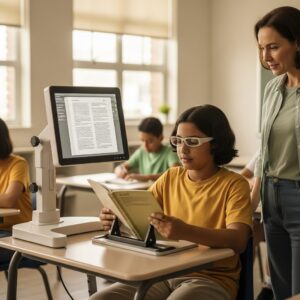
Assistive technology transforms computer access, communication, and daily living for those who are visually impaired. Our team helps users select and learn to use devices such as refreshable braille displays, digital magnifiers, and accessible mobile apps.
We prioritize customization, ensuring each person can navigate digital documents, emails, books, and websites. Text-to-speech programs and voice assistants provide hands-free convenience.
Our guidance includes matching leading-edge technology with individual needs, so everyone can maintain employment, pursue education, and stay connected. Learn more about specific assistive technology solutions and training.
Audio Descriptions and Screen Readers
Audio descriptions make visual content and live events accessible by voicing key on-screen actions, colors, and facial expressions. This allows for independent enjoyment of television, movies, and even museum tours.
Screen readers such as JAWS, NVDA, and VoiceOver convert text into speech or braille. These programs allow users to access websites, documents, and apps efficiently.
We teach best practices for screen reader navigation, keyboard shortcuts, and customizing settings for maximum comfort. This ensures our users can work, study, and socialize with confidence and autonomy. More information on these accessible solutions can be found by exploring tailored blindness aids for skill growth and independence.
Mobility, Navigation, and Orientation Strategies with Beyond Sight
Mobility training and orientation tools foster real independence for individuals who are visually impaired. Using the right aids and techniques empowers us to move safely, navigate unfamiliar areas, and participate fully in our communities.
Safe and Confident Navigation
Navigating busy streets, transit stations, and open spaces can be daunting for individuals with low vision or blindness. Specific orientation and mobility skills open pathways to greater independence.
We focus on techniques such as mental mapping and spatial awareness, which help us build a mental layout of our surroundings. Learning to identify environmental cues—like sounds, textures, and smells—provides essential feedback when moving through a space.
Our approach includes route planning and landmark recognition, both crucial for effective travel. Practical orientation and mobility training develops these skills, helping build confidence for solo or group navigation.
Orientation and Mobility Aids
A wide range of aids supports safe movement and orientation. The white cane remains essential, serving as both a tool for physical detection and as a signal to others that its user may have visual impairment.
Electronic travel aids, such as GPS devices designed for people who are blind, deliver audio directions and real-time updates. These tools supplement traditional methods and help us tackle unfamiliar environments more efficiently.
Regular instruction from an orientation and mobility specialist can further personalize training and address specific challenges. Learning to use these aids proficiently encourages self-reliance and enhances daily access to the world around us.
Tactile Maps and Devices
Tactile maps convert complex visual information into touchable, understandable surfaces. Key features such as streets, intersections, and buildings are presented using raised lines, textures, and Braille labeling. This format helps us plan routes, grasp spatial relationships, and visualize new environments.
We also benefit from devices like talking compasses and refreshable tactile displays, which provide ongoing orientation support during travel. These solutions increase accessibility and promote inclusion by providing equal access to information, thus supporting independent movement.
As we engage with tactile tools and devices, we strengthen our ability to interpret, interact with, and navigate the world with confidence.
Education and Rehabilitation for the Visually Impaired
Education and rehabilitation transform possibilities for blind and visually impaired people through skilled guidance and structured support. These fields empower individuals to develop practical skills, leverage assistive technology, and build a foundation for real independence.
Role of Vision Rehabilitation Therapists
Vision rehabilitation therapists (VRTs) help adults and older adolescents adjust to vision loss by providing hands-on training and professional guidance. Their work includes instruction in essential daily living skills such as safe cooking, personal care, organization, labeling techniques, and the use of adaptive tools.
VRTs often introduce clients to both low-tech and leading-edge assistive technology, teaching practical strategies for activities like managing medications, dialing telephones, or using digital reading devices. By working closely with individuals, they tailor sessions to overcome real-world challenges unique to each person’s lifestyle and level of vision.
The relationship between a client and their vision rehabilitation therapist often evolves into a strong support system. This supportive dynamic, grounded in trust and expertise, can make a significant difference in rebuilding confidence after vision loss.
Teachers of the Visually Impaired
Teachers of the visually impaired (TVIs) are educators specializing in instructional methods for students with a wide range of visual impairments, including blindness. They assess individual learning needs and modify classroom materials to be accessible, whether by using braille, large print, or tactile graphics.
TVIs collaborate with classroom teachers, families, and other specialists to ensure students receive a comprehensive and inclusive education. Their responsibilities can include teaching braille literacy, adaptive technology, and orientation and mobility basics.
By providing direct instruction and consulting on accommodations, TVIs help open doors to academic achievement and personal growth. These professionals play an integral role in fostering self-advocacy and lifelong learning for visually impaired students.
Low Vision Therapists in Practice
Low vision therapists (LVTs) work with people who have residual vision and focus on maximizing functional sight through specialized training. They conduct detailed assessments to determine which optical devices, lighting options, and adaptive strategies will best help each individual use their remaining vision.
Practical skills training with LVTs can involve reading mail with magnifiers, signing documents, and locating items in unfamiliar environments. We often see people experience new independence through these step-by-step lessons, as LVTs teach practical and sustainable habits for home, work, and community life.
LVTs also train individuals to integrate digital devices, smartphone accessibility features, and specialized software into daily routines. Their expertise bridges the gap between vision loss and independent living, making daily tasks manageable and less overwhelming.
Prominent Institutions and Programs
Several respected organizations and academic programs shape the education and rehabilitation of people with visual impairments. For example, Salus University is recognized for preparing highly skilled VRTs, TVIs, and LVTs through advanced training and clinical experience.
Comprehensive support programs such as the Beyond Vision initiative offer skill-building, assistive technology training, information, and peer support. These services foster independent living and provide a critical bridge for people adjusting to vision loss.
Professional membership associations such as the Association for Education and Rehabilitation of the Blind and Visually Impaired set standards, provide resources, and advocate for continued professional growth among specialists in this field.
Learning from these programs and professionals, we help bring hope and practical solutions to those adjusting to life with vision loss.
Fostering Accessibility and Social Inclusion
Enhancing accessibility and inclusion means building more than just spaces—it’s about shaping attitudes, practices, and tools that support independence for people with all levels of vision. Solutions must address real barriers, celebrate personal stories, and support practical steps toward full participation in every aspect of life.
Removing Barriers to Participation
To remove barriers for people who are visually impaired, we focus on both physical and digital accessibility. Accessible routes, tactile guidance paths, braille signage, and reliable transportation options are starters. Websites and mobile apps must be compatible with screen readers and magnification tools.
Leading-edge assistive technology, like OCR devices and wearable reading aids, helps individuals access printed and digital information. Comprehensive staff training goes a long way, ensuring that everyone—from reception to management—understands and implements inclusive practices. Implementing feedback systems lets us identify what works and adapt where necessary.
Government agencies, employers, and community centers can create accessible environments by adopting clear signage, offering large print or audio materials, and ensuring meeting spaces have sufficient lighting and contrast. Universal design not only supports those with vision loss but also benefits everyone.
Community Experiences and Shared Journeys
Shared experiences create opportunities for us to learn, connect, and find hope. Peer support groups provide spaces to share challenges, successes, and strategies, helping people adjust to life with vision loss. We see tremendous value in joining structured groups, where lived experiences help others gain confidence and practical skills.
Storytelling plays a major role. Hearing from individuals about their journey to independence—how they use blindness aids, how they navigate unfamiliar areas, and how they advocate for change—empowers new members to get involved and try new tools.
Local and online events, technology demonstrations, and social activities break down isolation and offer regular opportunities to practice daily living skills. We have seen firsthand how these experiences foster inclusion and help people build lifelong friendships. Community connections are also vital for learning about resources and updates, such as those listed in the Inclusive Community Guide.
Recommendations for Inclusive Environments
For businesses, schools, and public spaces seeking to foster inclusion for people with limited or no functional vision, we recommend focusing on a mix of technology, training, and community engagement.
Key recommendations include:
- Ensure all digital content works seamlessly with screen readers.
- Provide alternate formats (braille, audio, large print) for essential information.
- Conduct regular accessibility reviews of physical spaces.
- Encourage participation by inviting feedback and acting on suggestions.
It is also essential to promote understanding and empathy through staff education and ongoing awareness campaigns. For educators, using tactile maps, 3D models, and detailed verbal explanations can help students access full curriculum content, as outlined by experts in inclusive education.
Actively involving people with vision loss in planning and decision-making leads to more effective solutions. Combining accessible technology with inclusive attitudes creates environments where everyone can thrive.
Frequently Asked Questions — Beyond Sight: A Group’s Journey to Independence with Blindness Aids
Navigating vision loss can feel overwhelming, but the right support, technology, and training empower people to live independently. Specialized resources exist to address daily living, community participation, and ongoing skill development.
What support services are available for individuals with vision impairment?
We help connect people to personalized assessments, vision rehabilitation services, and counseling that address both practical and emotional needs. Organizations and centers focused on low vision offer mobility training, daily living skills, and peer support. Access to these services can make the transition to independence smoother and more manageable.
How can visually impaired individuals find and join local support groups?
Local support groups provide a network for sharing experiences and advice. Community centers, blindness associations, and online directories, like those listed on the APH ConnectCenter, frequently host information about group meetings and events. We also guide those seeking connections within their community to helpful local resources.
What resources do state agencies offer for those who are blind or have low vision?
State agencies often offer training, vocational counseling, and access to leading-edge devices for independent living. They may also provide financial assistance for approved technologies or services. Eligibility requirements and available resources can vary depending on the state.
How does assistive technology aid in the independence of people with blindness?
Leading-edge assistive technology tools like screen readers, magnifiers, Braille displays, and digital assistants allow individuals with blindness to manage daily tasks, communicate, and pursue education or employment. We specialize in recommending and training people on devices that are tailored for every stage of vision loss.
Where can someone with vision loss find specific training or assistance in daily activities?
Vision rehabilitation programs and low vision clinics focus on hands-on training in household management, personal care, and safe travel. Many agencies also train individuals to use adaptive tools and technology. Information about these programs is often available through state agencies, community organizations, or groups specializing in thriving with vision loss.
What steps can be taken to support aging individuals facing challenges with sight?
Supporting older adults includes reassessing home safety, introducing accessible lighting, and providing training in adaptive technologies and methods for daily living. Community agencies and low vision professionals offer personalized advice and ongoing support to help seniors maintain independence and confidence.
You’re Not Alone — We’re Here to Help Your Family Take the Next Step
Our caring specialists at New England Low Vision and Blindness are here to help you and your family take the next steps with confidence. Schedule a Free Consultation or Contact Us today to learn how early intervention and the right assistive technology can empower your child to thrive.
Additional Resources to Help:
- Macular Degeneration https://nelowvision.com/macular-degeneration-help-resources/
- Living With Glaucoma https://nelowvision.com/living-with-glaucoma-helpful-resource/
- Smart Home Services https://nelowvision.com/smart-homes/
- Our Caring Resources https://nelowvision.com/we-care-more/