Meal Preparation Tips for People with Low Vision: Strategies for Safe and Efficient Cooking
Essential Kitchen Tools for Meal Prep with Low Vision
Adapting meal prep for low vision requires careful organization and specific tools. Focusing on tactile guidance, voice assistance, and stability helps make the kitchen safer and meal prep more manageable.
Adaptive Cutting Boards
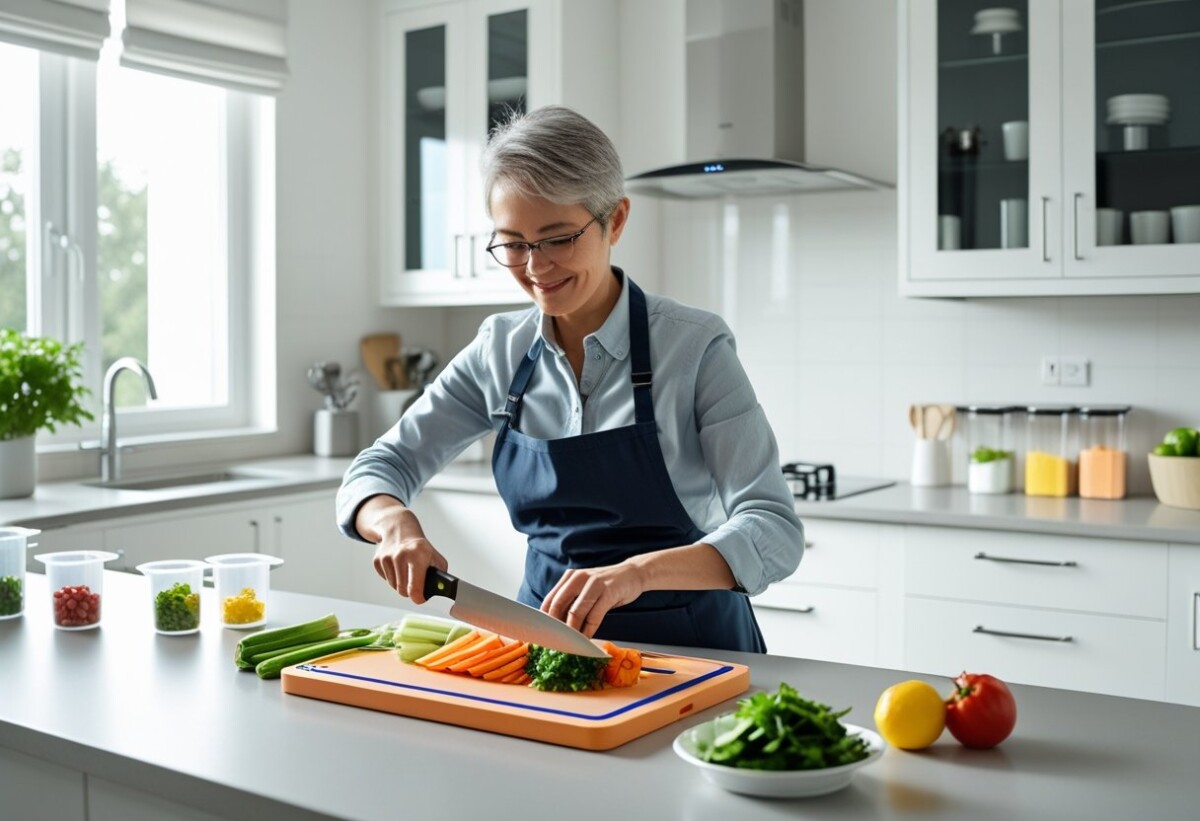
Adaptive cutting boards provide increased safety and efficiency for people with low vision or blindness. These boards often use high-contrast colors, such as white on one side and black on the other, allowing users to match food to the background for better visibility.
Some models include fixed guards or spikes to hold foods in place, reducing the need to stabilize items by hand. Corner guards can create a designated “cutting zone,” helping to prevent ingredients from slipping off surfaces.
Adaptive boards are usually larger and made from non-slip materials. Product options often feature tactile markings along the edges or sides. Using an adaptive cutting board can decrease fatigue and boost independence in the kitchen for those managing vision loss. For more details, refer to accessible food preparation tools such as adaptive boards at The Blind Kitchen.
Using Non-Slip Mats Effectively
Non-slip mats are essential for meal prep with low vision. By placing these mats under cutting boards, bowls, or small appliances, we reduce movement and improve stability while working in the kitchen.
Mats made from silicone or rubber are especially effective. They can be washed and reused multiple times. Some mats come in high-contrast colors, improving visibility for those with residual vision.
Simple steps can maximize mat effectiveness:
- Place a mat under every major work area
- Cut mats to fit custom shapes or specific counter spaces
- Wipe mats dry before use to maintain grip
This simple adaptation can prevent accidental spills and improve kitchen safety, as recommended by many safe cooking guides for people with low vision.
Incorporating Talking Thermometers
Talking thermometers make it easier to check the temperature of foods without relying on sight. With audible readouts, these devices clearly announce temperatures in either Fahrenheit or Celsius.
Many talking thermometers include large tactile buttons. Some models offer backlit screens and vibrating alerts for extra feedback. These features are crucial for anyone who finds traditional thermometers difficult or unsafe to use.
We suggest keeping a talking thermometer within reach whenever you cook—especially when working with meat, baked goods, or boiling liquids. Regularly calibrate the thermometer and keep the tip clean for accurate, reliable readings. Devices like these can enhance cooking confidence, as found in leading adaptive kitchen tool recommendations.
Braille and Tactile Labels
Labeling kitchen items is vital for safely identifying ingredients, measuring cups, and appliance controls. Braille labels, tactile bump dots, and raised symbols can all be used to mark items in the kitchen.
We recommend using durable, heat-resistant materials for labels on items like spice jars, stove dials, and microwave keypads. Many specialty suppliers sell customizable labeling kits designed for people with low vision or blindness.
For tasks requiring quick access to multiple ingredients, tactile bands or raised rubber bands can differentiate containers by touch. Organizing and labeling in this way makes meal prep safer and more efficient, as supported by advice in safe kitchen organization resources.
Prep Strategies and Organization for Low Vision Meal Prep
Successfully preparing meals with low vision starts with tailored organizational approaches, reliable food placement methods, and accurate ingredient measurement. Intentional kitchen setups and smart techniques can make meal prep safer, easier, and more efficient.
Clock Reference System for Food Placement
One practical method for food arrangement is the clock reference system. When using this approach, we describe the layout of food on a plate as if the plate is the face of a clock. For example, placing vegetables at 3 o’clock, starch at 6 o’clock, and proteins at 12 o’clock helps us easily locate different foods by touch or memory.
This system also supports identifying the placement of drinks and utensils. If a glass is at 2 o’clock and a fork at 9 o’clock, it’s simple to find these items without needing vision. The clock method is invaluable for maintaining independence during meals and is commonly recommended by specialists supporting those with low vision. More on the clock method for locating food and tableware.
Setting Up Effective Place Settings
A well-organized place setting can minimize confusion and make eating more enjoyable. High-contrast materials make it easier to distinguish between the plate, utensils, and the table or placemat. For example, using a white plate on a dark placemat highlights the edges and helps us locate dishes quickly.
Arranging items in a consistent order on the table is equally important. We recommend setting forks on the left, knives and spoons on the right, and water glasses above the knives. Tactile markers or rubber bands can be added to utensils for greater distinction. Organizing the table setup in the same way every time reduces uncertainty and supports comfortable, independent dining.
Accessible Ingredient Measurement
Consistent and accurate ingredient measurement is critical for safe cooking. Large-print or tactile measuring cups, talking kitchen scales, and audible timers can help us measure ingredients with confidence. Raised markings on measuring spoons let us identify quantities by touch, while digital scales with voice output are a leading-edge way to confirm weights.
Set up all ingredients before starting to cook. Organize them on a tray or in clear, labeled containers with braille or large-print labels. Keeping things tidy and well-labeled limits confusion and ensures we’re always confident in each step of meal preparation. Tools such as audible timers and tactile measuring devices are highlighted by Wisconsin Department of Health kitchen guidance.
Cooking Techniques for Safety and Independence
Staying safe and maintaining autonomy in the kitchen is achievable with tailored strategies. With the right adaptive tools, clear routines, and a few accessible techniques, we can confidently navigate common meal prep challenges related to pouring, cooking, and maintaining a clean environment.
Safe Pouring of Hot Liquids
Pouring hot liquids can be hazardous when dealing with low vision or blindness. To minimize risk, we recommend using tactile guides or liquid level indicators. Devices that beep or vibrate as a cup nears full can prevent overfilling and burns.
A simple but effective method involves placing a finger over the rim of the mug while slowly pouring, stopping once the liquid touches the finger. For greater independence, insulated measuring jugs with textured handles offer a secure grip and extra control. Accessible talking kitchen gadgets are available, providing audio feedback to track volume accurately.
Selecting kettles with automatic shut-off and covered spouts limits splashes and reduces potential for accidents. More safe pouring techniques can be found through national low vision resources.
Modifying Cooking Methods
We can adapt traditional cooking routines using leading-edge accessible tools and simplified workflows. Non-slip mats keep cutting boards in place, while finger guards offer additional safety protection. Pre-chopped or portioned ingredients further reduce handling hazards.
Braille- or large-print labels on spices and pantry items are helpful. Talking timers and tactile oven dials streamline tasks that require precise timing or temperature control. Using slow cookers or induction cooktops with easy-to-identify controls minimizes open flame risks and provides stable surfaces for pots and pans.
Color-contrasting equipment like measuring spoons and pans makes identification easier for those with low vision. Learn more about these adaptive cooking techniques and tools tailored for vision impairment.
Maintaining Cleanliness
Keeping our workspace clean is essential for safe cooking routines. Tactile marking pens or raised-label stickers on cleaning products and appliances help identify critical items. We can organize countertops and cupboards by grouping related items and maintaining set places, so spills or misplaced tools are quickly noticed.
Using cutting mats with high-contrast colors improves visibility for clean-up. We suggest establishing a step-by-step cleaning checklist in large print or Braille, which reinforces thoroughness. Adaptive sponges with textured grips prevent slipping and offer better feedback while washing dishes.
To ensure surfaces are residue-free, wipe down counters in a grid pattern, allowing for systematic coverage. For further insights on safe and organized kitchen routines, explore strategies at ConnectCenter’s safe cooking guide.
Developing Eating Skills and Confidence
Eating independently with low vision can feel challenging, but effective techniques and hands-on practice allow us to approach mealtimes with greater confidence. The right strategies promote safety, comfort, and independence at the table.
Adaptive Eating Techniques
Many people with low vision use adaptive methods that make identifying and handling food easier.
One widely used approach is the clock method. This technique divides the plate into sections like a clock face, where we can remember, for example, “vegetables are at 9 o’clock, chicken is at 3 o’clock.” This makes locating food items on the plate more predictable.
Using high-contrast tableware helps us see items more clearly. For example, a dark placemat with a light plate can make dishes and cutlery stand out. Plates with a raised edge can help guide utensils and prevent food from being pushed off the plate, making the entire eating process smoother.
Choosing simple, non-patterned dishes and keeping the table free of unnecessary clutter improves both safety and independence. We can find additional tips on adaptive techniques for dining confidently with low vision and tools to support daily eating.
Building Confidence with Practice
Gaining confidence with eating skills comes with repeated practice and support.
We recommend starting with familiar foods and gradually introducing new textures or plate arrangements. Practicing in a comfortable setting, such as our own home, can help us master basic techniques before trying them in public. Small successes, like accurately identifying the placement of silverware or serving ourselves a drink, build the trust we need to feel capable at meals.
Working with a vision rehabilitation specialist can also boost our skills and assurance at the table. These professionals can demonstrate strategies for safer meal prep, food identification, and adaptive eating. More detailed resources and specialist guidance on developing daily living skills for low vision are available for those wanting extra support.
Frequently Asked Questions: Meal Prep Tips for People with Low Vision
Organizing a kitchen with tactile labeling, reliable lighting, and accessible storage increases safety and efficiency for low vision cooks. Using adaptive tools, planning meals ahead, and adjusting recipes can help people with visual impairments maintain independence at mealtime.
What are some simple meal preparation techniques for individuals with low vision?
We recommend using non-slip mats under cutting boards and bowls to keep them from moving during food prep. Dividing tasks into smaller steps, pre-measuring ingredients, and opting for recipes with fewer components can help make meal prep easier. Touch, scent, and sound become valuable guides for monitoring food progress.
How can kitchen organization aid in meal prep for those with vision impairments?
Labeling shelves and containers with large print, braille, or tactile markers helps quickly locate ingredients and utensils. Grouping similar items together—such as spices, canned goods, or baking tools—minimizes searching. A well-organized space reduces stress and increases efficiency in the kitchen, as suggested by practical kitchen labeling and organizing tips.
What safety tips should be considered when cooking for someone who is visually impaired?
We advise relying on stove guards, cut-resistant gloves, and pot stabilizers to prevent accidents. Keeping sharp utensils and hot items in designated spaces within reach improves safety. Using solid or heavier foods, such as mashed potatoes, as a buffer can help guide the placement of other items on a plate when serving or eating, as described in this guide to easier eating.
What kitchen gadgets can assist someone with low vision in preparing a meal?
There are talking kitchen scales, liquid level indicators, and digital thermometers that provide audio feedback. Large-print and tactile measuring cups or spoons help with accurate portioning. These devices can offer greater confidence and efficiency in meal preparation for individuals with low vision.
How can people with low vision maintain independence while cooking?
Planning meals ahead, relying on accessible recipes, and using adaptive equipment can foster independence. Taking advantage of specialized training and resources empowers cooks to prepare their favorite dishes safely. Practicing new skills with guidance builds confidence for cooking solo, as outlined in adaptive cooking resources.
What strategies can be used to make recipes more accessible for those with low vision?
We encourage using large print or accessible electronic recipe formats, as well as simplifying complex recipes to include step-by-step instructions. Adding tactile cues, high-contrast labels, and color-coded utensils makes each step easier to navigate. Breaking down recipes into smaller, manageable tasks helps reduce confusion and increases success in the kitchen.
How Can We Help
TechCare
Regain confidence and simplify your daily routines with our TechCare Senior Technology Training at New England Low Vision and Blindness. Whether it’s learning to navigate your smartphone, set up video calls with loved ones, or manage online appointments, our experts provide personalized, one-on-one support tailored to the unique needs of older adults. From iPhones to Alexa and everything in between, we make technology accessible, approachable, and stress-free.
With our TechCare service, we help you learn, set up, troubleshoot, and feel confident using the technology that matters most to you! Contact us today for a free consultation. Visit https://nelowvision.com/retirement-community-ideas/ to learn more.
Smart Home

Enhance your independence and safety with our Smart Home Service at New England Low Vision and Blindness. From voice-activated lighting to accessible home automation systems, we specialize in customizing your living environment to meet the needs of individuals with low vision. Discover how our experts can help you create a smarter, more functional home by visiting our Smart Homes page https://nelowvision.com/smart-homes/
With our Smart Home service, we help you learn, purchase, set up, and train the right option for you!