
Resources
Screen Magnification and Text-to-Speech at Work

Most articles about workplace assistive technology tell you what exists. That’s the easy part, and it’s rarely what’s stopping anyone. The hard parts are choosing between magnification and speech, getting it installed on a locked-down work computer, and learning it well enough to be fast. That last one gets almost no attention and determines whether…
Read MoreCareer Success with Vision Loss: Strategies and Support

The employment statistics for people with vision loss are genuinely bad, and they get quoted constantly. Somewhere around seven in ten working-age adults who are blind or have significant vision loss are not working full time — figures vary by source and by how “employed” is defined, but every version of the number is stark.…
Read MoreDiabetic Macular Edema: Vision Loss, Treatment, and Aids

Diabetic macular edema is the most common way people with diabetes actually lose vision — and it’s also, unusually, a condition where treatment often makes vision better rather than merely holding the line. That second part matters, because the treatment is demanding enough that people give up on it. Anti-VEGF injections work, and they work…
Read MoreLarge Print Materials in the Classroom: Creation and Sourcing Guide

When a student in your classroom is squinting at a worksheet or holding a book inches from their face, you want to help right now. Large print is often the first accommodation that comes to mind, and for good reason. It is one of the most common and effective supports for students with low vision.…
Read MoreUsher Syndrome: Managing Dual Sensory Loss

If you or someone you love is living with Usher syndrome, you are facing something most people have never heard of—and that can feel isolating. Take heart: while combined vision and hearing loss brings real challenges, there are well-established strategies, technologies, and communities built specifically to help. With the right support, people with Usher syndrome…
Read MoreText-to-Speech Software and Tools for Classroom Accessibility

If a student in your classroom is straining to read the screen, or falling behind because the reading takes twice as long as it should, text-to-speech is usually the first tool to try. It is free on nearly every device your school already owns, and most students can start using it the same afternoon. Text-to-speech…
Read MoreCaregiver Burnout and Self-Care When Supporting Vision Loss

Caring for someone you love through vision loss is an act of devotion. It can also quietly wear you down. If you have been feeling exhausted, stretched thin, or guilty for needing a break, please know this: you are not failing. Caregiver burnout when supporting someone with vision impairment is real, and it is common.…
Read MoreDepression and Vision Loss: Recognition and Resources

If your world has gotten smaller since your vision changed, and the days feel heavier than they used to, please know this: you are not weak, and you are not alone. Depression from vision loss is real, it is common, and it is treatable. Adults living with vision loss are two to three times more…
Read MoreTax Deductions and FSA/HSA for Assistive Technology

Tax stuff is intimidating, especially when you are already navigating the cost of low vision technology. The good news is that the IRS, your FSA plan, and your HSA all see assistive technology the same way you do — as a real medical expense. Most low vision assistive technology counts as a deductible medical expense…
Read MoreState Assistive Technology Programs: Complete Directory
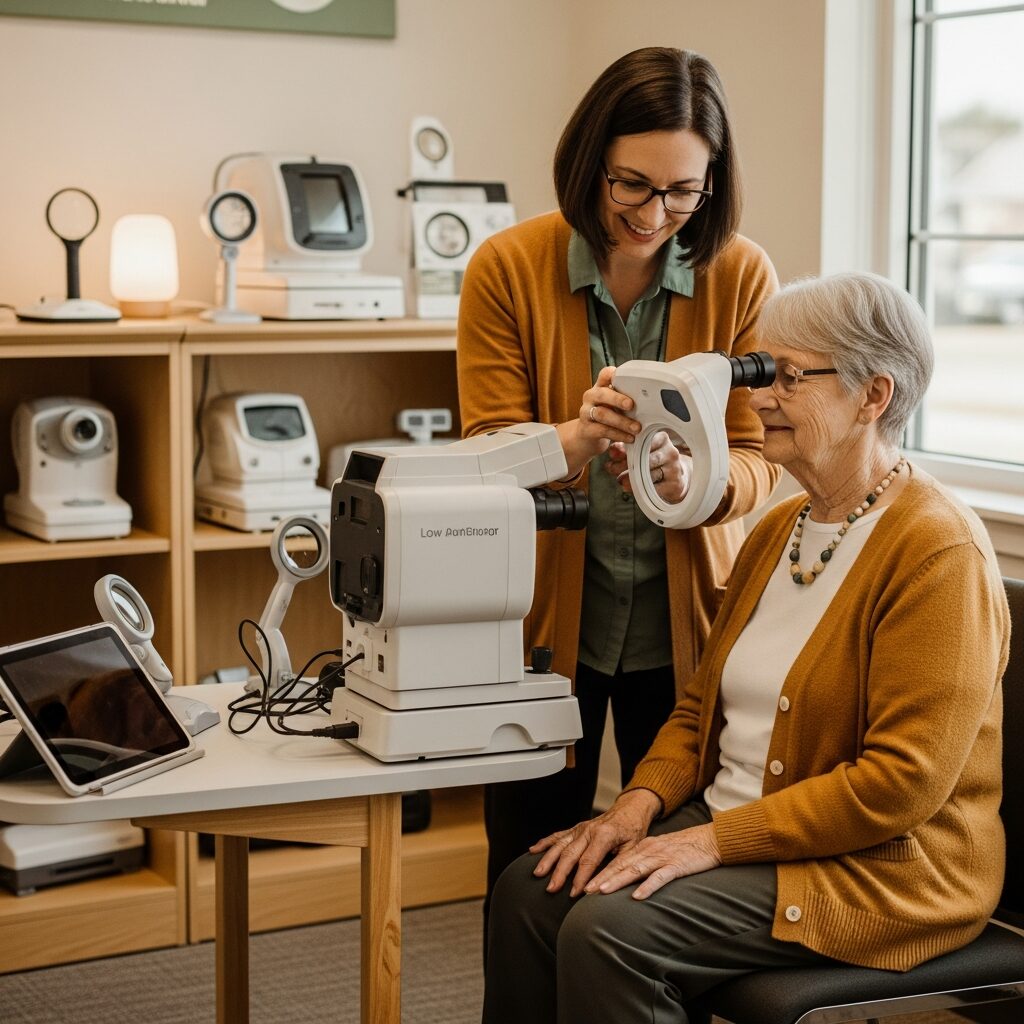
Trying to figure out what assistive technology you need, what it costs, and who can help you try it before you buy is exhausting — especially when every state seems to have a different program with a different name and different rules. If you have low vision, you have probably already run into this. The…
Read MoreVocational Rehabilitation Funding for Assistive Technology

Here is the funding source most people with low vision have never heard of: Vocational Rehabilitation. Every state has a VR agency, the application is free, and the program is built specifically to cover the assistive technology you need for work. There is no income test for eligibility, you do not have to be legally…
Read MoreFree Assistive Technology Programs for Low Vision

If you have ever priced a video magnifier or a screen-reading laptop, you already know the sticker can be brutal. A single device can run anywhere from $800 to well over $4,000, and most people walk away feeling like real help is just out of reach. That is a frustrating place to be, especially when…
Read More