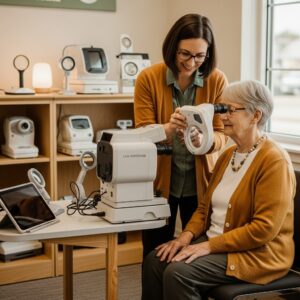
Low Vision Support for Seniors: Enhancing Safety and Quality of Life

If you are a senior living with low vision, you already know that the challenge is not just about seeing. It is about maintaining the life you have built, the routines you value, and the independence that defines who you are.
The good news is that comprehensive low vision support for seniors exists, and it can make a remarkable difference in your daily safety, confidence, and quality of life.
Understanding Low Vision Support
Low vision support is not a single service or device. It is a coordinated approach that combines professional evaluation, practical tools, skills training, and ongoing guidance to help you live well with your current vision.
The goal is straightforward: maximize what you can see and adapt what you cannot. This is not about accepting limitations. It is about finding new ways to accomplish the things that matter to you.
Effective low vision support starts with understanding your specific situation. Two people with the same diagnosis can have very different functional vision, which means the support that works for one person may not work for another. Personalized assessment is the foundation everything else builds on.
Safety First: Protecting Your Independence at Home
Falls are the leading cause of injury for older adults, and low vision significantly increases that risk. The right support addresses safety proactively rather than waiting for an accident to prompt changes.
Lighting is the single most impactful safety modification. Many homes are underlit for someone with low vision. Task lighting in the kitchen, bathroom, and reading areas should be bright and even, without glare. Motion-activated lights in hallways, bathrooms, and stairways eliminate the danger of navigating dark spaces.
Contrast helps your brain interpret what limited vision provides. Dark light switch covers on light walls, colored tape on stair edges, and contrasting dish colors against countertops and placemats all create visual cues that reduce mistakes and prevent accidents.
Organization removes the need to search for items in spaces where clutter creates hazards. Consistent placement of everyday objects, clear walking paths, and labeled storage systems transform a confusing environment into a navigable one.
These modifications are not about making your home look different. They are about making your home work better for you.
Assistive Technology That Fits Your Life
Technology has expanded what is possible for seniors with low vision, but the best tools are often the simplest ones.
Magnification devices remain the most widely used assistive technology. Handheld magnifiers work for quick tasks like reading mail and labels. Desktop video magnifiers provide a stable platform for extended reading, letter writing, and hobbies like crossword puzzles.
Talking devices remove the need to read small displays. Talking watches, thermometers, blood pressure monitors, and kitchen scales announce information aloud. These devices are usually affordable and require almost no learning curve.
Smartphone and tablet accessibility features offer surprising capability at no extra cost. Built-in screen readers, magnification gestures, and voice assistants can handle tasks from reading texts to identifying objects. Many seniors are surprised to learn their current phone already has these features ready to activate.
The key is matching technology to your actual daily needs, not to what sounds impressive. A low vision specialist can help you identify which tools will make the biggest difference and provide the hands-on training to use them confidently.
Professional Support That Makes a Difference
Low vision rehabilitation specialists bring expertise that transforms daily life. These professionals assess your functional vision, recommend specific tools and strategies, and provide the training that makes those tools useful.
A comprehensive low vision evaluation measures more than just acuity. It examines contrast sensitivity, visual field, and how your eyes work together. This detailed picture allows the specialist to recommend precisely targeted solutions rather than generic suggestions.
Training services teach practical skills for daily living. From safe cooking techniques to medication management to technology use, professional training builds competence session by session. Most people notice significant improvement within just a few sessions.
In-home training is particularly valuable because it addresses your specific environment. A specialist can evaluate your lighting, identify safety concerns, and recommend modifications that are practical for your actual living space.
Building a Support Network
Low vision support for seniors works best as a team effort. While professional guidance provides the foundation, ongoing support from family, friends, community resources, and peer connections sustains progress over time.
Local support groups connect you with others who understand what daily life with low vision looks like. These peer relationships offer practical tips, emotional encouragement, and the reassurance that you are not navigating this alone.
State commissions for the blind and area agencies on aging often provide additional resources, including free or reduced-cost assistive devices, transportation assistance, and home modification programs. These resources exist specifically to support seniors with vision loss and are worth exploring.
Family and friends play an important role, but their support is most effective when guided by professional recommendations. Encouraging your family to participate in training alongside you ensures everyone understands how to help in ways that strengthen rather than replace your independence.
Taking the Next Step
If you are ready to explore what low vision support can do for your daily life, the first step is a professional evaluation. Understanding exactly what your vision can do, and what tools and training can enhance it, gives you a clear path forward.
Contact New England Low Vision and Blindness at (888) 211-6933 or visit our independent living services page to schedule a consultation. Our specialists will work with you to create a personalized plan that enhances your safety, confidence, and quality of life.
You have spent a lifetime building the life you want. Low vision support for seniors helps you keep living it.
Frequently Asked Questions
Q: What is the difference between low vision and blindness?
A: Low vision means significant vision loss that cannot be fully corrected with glasses, contacts, or surgery, but some usable vision remains. Blindness refers to little or no functional vision. Most seniors with age-related eye conditions have low vision rather than total blindness, which means assistive tools and training can make a substantial difference in daily life.
Q: How do I know if I qualify for low vision services?
A: If vision loss is affecting your ability to perform daily activities like reading, cooking, managing medications, or moving safely through your home, you likely qualify for low vision services. A professional evaluation determines your specific needs and recommends appropriate support. Many services are available regardless of income or insurance status.
Q: Will low vision get worse over time?
A: This depends on the underlying condition. Some conditions like macular degeneration may progress gradually, while others can be stabilized with treatment. Regardless of progression, low vision support helps you maximize your current vision and adapt effectively to any changes. Regular check-ups with your eye care provider and ongoing support from a low vision specialist ensure your tools and strategies stay current.
Take the Next Step Toward Visual Independence
New England Low Vision and Blindness specializes in helping seniors maintain independence and quality of life through personalized low vision support. Our Assistive Technology Specialists provide comprehensive evaluations and training designed around your specific needs.
Ready to explore your options?
- Call 888-211-6933 to schedule a free consultation
- Visit our Independent Living page to learn about our services
- Explore training services that build skills and confidence
- Learn about why families trust NELVB for compassionate low vision support
You don’t have to figure this out alone. Bringing hope through technology, training, and care is what we do.