
Resources
Free Assistive Technology Programs for Low Vision

If you have ever priced a video magnifier or a screen-reading laptop, you already know the sticker can be brutal. A single device can run anywhere from $800 to well over $4,000, and most people walk away feeling like real help is just out of reach. That is a frustrating place to be, especially when…
Read MoreDoes Medicare Cover Assistive Technology for Low Vision?

If you are trying to figure out whether Medicare will cover the magnifier, screen reader, or other low vision device you need, you have probably already gotten different answers from different people. One says yes. Another says no. The Medicare website gives you a half-answer. That back-and-forth is the most frustrating part, and it happens…
Read MoreAssistive Technology Funding Guide: Grants, Programs, and Financial Aid

If you are researching how to pay for assistive technology, you are probably feeling overwhelmed. Maybe you just learned that the magnifier or screen reader you need costs more than you expected. Maybe a doctor recommended a device, and your first thought was, “How am I supposed to afford this?” That reaction is completely normal,…
Read MoreManaging Light Sensitivity While Driving

Light sensitivity while driving is one of the most common challenges reported by people with low vision, and it affects both daytime and nighttime driving in distinct ways. The sun reflecting off a wet road, oncoming LED headlights at night, the sudden transition from a dark tunnel to full daylight — each of these…
Read MoreBioptic Driving: State Requirements & How It Works
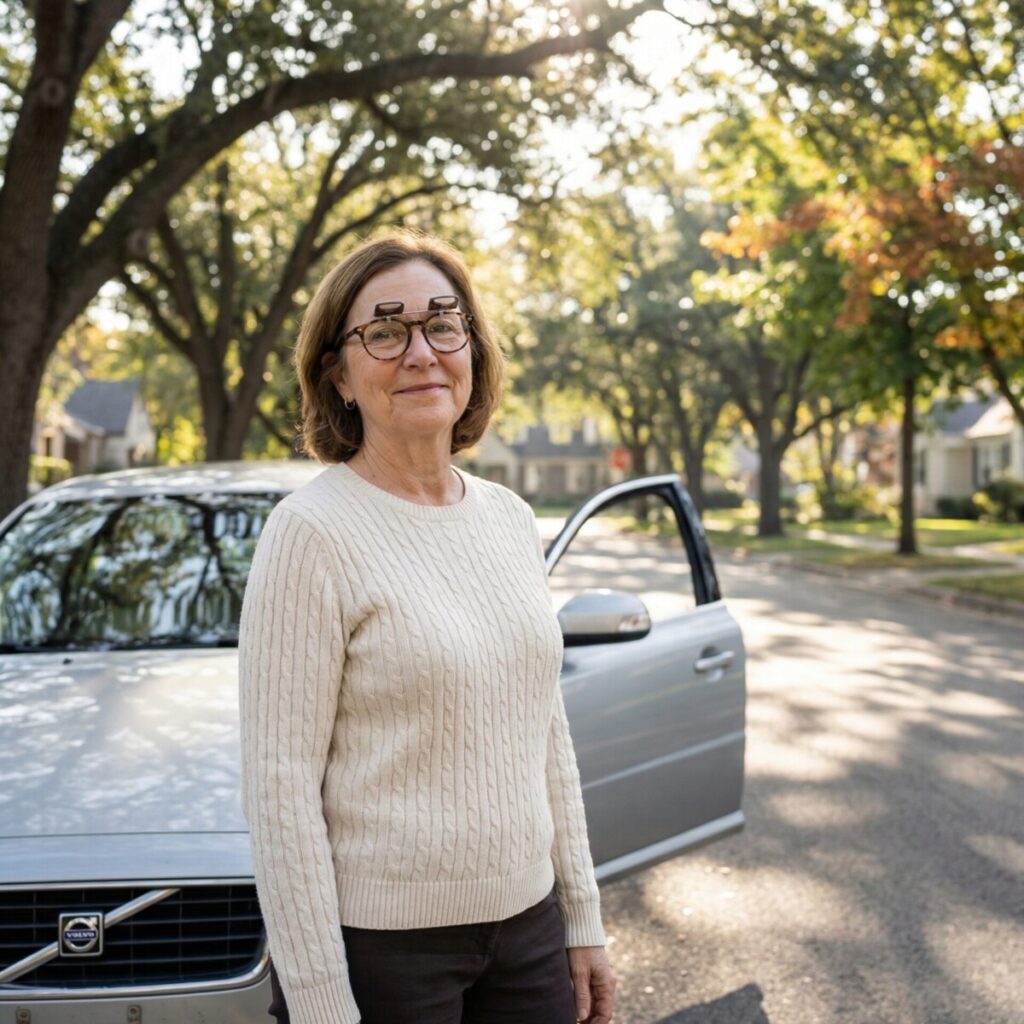
Bioptic driving is the use of a miniature telescope mounted on eyeglasses to help people with low vision meet the acuity standards required for a driver’s license. For many individuals living with central vision loss, it represents the difference between continuing to drive and giving it up entirely. More than 45 states currently allow bioptic…
Read MoreAnti-Glare Glasses for Night Driving: Complete Guide

Headlight glare is the most common night driving complaint among people with low vision, and anti glare glasses for night driving are one of the most searched-for solutions. But the term “anti-glare” covers several different technologies that work in fundamentally different ways. Choosing the wrong type can actually make nighttime visibility worse, not better. This…
Read MoreBest Night Driving Glasses for Low Vision: Expert Picks
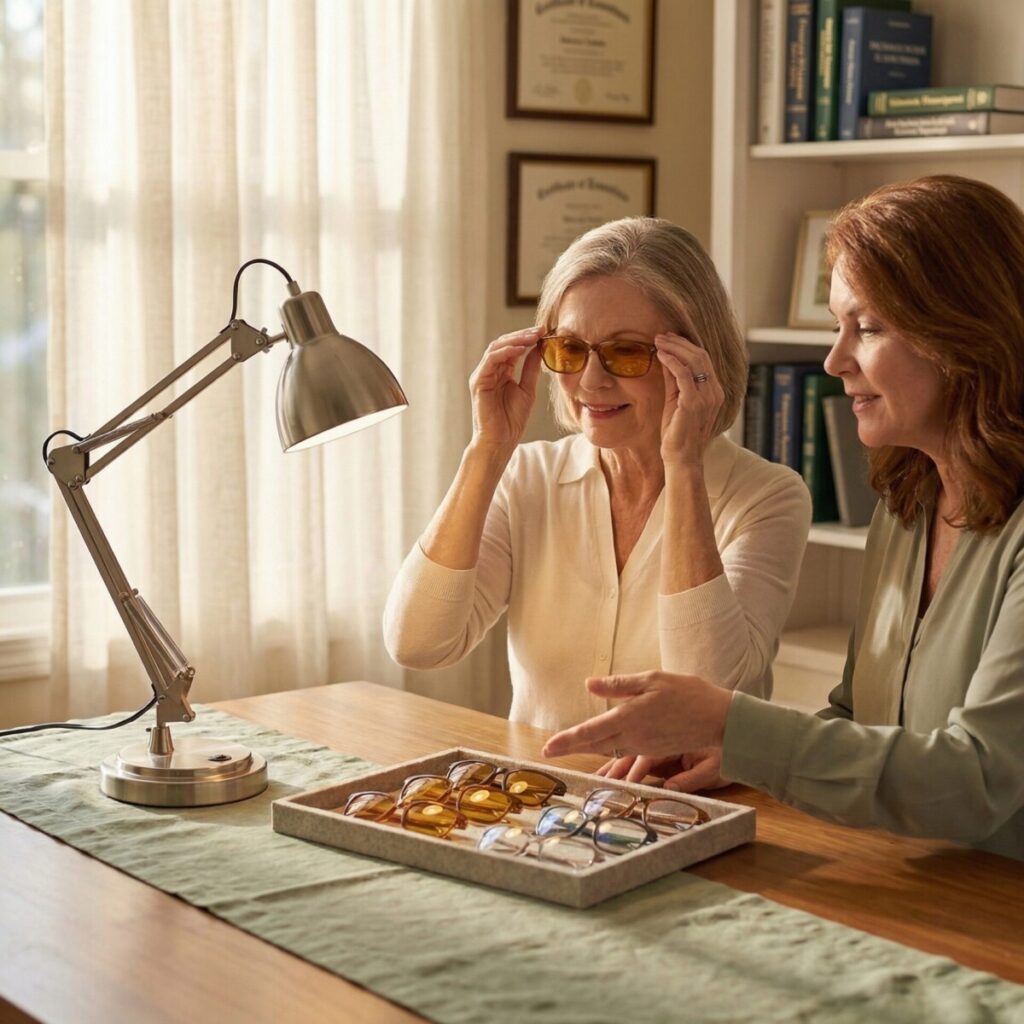
If night driving has become more stressful with low vision, you are not alone. Night driving glasses are one of the most frequently searched tools for people experiencing glare sensitivity, reduced contrast, and halos around headlights. But here’s something most product roundups won’t tell you: the research on night driving glasses is more complicated than…
Read MoreDriving with Low Vision: Complete Guide

For most Americans, driving is not just transportation. It is independence. It is the ability to get to a medical appointment without arranging a ride, to pick up grandchildren from school, to run an errand on your own schedule. When a vision diagnosis enters the picture, one of the first fears many people face is…
Read MoreHumanWare Braille Workshop Featuring Monarch and BrailleNote Evolve
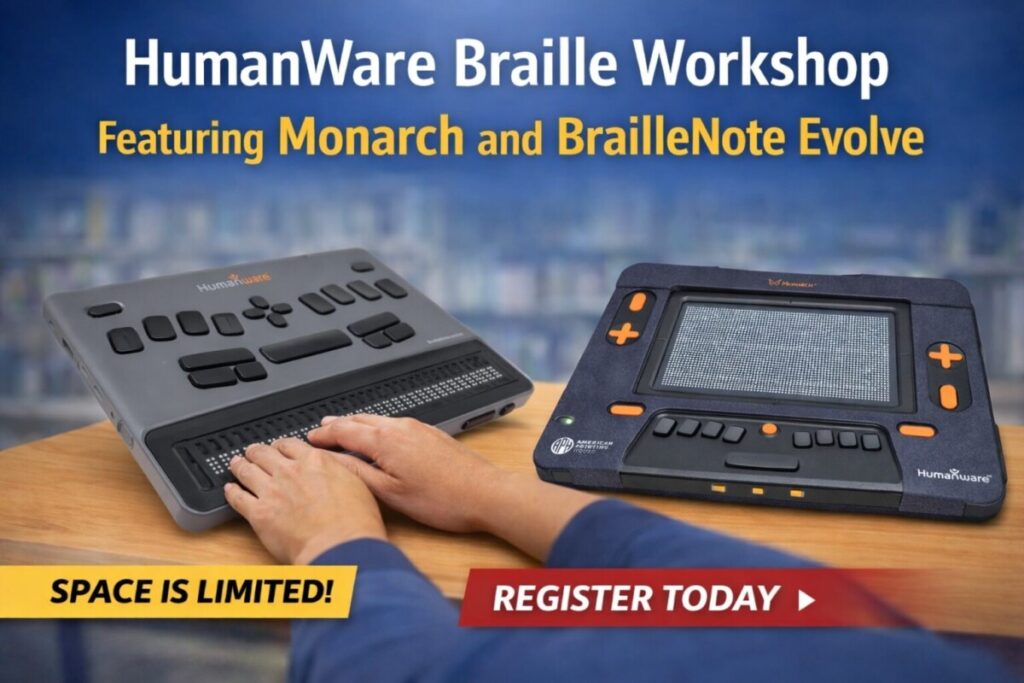
New England Low Vision and Blindness is proud to collaborate with HumanWare to present an engaging, education-focused, in-person braille technology workshop created for schools, educators, and organizations supporting blind and visually impaired individuals. This special workshop will feature the HumanWare Monarch, giving attendees hands-on experience with this groundbreaking multi-line braille tablet. Participants will also attend…
Read MoreAssistive Technology for Seniors with Low Vision: Essential Daily Living Solutions That Restore Independence

Understanding Low Vision and Vision Impairment in Seniors Vision loss affects millions of older adults and ranges from partial sight reduction to complete blindness. Age-related eye conditions often develop gradually, making early detection and proper care essential for maintaining quality of life. Common Causes and Types of Vision Loss in Older Adults Age-related macular degeneration…
Read MoreManaging Vision Changes as You Age: Essential Strategies and Resources for Maintaining Independence

Understanding Age-Related Vision Changes Age-related vision changes affect nearly everyone over 40, with low vision becoming increasingly common as people reach their 60s and beyond. These changes range from normal aging processes to serious eye diseases that can significantly impact visual acuity and peripheral vision. What Is Low Vision in Older Adults Low vision refers…
Read MoreHealthy Aging Tips for Legally Blind Seniors: Essential Strategies for Independent Living and Wellness

Understanding Legal Blindness and Vision Loss in Seniors Legal blindness affects millions of older adults and occurs when central visual acuity measures 20/200 or less in the better eye with correction, or when the visual field is 20 degrees or less. Age-related conditions like macular degeneration, cataracts, glaucoma, and diabetic retinopathy are the primary causes…
Read More