Early Eye Exams: Why Your Child’s Eye Health Matters for Academic Success and Long-Term Vision Development
The Importance of Early Eye Exams for Children
Early detection of vision problems in children can prevent lifelong challenges with learning, social development, and overall quality of life. The earlier we identify and address vision issues, the better outcomes children achieve in school and beyond.
Why Early Detection Is Critical
Vision development occurs rapidly during a child’s first few years of life. The visual system continues developing until around age 8, making early intervention essential for optimal outcomes.
Critical developmental windows exist when the brain learns to process visual information correctly. If vision problems go undetected during these periods, the brain may not develop proper visual pathways.
Early detection of vision problems allows for timely treatment when interventions are most effective. Common conditions like amblyopia (lazy eye) respond best to treatment before age 7.
Key benefits of early detection include:
- Prevention of permanent vision loss
- Better treatment outcomes
- Reduced need for intensive interventions later
- Protection of binocular vision development
Many vision problems in children show no obvious symptoms. Parents often cannot detect issues like refractive errors or subtle eye alignment problems without professional examination.
The Impact on Learning and Development
Vision problems significantly affect a child’s ability to succeed academically. Approximately 80% of classroom learning relies on visual information processing.
Children with undiagnosed vision issues often struggle with reading, writing, and mathematics. They may appear inattentive or have difficulty following instructions when the real problem is visual.
Academic performance suffers when children cannot see clearly. Poor vision affects reading comprehension, note-taking abilities, and participation in classroom activities.
Social development also depends heavily on clear vision. Children need good eyesight to recognize facial expressions, participate in sports, and engage confidently with peers.
Vision problems can lead to:
- Reading difficulties and poor academic performance
- Reduced self-confidence and social withdrawal
- Behavioral issues mistaken for attention disorders
- Limited participation in physical activities
Early identification ensures children receive appropriate support before academic and social challenges become entrenched patterns.
Risks of Delaying Eye Exams
Delayed eye exams can result in irreversible vision loss and developmental delays. The longer vision problems persist, the harder they become to treat effectively.
Amblyopia becomes increasingly difficult to treat after age 9. Without early intervention, children may develop permanent reduced vision in one eye.
Academic struggles compound over time when vision problems remain unaddressed. Children fall behind in foundational skills like reading, making it harder to catch up later.
Long-term consequences of delayed care include:
- Permanent vision impairment
- Chronic academic difficulties
- Reduced career opportunities
- Increased risk of accidents and injuries
Some eye conditions progress rapidly in children. Conditions like glaucoma or retinal problems require immediate attention to prevent serious vision loss.
Early intervention provides children with the best possible foundation for lifelong visual health and academic success.
Common Pediatric Vision Problems and Conditions
Nearly 20% of children under 18 have a diagnosed eye or vision condition, with many cases going undetected without proper screening. Understanding the four most prevalent pediatric vision issues—myopia, hyperopia, astigmatism, and amblyopia—helps parents recognize early warning signs and seek timely intervention.
Recognizing Nearsightedness (Myopia)
Nearsightedness affects millions of children worldwide and occurs when the eye grows too long or the cornea curves too steeply. This causes distant objects to appear blurry while close objects remain clear.
Common signs of myopia include:
- Squinting when looking at distant objects
- Sitting close to the television or computer screen
- Complaints of headaches after visual tasks
- Difficulty seeing the whiteboard at school
- Frequent eye rubbing
Children with myopia often perform well with near tasks like reading but struggle with distance vision. The condition typically develops between ages 6-14 and can progress rapidly during growth spurts.
Early detection proves crucial since untreated myopia can worsen significantly. Progressive myopia increases the risk of serious eye conditions later in life, including retinal detachment and glaucoma.
Understanding Farsightedness (Hyperopia)
Farsightedness occurs when the eye is shorter than normal or the cornea is too flat. Unlike myopia, children with hyperopia may see distant objects more clearly than near objects, though severe cases affect both near and distance vision.
Key indicators of hyperopia:
- Avoiding close-up activities like reading or coloring
- Complaining of tired or burning eyes
- Difficulty concentrating on schoolwork
- Frequent headaches during homework
- Crossed eyes in severe cases
Many children are born with mild hyperopia that often resolves as their eyes grow. However, moderate to severe cases require correction to prevent complications.
Hyperopia can lead to amblyopia if left untreated, particularly when one eye is more farsighted than the other. Children may also develop accommodative esotropia, a type of crossed eyes caused by excessive focusing effort.
Astigmatism in Children
Astigmatism results from an irregularly shaped cornea or lens that prevents light from focusing properly on the retina. Instead of being round like a basketball, the cornea resembles a football shape.
This condition causes blurred or distorted vision at all distances. Children with astigmatism may experience eye strain, headaches, and difficulty with both near and distance tasks.
Warning signs include:
- Tilting the head to see better
- Complaining that letters look fuzzy or distorted
- Difficulty distinguishing between similar letters (H and N)
- Eye fatigue during reading
- Poor performance in sports requiring distance vision
Astigmatism frequently occurs alongside myopia or hyperopia. Even mild astigmatism can significantly impact a child’s learning and development if uncorrected.
The condition remains stable in most children but requires regular monitoring. Corrective lenses effectively treat astigmatism and prevent associated complications.
Identifying Lazy Eye (Amblyopia)
Amblyopia, commonly called lazy eye, develops when one eye fails to achieve normal visual acuity despite correction. The brain favors the stronger eye and essentially ignores input from the weaker eye.
This condition affects approximately 2-3% of children and represents the leading cause of vision loss in one eye among young people. Lazy eye typically develops before age 8 when the visual system is still maturing.
Types of amblyopia:
- Strabismic amblyopia – caused by crossed or misaligned eyes
- Refractive amblyopia – results from significant differences in prescription between eyes
- Deprivation amblyopia – occurs when something blocks vision in one eye
Amblyopia rarely causes obvious symptoms since children adapt to using their stronger eye. Parents may notice poor depth perception, clumsiness, or covering one eye during activities.
Early treatment proves essential because the visual system becomes less responsive to therapy after age 8-9. Treatment options include patching the stronger eye, special eyedrops, or corrective lenses to force the weaker eye to work harder.
Eye Misalignment and Related Conditions
Eye misalignment affects how the eyes work together and can lead to vision problems if left untreated. Early detection of strabismus and squinting helps prevent long-term complications in your child’s visual development.
Crossed Eyes (Strabismus)
Strabismus occurs when one or both eyes turn inward, outward, upward, or downward instead of looking straight ahead. This condition affects approximately 4% of children and can develop at any age during childhood.
Types of strabismus include:
- Esotropia (eyes turn inward)
- Exotropia (eyes turn outward)
- Hypertropia (one eye turns upward)
- Hypotropia (one eye turns downward)
The brain may begin ignoring signals from the misaligned eye to avoid double vision. This can lead to amblyopia or “lazy eye” where vision in the affected eye becomes weaker over time.
Treatment options depend on the severity and type of strabismus. Some children benefit from corrective glasses, while others may need eye patches or vision therapy exercises.
Signs of Eye Misalignment
Parents should watch for specific indicators that suggest their child may have eye alignment issues. These signs can appear gradually or suddenly depending on the underlying cause.
Common warning signs include:
- One eye appears to wander or drift
- Frequent eye rubbing or blinking
- Difficulty tracking moving objects
- Problems with depth perception
- Closing one eye to see better
Your child may also experience headaches or eye strain during reading or close-up activities. Some children tilt their head to one side to compensate for the misalignment.
Double vision complaints from older children who can verbalize their symptoms require immediate attention. Younger children may not recognize or communicate these visual disturbances effectively.
Squinting and Its Causes
Squinting involves partially closing the eyelids to improve focus or reduce light sensitivity. While occasional squinting is normal, persistent squinting often indicates an underlying vision problem.
Primary causes of squinting include:
- Refractive errors (nearsightedness, farsightedness, astigmatism)
- Bright light sensitivity
- Eye muscle weakness
- Neurological conditions
Children may squint when looking at distant objects like the television or classroom board. This behavior often develops gradually as vision changes occur during growth periods.
Some children squint to force their eyes into better alignment temporarily. This compensatory mechanism can cause eye strain and fatigue over extended periods.
Regular eye examinations help identify the root cause of persistent squinting behaviors. Early intervention prevents these habits from becoming permanent or worsening over time.
What to Expect During a Pediatric Eye Exam
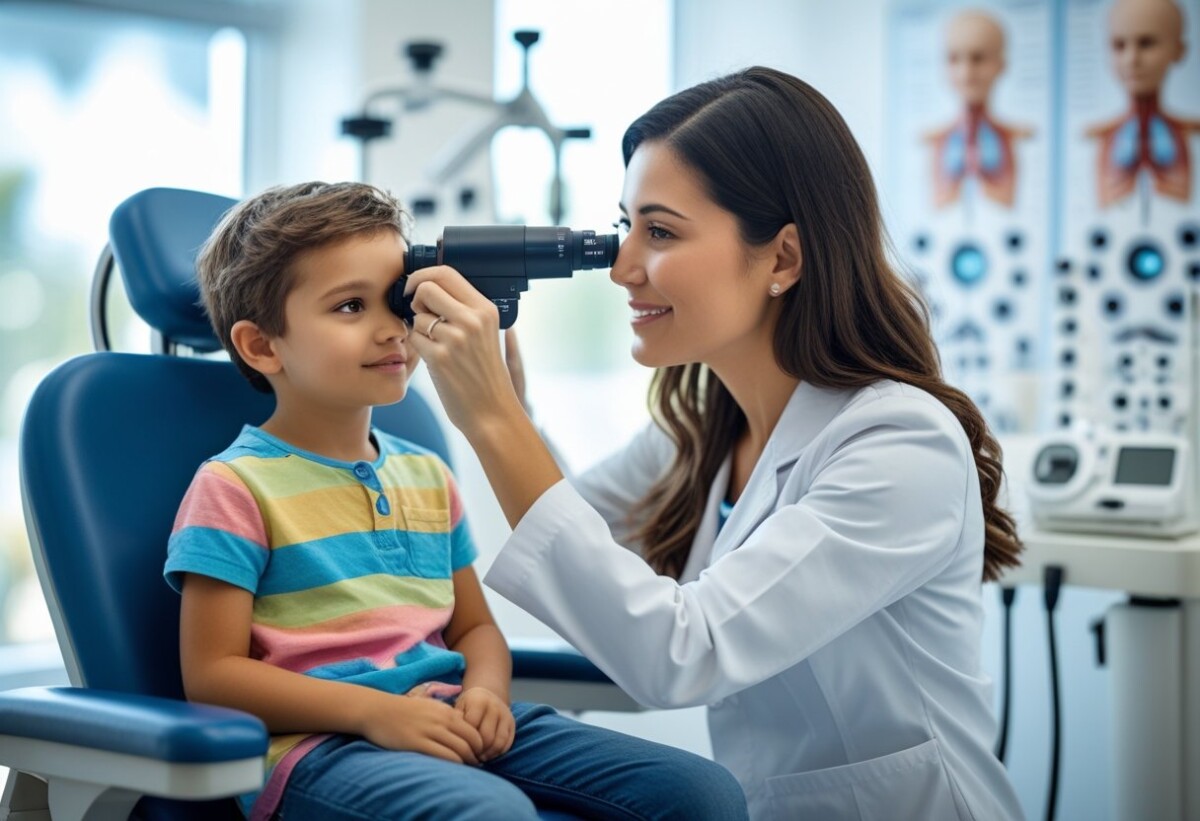
Pediatric eye exams use specialized techniques to assess children’s developing vision through age-appropriate tests. Eye care professionals evaluate visual acuity using picture charts and symbols, assess coordination through tracking exercises, and employ engaging methods that keep young patients comfortable.
Visual Acuity Assessments
Visual acuity testing varies significantly based on your child’s age and developmental stage. For infants and toddlers who cannot yet communicate verbally, pediatric optometrists use preferential looking tests and observe eye tracking responses.
Age-Specific Testing Methods:
- Ages 6 months – 2 years: Light tracking and visual following exercises
- Ages 3-5 years: Picture charts with familiar objects like houses, apples, or circles
- School-age children: Traditional letter charts or tumbling E charts
The pediatric optometrist will cover each eye separately to identify potential differences in vision clarity. This process helps detect common childhood vision problems like amblyopia or significant refractive errors.
Many children initially feel nervous about covering one eye. The eye care professional will explain each step and may use colorful occluders or fun patches to make the experience less intimidating.
Tests for Hand-Eye Coordination
Hand-eye coordination assessments reveal how well your child’s visual system works with their motor skills. These evaluations are crucial for identifying issues that could affect learning and development.
Common Coordination Tests Include:
- Tracking exercises: Following moving objects with eyes while keeping the head still
- Convergence testing: Watching a small target move closer to assess eye teaming
- Depth perception: Identifying 3D images or determining which objects appear closer
The pediatric optometrist may ask your child to touch their finger to a target or catch a small ball. These activities seem like games but provide valuable information about visual processing abilities.
Children with poor hand-eye coordination may struggle with reading, writing, or sports activities. Early detection through pediatric eye exams allows for timely intervention and vision therapy if needed.
Child-Friendly Techniques
Pediatric eye care professionals understand that children respond better to engaging, interactive approaches than traditional adult examination methods. The entire pediatric eye exam process is designed to feel comfortable and non-threatening.
Interactive Elements Include:
- Colorful equipment and child-sized furniture
- Storybook explanations of each test
- Praise and encouragement throughout the examination
- Brief breaks when children become restless
Eye doctors often use puppet shows or animated characters to demonstrate what will happen during tests. This approach reduces anxiety and helps children cooperate more willingly.
The examination room typically features bright, welcoming décor with toys or books in the waiting area. Many pediatric optometrists allow parents to stay close during the exam to provide additional comfort and reassurance for nervous children.
Recognizing Signs of Vision Problems in Children
Children often cannot communicate vision problems effectively, making it essential for parents to watch for specific behavioral changes and physical symptoms. Vision problems in children can manifest through daily struggles, unusual behaviors, and signs of eye strain that impact their learning and development.
Behavioral Clues and Warning Signs
Children with undiagnosed vision problems often develop compensatory behaviors that signal underlying issues. Frequent eye rubbing beyond normal tiredness indicates potential strain or discomfort.
Squinting or closing one eye while reading, watching television, or focusing on distant objects suggests difficulty with clarity. Children may tilt their head to unusual angles or cover one eye to improve their vision.
Excessive blinking or frequent headaches after visual tasks point to focusing problems. Some children avoid activities requiring visual concentration like puzzles, coloring, or reading.
Short attention spans during visual activities may indicate fatigue from struggling to see clearly. Children might sit unusually close to screens or hold books very close to their faces.
Light sensitivity causes children to squint in bright environments or complain about glare. They may prefer dimly lit spaces or struggle with transitions between light and dark areas.
Challenges With School and Daily Activities
Academic performance often reveals the first signs of vision problems in children. Difficulty reading manifests as skipping lines, losing place frequently, or using fingers to track words across pages.
Poor handwriting with inconsistent letter spacing or difficulty staying within lines indicates coordination issues related to vision. Children may struggle to copy information from whiteboards or complete worksheets accurately.
Confusion with similar letters like ‘b’ and ‘d’ or ‘p’ and ‘q’ beyond typical developmental stages suggests visual processing difficulties. Math problems become challenging when children cannot align numbers properly.
Reluctance to participate in sports or playground activities may stem from depth perception issues or difficulty tracking moving objects. Children might appear clumsy or frequently bump into objects.
Fatigue after homework or resistance to reading assignments often indicates the extra effort required to process visual information clearly.
Eye Strain and Fatigue
Eye strain in children creates observable physical and behavioral symptoms that worsen throughout the day. Red, watery eyes after screen time or reading indicate overworked visual systems.
Frequent complaints of tired eyes, especially during or after visual tasks, signal strain from uncorrected vision problems. Children may rub their eyes excessively or complain that their eyes “hurt.”
Difficulty concentrating increases as the day progresses when children must work harder to maintain focus. This creates a cycle where academic tasks become increasingly challenging.
Behavioral changes like irritability or mood swings often correlate with visual fatigue. Children may become frustrated with activities they previously enjoyed.
Physical symptoms include headaches concentrated around the forehead or temples, particularly after school or homework time. Some children experience neck or shoulder tension from compensating with poor posture to see better.
Best Practices for Supporting Children’s Eye Health
Protecting your child’s vision requires consistent attention to regular screenings, healthy daily routines, controlled screen exposure, and proper nutrition. These foundational practices work together to support optimal vision development during critical childhood years.
Scheduling Regular Eye Exams
The American Optometric Association recommends children receive their first comprehensive eye exam between 6 and 12 months of age. A pediatric optometrist can detect vision problems that young children cannot communicate.
Follow this examination schedule:
- First exam: 6-12 months
- Second exam: Ages 3-5 years
- Annual exams: Starting before kindergarten
Early detection through pediatric eye care prevents many vision problems from worsening. Children may not recognize vision issues, making professional assessments essential for proper vision development.
Pediatric optometrists use specialized techniques to examine young patients effectively. They can identify conditions like amblyopia, strabismus, and refractive errors before they impact learning and development.
Healthy Habits at Home
Creating eye-friendly environments at home supports your child’s visual health between professional exams. Proper lighting reduces eye strain during reading and homework activities.
Essential home practices include:
- Ensuring adequate lighting for all visual tasks
- Maintaining proper reading distances (12-16 inches from books)
- Taking regular breaks during close-up work
- Encouraging outdoor play and activities
Good posture while reading or doing homework prevents unnecessary eye strain. Position books and materials at appropriate angles to reduce neck and eye fatigue.
Teach children to recognize eye discomfort symptoms like headaches, squinting, or rubbing their eyes frequently. These signs may indicate developing vision problems requiring professional attention.
Limiting Screen Time
Digital devices present unique challenges for developing eyes. The 20-20-20 rule helps reduce digital eye strain: every 20 minutes, look at something 20 feet away for 20 seconds.
Age-appropriate screen time limits:
- Ages 2-5: Maximum 1 hour daily
- Ages 6+: Consistent limits with breaks
- All ages: No screens 1 hour before bedtime
Blue light exposure from screens can disrupt sleep patterns and cause eye discomfort. Consider blue light filtering glasses or screen filters for extended device use.
Position screens at arm’s length and slightly below eye level. Ensure room lighting matches screen brightness to prevent harsh contrasts that strain developing eyes.
Nutrition and Eye Health
Specific nutrients support healthy vision development in children. Vitamin A, omega-3 fatty acids, and antioxidants play crucial roles in maintaining eye health.
Vision-supporting foods include:
- Leafy greens: Spinach, kale (lutein and zeaxanthin)
- Orange vegetables: Carrots, sweet potatoes (beta-carotene)
- Fish: Salmon, tuna (omega-3 fatty acids)
- Berries: Blueberries, strawberries (antioxidants)
Proper hydration maintains healthy tear production and prevents dry eyes. Encourage children to drink water throughout the day, especially during outdoor activities.
Limit processed foods high in sugar and unhealthy fats. These foods can contribute to inflammation that may affect overall eye health and vision development over time.
The Role of Eye Care Professionals in Early Detection
Pediatric eye care professionals use specialized equipment and techniques to identify vision problems that may not be apparent during standard screenings. They establish comprehensive care plans that track your child’s visual development over time.
Choosing a Pediatric Optometrist
A pediatric optometrist specializes in diagnosing and treating vision conditions specific to children. They understand how young eyes develop and can identify problems that general practitioners might miss.
Look for optometrists with specific training in pediatric care. They should have experience working with children of different ages and developmental stages. Many pediatric optometrists complete additional fellowship training beyond their doctoral degree.
Key qualifications to consider:
- Board certification in pediatric optometry
- Experience with developmental vision assessments
- Specialized equipment for examining young children
- Training in conditions like amblyopia and strabismus
The office environment matters significantly for children’s comfort. Pediatric optometrists typically design child-friendly spaces with age-appropriate testing methods. They use picture charts instead of letters for pre-readers and games to keep children engaged during examinations.
Frequency of Eye Exams in Childhood
The American Optometric Association recommends specific timing for pediatric eye exams. Early detection of vision problems requires consistent monitoring throughout childhood development.
Recommended exam schedule:
- First exam: 6-12 months of age
- Second exam: 3 years old
- Third exam: Before starting school (5-6 years)
- Annual exams: Throughout school years
Children with risk factors need more frequent monitoring. These include family history of eye diseases, premature birth, or developmental delays. Some conditions like myopia progress rapidly during school years and require closer supervision.
Between scheduled exams, watch for warning signs that indicate immediate attention is needed. These include frequent eye rubbing, complaints of headaches, or difficulty reading age-appropriate materials.
Frequently Asked Questions
Parents often have specific concerns about timing, procedures, and potential risks when it comes to their child’s vision care. Understanding examination frequency, common vision problems, and warning signs helps families make informed decisions about their child’s eye health.
How often should children undergo eye examinations?
Children should receive their first comprehensive eye exam at 6 months of age. The next examination should occur at age 3, followed by another before starting kindergarten.
School-age children need eye exams every two years if no vision problems exist. Children with existing vision issues or risk factors require annual examinations.
Some children may need more frequent monitoring based on family history or specific conditions. Regular examinations ensure early detection of problems that could affect learning and development.
What common vision issues can be detected in a child’s eye exam?
Refractive errors like nearsightedness, farsightedness, and astigmatism are among the most common issues found during pediatric eye exams. These conditions can significantly impact a child’s ability to see clearly at various distances.
Amblyopia, commonly called lazy eye, affects how the brain processes visual information from one or both eyes. Early detection allows for more effective treatment options.
Strabismus causes eyes to misalign and can lead to double vision or depth perception problems. Eye tracking issues and focusing difficulties can also be identified during comprehensive examinations.
Can early eye exams help with a child’s learning and development?
Vision problems directly impact academic performance since approximately 80% of learning occurs through visual input. Children with undiagnosed vision issues often struggle with reading, writing, and classroom participation.
Early detection allows for prompt treatment that can prevent long-term developmental delays. Correcting vision problems helps children participate fully in educational activities and social interactions.
Proper vision support enables children to develop essential skills like hand-eye coordination and spatial awareness. These abilities form the foundation for future learning and independence.
What signs might indicate that a child needs an eye exam?
Children may squint frequently, cover one eye, or tilt their head when trying to focus on objects. Excessive eye rubbing or complaints of headaches after visual tasks can signal vision problems.
Difficulty with reading, avoiding close-up activities, or sitting too close to screens may indicate refractive errors. Some children experience frequent eye tearing or sensitivity to light.
Behavioral changes like decreased attention span or reluctance to participate in sports can stem from undiagnosed vision issues. Academic struggles or complaints that words appear blurry warrant immediate evaluation.
How do eye exams in children differ from those for adults?
Pediatric eye exams use age-appropriate testing methods that don’t rely on verbal responses from very young children. Picture charts and symbol recognition replace traditional letter charts for non-readers.
Eye care professionals use specialized techniques to assess focusing ability and eye movement patterns in children. The examination environment is designed to be comfortable and engaging for young patients.
Testing duration is typically shorter to accommodate children’s attention spans. Multiple visits may be necessary to complete comprehensive evaluations for some children.
Are there any risks associated with delaying a child’s first eye exam?
Delayed diagnosis can result in permanent vision loss or reduced visual development that cannot be fully corrected later. The visual system develops rapidly during early childhood, making timely intervention crucial.
Untreated vision problems can lead to academic difficulties that persist throughout a child’s educational journey. Social and emotional development may also be affected when children struggle with vision-related activities.
Some conditions like amblyopia become increasingly difficult to treat as children age. Early intervention provides the best opportunity for successful treatment outcomes and normal visual development.
Discover the Best Low Vision Solutions Today
At New England Low Vision and Blindness, we are committed to helping individuals with visual impairments regain independence and improve their quality of life. Our Top 10 Low Vision Aids for People Who are Visually Impaired features expertly selected tools designed to address everyday challenges, from enhancing reading and writing to simplifying daily tasks. Explore our comprehensive range of low vision aids and find the perfect solution to meet your unique needs. Visit us today and take the first step toward a brighter, more accessible future!