Creating a Safe Environment for Kids’ Eye Health: Essential Prevention Strategies for Parents
Fundamentals of Kids’ Eye Health
Understanding how children’s eyes develop and the factors that influence their health forms the foundation for creating protective environments. Recognizing normal vision development patterns and identifying key health influences helps parents make informed decisions about their child’s eye care.
Understanding Healthy Eyes and Vision Development
Vision development begins before birth and continues through early childhood. Newborns can only see objects 8 to 12 inches away, which gradually improves as their visual system matures.
Key developmental milestones include:
- 0-3 months: Basic light perception and tracking moving objects
- 3-6 months: Hand-eye coordination begins developing
- 6-12 months: Depth perception and color vision improve significantly
- 1-2 years: Visual acuity reaches approximately 20/40
- 3-5 years: Vision typically reaches adult levels of 20/20
The brain processes visual information through neural pathways that strengthen with use. Children who experience vision problems during these critical periods may develop lasting visual impairments if left untreated.
Regular eye examinations help detect issues like amblyopia, strabismus, or refractive errors early. Early intervention during these developmental windows provides the best outcomes for maintaining healthy vision throughout life.
Key Factors That Influence Eye Health in Children
Multiple factors impact children’s developing vision systems. Nutrition plays a fundamental role, with vitamins A, C, and E supporting healthy eye tissue development.
Environmental factors significantly affect eye health:
- UV exposure without proper protection damages developing eyes
- Screen time without breaks can cause digital eye strain
- Poor lighting during reading or homework strains developing vision
- Exposure to harmful chemicals or projectiles during play
Genetic factors determine predisposition to conditions like myopia, hyperopia, or astigmatism. Children with family histories of eye conditions require more frequent monitoring.
Physical activity promotes healthy blood circulation to the eyes and reduces myopia risk. Outdoor play provides natural light exposure that supports normal eye development.
Hand hygiene prevents eye infections that can damage developing vision. Teaching children proper handwashing techniques and avoiding eye rubbing reduces infection risks significantly.
Nutrition and Lifestyle Choices for Eye Wellness
Proper nutrition and active lifestyle habits provide essential building blocks for children’s developing visual systems. Specific nutrients like omega-3 fatty acids support retinal function, while outdoor activities help regulate eye growth and reduce myopia risk.
Role of Omega-3 Fatty Acids and Essential Nutrients
Omega-3 fatty acids play a crucial role in maintaining healthy retinal function and supporting visual development in children. These essential fats help form cell membranes in the eye and contribute to proper tear production.
DHA (docosahexaenoic acid) concentrates heavily in retinal tissue. Children need adequate DHA intake for optimal visual processing and eye development.
Key nutrients for children’s eye health include:
- Vitamin A: Supports night vision and corneal health
- Lutein and zeaxanthin: Filter harmful blue light and protect the macula
- Vitamin C: Maintains healthy blood vessels in the eyes
- Vitamin E: Protects eye cells from oxidative damage
- Zinc: Essential for retinal function and vitamin A metabolism
We recommend incorporating fatty fish like salmon, sardines, and mackerel twice weekly. Plant-based sources include flaxseeds, chia seeds, and walnuts for families following vegetarian diets.
Encouraging a Balanced Diet for Healthy Eyes
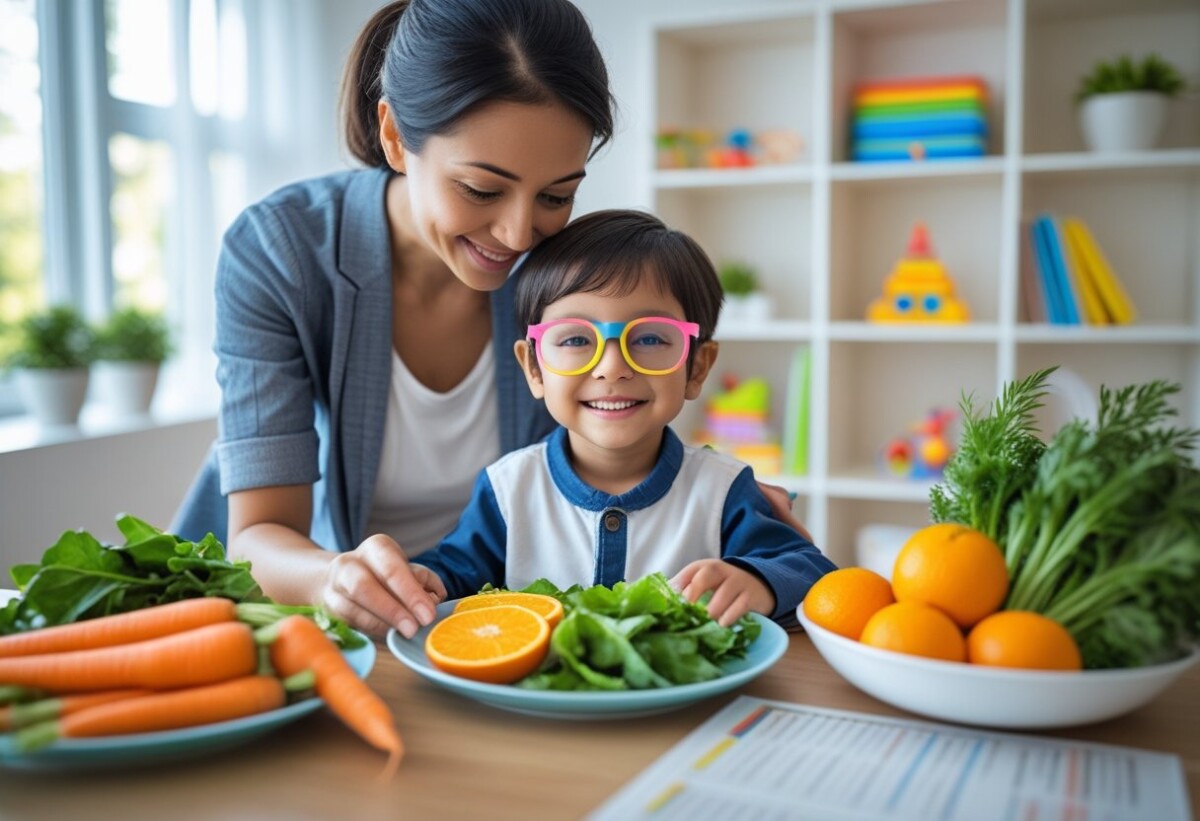
Creating colorful meals helps ensure children receive diverse eye-supporting nutrients. Dark leafy greens provide lutein and zeaxanthin, while orange vegetables supply beta-carotene.
Eye-healthy foods to include regularly:
| Food Group | Examples | Key Nutrients |
| Leafy Greens | Spinach, kale, collards | Lutein, zeaxanthin |
| Orange Vegetables | Carrots, sweet potatoes, squash | Beta-carotene, vitamin A |
| Berries | Blueberries, strawberries | Vitamin C, antioxidants |
| Fish | Salmon, tuna, sardines | Omega-3 fatty acids |
| Nuts/Seeds | Almonds, sunflower seeds | Vitamin E, healthy fats |
Make nutrition education interactive by involving children in meal planning and preparation. Explain how different colored foods support their vision and overall health.
Limit processed foods high in sugar and unhealthy fats. These can contribute to inflammation and may increase the risk of developing eye conditions later in life.
Benefits of Outdoor Activities for Vision
Regular outdoor time provides natural light exposure that helps regulate children’s eye growth patterns. Studies show outdoor activities can reduce myopia development by up to 30% in school-age children.
Natural sunlight stimulates dopamine release in the retina. This neurotransmitter helps control eye growth and prevents excessive elongation that leads to nearsightedness.
Recommended outdoor activities:
- Sports: Soccer, basketball, tennis encourage distance vision use
- Nature exploration: Hiking and playground activities promote varied focusing
- Gardening: Close and distance work while providing vitamin D exposure
Aim for at least 90 minutes of outdoor time daily when possible. Even shorter periods provide benefits compared to indoor-only activities.
Ensure children wear appropriate UV protection during peak sun hours. Quality sunglasses with 100% UV blocking protect developing eyes from harmful radiation while still allowing beneficial light exposure.
Safe Practices at Home and School
Protecting children’s eye safety requires proactive measures in both home and school environments. The most effective approach involves removing potential hazards and securing dangerous items before accidents occur.
Childproofing to Prevent Eye Injuries
Cabinet locks and safety latches are essential for protecting children’s vision. Install these devices on all lower cabinets and drawers containing cleaning supplies, tools, or small objects.
Corner guards and edge protectors should cover sharp furniture edges at eye level. Coffee tables, end tables, and low shelving pose significant risks for running children.
Safety gates prevent access to areas with potential eye hazards. Use them to block staircases, workshops, and rooms with dangerous equipment.
Secure mounting of televisions and heavy furniture prevents tip-over accidents. Wall-mounted TVs should be at appropriate heights to reduce neck strain and collision risks.
Window blind cords require immediate attention. Cut looped cords and install cord cleats to keep them out of reach.
Toy storage systems help maintain organized play areas. Remove broken toys immediately and inspect new toys for small parts or sharp edges.
Keeping Chemicals and Sharp Objects Out of Reach
High shelf storage is the first line of defense for dangerous items. Place cleaning products, medications, and chemicals at least six feet high in locked cabinets.
Child-resistant containers provide additional protection for unavoidable low storage. Transfer loose items into containers with secure, difficult-to-open lids.
Kitchen safety requires special attention to knives, scissors, and small appliances. Install drawer locks on utensil drawers and unplug countertop appliances when not in use.
Bathroom hazards include razors, tweezers, and aerosol products. Store these items in medicine cabinets or high shelves away from curious hands.
Workshop and garage areas need complete restriction for children. Keep tools, automotive fluids, and yard chemicals in locked storage areas with clear hazard labeling.
Protecting Eyes During Outdoor and Sports Activities
Sports-related eye injuries cause thousands of preventable vision problems each year, with proper protective eyewear preventing 90% of these incidents. Children need specific sun protection and appropriate sports eyewear to maintain healthy vision during active play.
Choosing Protective Eyewear for Sports
Sport-specific eyewear requirements vary significantly based on activity type and injury risk levels. High-impact sports like baseball, basketball, and racquet sports require polycarbonate lenses with wraparound frames that meet ASTM safety standards.
Key features for sports eyewear include:
- Polycarbonate or Trivex lenses for impact resistance
- Wraparound frame design for peripheral protection
- Secure strap or properly fitted temples
- Shatterproof construction
- Prescription capability when needed
Swimming activities require sealed goggles to prevent chlorinated water exposure and potential infections. Water sports participants need polarized lenses to reduce glare from water surfaces.
Proper fit ensures maximum protection. Eyewear should sit close to the face without gaps while allowing comfortable movement. Loose-fitting glasses can shift during activity, leaving vulnerable areas exposed to potential injury.
Sun Protection and Sunglasses for Kids
UV radiation poses serious long-term risks to developing eyes, making quality sunglasses essential for outdoor activities. Children’s eyes transmit more UV light to the retina than adult eyes, increasing their vulnerability to sun damage.
Essential sunglass features for children:
- 100% UV protection (blocks UVA and UVB rays)
- Impact-resistant polycarbonate lenses
- Wraparound or close-fitting frame design
- Scratch-resistant coating
- Adjustable or secure fit options
Establish consistent wearing habits by introducing sunglasses during early childhood outdoor activities. Children who learn to wear sunglasses regularly develop lifelong eye protection behaviors that prevent future vision problems.
Choose sunglasses that children find comfortable and appealing to encourage consistent use. Replacement straps and durable frames help maintain protection during active play and reduce the risk of losing eyewear during outdoor adventures.
Managing Screen Time and Digital Eye Strain
Digital eye strain affects children who spend extended periods looking at screens, causing symptoms like dry eyes, headaches, and blurred vision. Establishing realistic time limits and teaching proper screen habits helps protect developing vision.
Setting Realistic Screen Time Limits
Age-appropriate screen time limits form the foundation of healthy digital habits. The American Academy of Pediatrics recommends no screens for children under 18 months, except video chatting.
For children ages 2-5, we suggest limiting screen time to one hour per day of high-quality programming. School-age children need flexible limits that prioritize homework, physical activity, and sleep over recreational screen use.
Recommended Daily Screen Time Limits:
| Age Group | Recreational Screen Time | Notes |
| Under 18 months | Avoid screens | Video chatting acceptable |
| 18-24 months | Watch with caregiver | Choose educational content |
| 2-5 years | 1 hour maximum | High-quality programming only |
| 6+ years | Flexible limits | Prioritize sleep, activity, homework |
Create a family media plan that includes specific times for device use. Consider using parental controls and timers to enforce these boundaries consistently.
Teaching the 20-20-20 Rule
The 20-20-20 rule provides an effective method for reducing digital eye strain during screen use. Every 20 minutes, children should look at something 20 feet away for at least 20 seconds.
This simple practice allows eye muscles to relax and refocus. Children often forget to take breaks when engaged with screens, so setting regular reminders helps establish this healthy habit.
Make the rule engaging by having children identify objects across the room or outside a window. Use timers or apps that send gentle reminders every 20 minutes during screen time.
Additional eye-friendly practices include:
- Encouraging frequent blinking to keep eyes moist
- Positioning screens 20-26 inches from the face
- Adjusting screen brightness to match surrounding lighting
- Taking longer breaks every hour for physical activity
Creating Screen-Free Zones for Children
Designated screen-free areas in your home promote healthier habits and protect sleep quality. The bedroom should remain completely free of screens to ensure proper rest and eye recovery.
Establish the dining room as another screen-free zone to encourage family interaction and mindful eating. These spaces provide natural opportunities for eyes to rest and focus on varying distances.
Consider creating specific times when the entire house becomes screen-free. An hour before bedtime works well, as blue light from screens can disrupt natural sleep patterns.
Effective screen-free zones include:
- All bedrooms
- Dining areas during meals
- Car during short trips
- Study areas during homework time
Replace screen activities with books, puzzles, art supplies, or outdoor equipment in these zones. This gives children alternative entertainment options while their eyes recover from digital strain.
Regular Eye Examinations and Professional Guidance
Professional eye care establishes the foundation for detecting vision problems early and ensuring proper visual development throughout childhood. Regular examinations with qualified eye doctors provide essential monitoring and intervention when needed.
Importance of Eye Doctor Visits
Early detection saves vision and prevents long-term complications. Eye doctors can identify problems that parents might miss during daily activities.
The American Optometric Association recommends specific timing for examinations:
- 6-12 months: First comprehensive exam
- 3-5 years: At least one examination before school
- School age: Annual examinations
Eye doctors perform comprehensive evaluations beyond basic vision screenings. These examinations include visual acuity testing, eye health assessments, and detection of conditions like amblyopia or strabismus.
Professional guidance helps parents understand their child’s specific vision needs. Eye doctors provide recommendations for protective eyewear, screen time management, and environmental modifications.
Many vision problems show no obvious symptoms in children. Conditions like refractive errors or eye muscle imbalances often go unnoticed without professional evaluation.
Tracking Vision Development Milestones
Vision development follows predictable patterns that eye doctors monitor carefully. Normal development includes specific milestones at different ages.
Key developmental markers include:
- Birth to 4 months: Following objects and making eye contact
- 5-8 months: Reaching for objects accurately
- 9-12 months: Crawling and depth perception
- 12-24 months: Walking confidently and recognizing familiar people
Eye doctors track how well children meet these milestones during examinations. Delays in vision development can indicate underlying problems requiring intervention.
Regular monitoring allows for timely treatment when development falls behind expected ranges. Early intervention often produces better outcomes than waiting until problems become severe.
Professional tracking also identifies children who may benefit from specialized services or assistive technology as they grow.
Frequently Asked Questions
Parents need clear guidance on protecting their children’s vision through proper screenings, recognizing warning signs, and establishing healthy habits. These common questions address practical approaches to maintaining children’s eye health and preventing vision problems.
What are the best practices for ensuring children’s eye health?
Regular eye examinations form the foundation of children’s eye health. Schedule comprehensive eye exams with qualified eye care professionals starting at 6 months of age.
Create a safe environment by selecting age-appropriate toys and games. Remove sharp objects and provide proper supervision when children handle potentially dangerous items like scissors or pencils.
Encourage outdoor play to support natural eye development. Natural light exposure helps regulate healthy eye growth patterns in developing children.
Maintain proper lighting for reading and homework activities. Ensure adequate illumination to reduce eye strain during close-up tasks.
What symptoms should parents look out for to detect potential eye problems in children?
Frequent eye rubbing often signals underlying vision problems or eye discomfort. Children may unconsciously rub their eyes when experiencing strain or irritation.
Squinting, head tilting, or turning the head to look at objects indicates potential vision difficulties. These compensatory behaviors suggest children are struggling to see clearly.
Eye wandering or misalignment requires immediate attention from eye care professionals. One or both eyes may appear to drift inward, outward, or in different directions.
Complaints of headaches, especially after reading or schoolwork, may indicate uncorrected vision problems. Children often experience fatigue and discomfort when their eyes work harder to focus.
How can parents help improve their child’s eyesight naturally?
Provide a balanced diet rich in vitamins A, C, and E. Include leafy green vegetables, carrots, and citrus fruits to support healthy eye development.
Ensure adequate hydration throughout the day. Proper fluid intake helps maintain healthy tear production and eye moisture.
Encourage regular breaks during close-up activities. Follow the 20-20-20 rule: look at something 20 feet away for 20 seconds every 20 minutes.
Promote sufficient sleep for proper eye rest and recovery. Growing children need 9-11 hours of quality sleep to support healthy vision development.
What measures can be taken to protect a child’s eyes from excessive screen time?
Set specific time limits for recreational screen use. The American Academy of Pediatrics recommends limiting screen time based on age-appropriate guidelines.
Position screens at arm’s length distance from children’s eyes. Maintain proper viewing angles to reduce neck strain and eye fatigue.
Adjust screen brightness to match surrounding lighting conditions. Screens should not be significantly brighter or darker than the room environment.
Encourage frequent blinking during screen activities. Children often blink less while focusing on digital devices, leading to dry eyes.
Are there supplements recommended for supporting kids’ eye health?
Consult with pediatricians before starting any supplement regimen. Professional medical guidance ensures appropriate dosing and safety for developing children.
Omega-3 fatty acids support healthy retinal development and function. Fish oil supplements may benefit children who don’t consume adequate fish in their diet.
Vitamin A deficiency can impact night vision and overall eye health. Most children receive sufficient vitamin A through a balanced diet including dairy products and orange vegetables.
Lutein and zeaxanthin may support macular health in developing eyes. These antioxidants are naturally found in leafy green vegetables and egg yolks.
What are the recommended guidelines for eye screenings and checkups for children?
Schedule the first comprehensive eye exam at 6 months of age. Early detection identifies congenital eye problems and developmental issues.
Follow up with examinations at age 3 and again before starting school. These critical checkpoints ensure vision problems don’t interfere with learning.
Annual eye exams become important once children begin school. Regular monitoring catches refractive errors and other vision changes as children grow.
Increase examination frequency if family history includes eye diseases or vision problems. Genetic factors may increase children’s risk for certain eye conditions.
Discover the Best Low Vision Solutions Today
At New England Low Vision and Blindness, we are committed to helping individuals with visual impairments regain independence and improve their quality of life. Our Top 10 Low Vision Aids for People Who are Visually Impaired features expertly selected tools designed to address everyday challenges, from enhancing reading and writing to simplifying daily tasks. Explore our comprehensive range of low vision aids and find the perfect solution to meet your unique needs. Visit us today and take the first step toward a brighter, more accessible future!