Bioptic Driving: State Requirements & How It Works
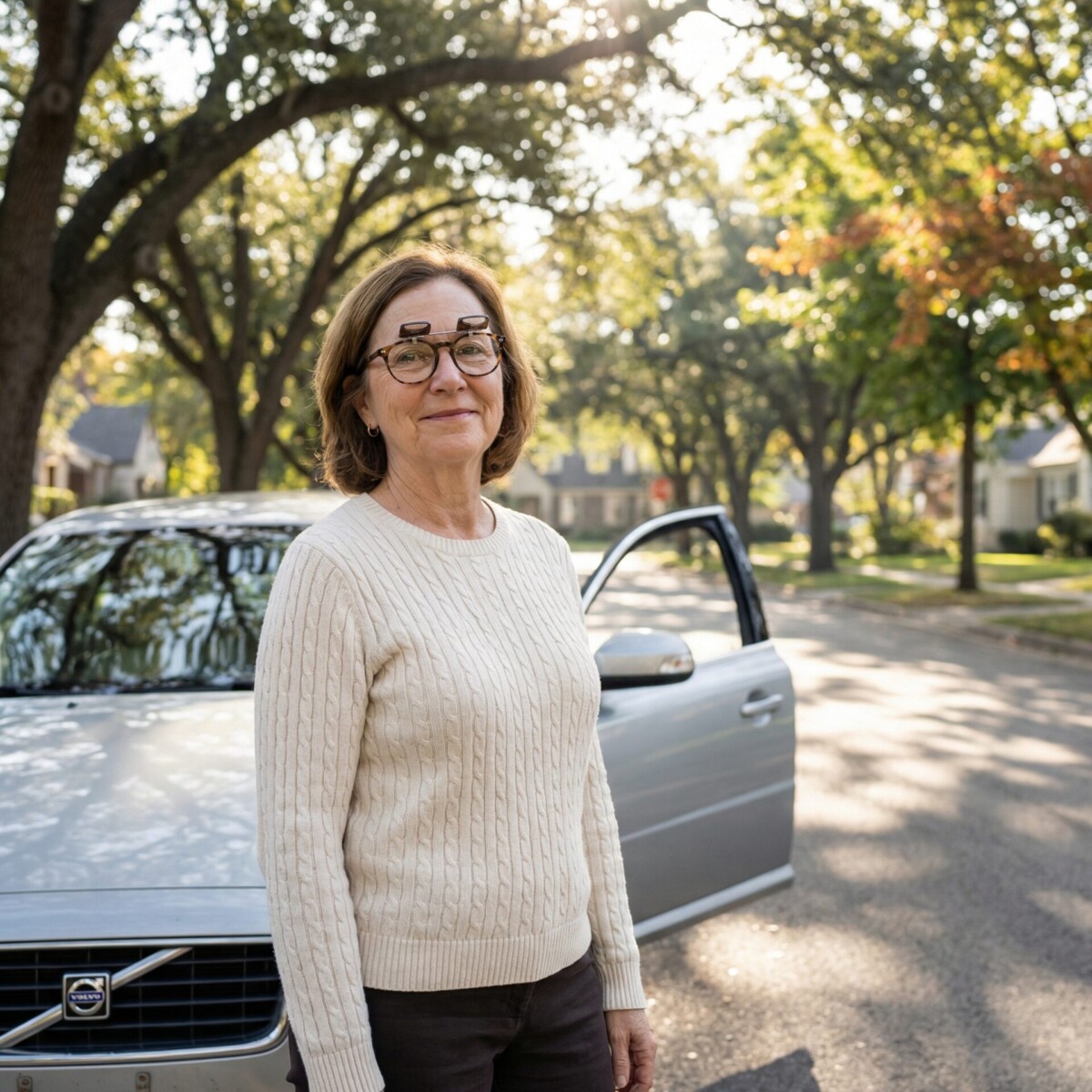
Bioptic driving is the use of a miniature telescope mounted on eyeglasses to help people with low vision meet the acuity standards required for a driver’s license. For many individuals living with central vision loss, it represents the difference between continuing to drive and giving it up entirely.
More than 45 states currently allow bioptic telescope driving. Programs exist throughout New England. But the path to a bioptic license is not simply getting the right glasses. It involves clinical evaluation, custom device fitting, weeks of structured training, a state licensing process, and real costs that can reach $8,500 or more. Understanding what is actually involved before you begin saves time, money, and disappointment.
This guide covers how bioptic telescopes work, which states allow bioptic driving and under what conditions, the complete training process step by step, a full cost breakdown with funding options most guides leave out, and honest data on success rates and realistic expectations. If someone told you that you cannot drive because of your vision, read this carefully before accepting that answer.
For a broader overview of driving with low vision, including other adaptive devices, glare management strategies, and when driving may no longer be safe, see our complete guide: Driving with Low Vision: Complete Guide.
What Are Bioptic Telescopes?
How Bioptic Telescopes Work
A bioptic telescope is a small optical telescope, typically 2x to 4x magnification, mounted in the upper portion of a standard prescription eyeglass lens. The lens is called the carrier lens. It gives you your widest usable field of view and is what you look through the vast majority of the time while driving.
The telescope sits just above your normal line of sight. To use it, you lower your head slightly, which moves your eyes up into alignment with the telescope eyepiece. You take a brief, targeted glance through the telescope to read a street sign, check a traffic signal, or identify a distant hazard. Then you return immediately to the carrier lens view. The motion takes less than a second when properly trained.
The purpose is targeted detail resolution, not constant magnification. Research shows that trained bioptic drivers use the telescope for approximately 10 to 15 percent of total driving time. The remaining 85 to 90 percent relies on the carrier lens and natural peripheral vision. This ratio is by design. The training process enforces it before any state licensing test proceeds.
Think of it as analogous to the brief glances a person with normal vision makes at road signs, mirrors, or instruments. They are brief, purposeful, and immediate. The carrier lens handles continuous navigation.
Who Benefits from Bioptic Driving
Bioptic telescopes are designed specifically for individuals with reduced central vision who retain functional peripheral vision. The most common qualifying conditions include:
Macular degeneration (AMD): The most common reason people pursue bioptic driving. AMD reduces central acuity while peripheral vision typically remains largely intact, which is exactly the visual profile bioptics are built to address.
Stargardt disease: A hereditary macular dystrophy that often begins in youth. Many younger individuals with Stargardt disease complete bioptic programs and maintain their driving independence for years.
Diabetic retinopathy: When central vision is primarily affected and peripheral fields remain functional, bioptic candidacy may exist depending on the degree of acuity reduction.
Other central vision conditions: Cone dystrophy, central scotomas from various etiologies, and some cases of amblyopia may qualify depending on state acuity thresholds.
Bioptics are not appropriate for conditions that primarily affect peripheral vision. Advanced glaucoma and retinitis pigmentosa typically involve peripheral field loss that the carrier lens depends on for safe continuous navigation. For those conditions, other adaptive strategies may apply, and a low vision specialist can evaluate your specific options.
Acuity range matters as well. Most states require through-telescope acuity of 20/40 or better, and carrier lens acuity typically falls between 20/60 and 20/200. A clinical evaluation is the only reliable way to determine whether your specific profile qualifies under your state’s program.
State-by-State Bioptic Driving Requirements
There is no federal bioptic driving standard in the United States. Each state sets its own rules. As of 2026, approximately 45 states plus the District of Columbia permit bioptic telescope driving under defined conditions. Five states currently prohibit it entirely: Arkansas, Iowa, Kansas, Nebraska, and Wyoming. If you live in one of these states, discuss alternative options with your low vision specialist. Some individuals in prohibiting states have pursued medical exception processes, though outcomes vary.
The table below covers 15 states including all six New England states and major national markets. Read both the “through bioptic” and “carrier lens” acuity columns carefully. These are separate standards and you must meet both. The field requirement applies to your peripheral visual field without the telescope and is measured through standard perimetry.
| State | Bioptic Allowed | Acuity Through Bioptic | Carrier Lens Acuity | Field Requirement | Common Restrictions |
|---|---|---|---|---|---|
| Massachusetts | Yes | 20/40 | 20/100 | 120 degrees | Daytime, local roads, speed limits |
| Connecticut | Yes | 20/40 | 20/200 | 120 degrees | Daytime only, restricted routes |
| New Hampshire | Yes | 20/50 | 20/200 | 105 degrees | Daytime, no interstate |
| Vermont | Yes | 20/40 | 20/160 | 120 degrees | Daytime, annual renewal |
| Rhode Island | Yes | 20/40 | 20/200 | 120 degrees | Daytime only |
| Maine | Yes | 20/40 | 20/200 | 110 degrees | Daytime, geographic limits |
| New York | Yes | 20/40 | 20/200 | 140 degrees | Daytime, no highway, speed limit |
| Florida | Yes | 20/40 | 20/200 | 130 degrees | Daytime only |
| Pennsylvania | Yes | 20/40 | 20/200 | 120 degrees | Daytime, 35 mph max |
| Texas | Yes | 20/40 | 20/200 | 110 degrees | Daytime, speed restrictions |
| California | Yes | 20/40 | 20/200 | 110 degrees | Daytime, local roads initially |
| Ohio | Yes | 20/40 | 20/200 | 70 degrees | Daytime, 45 mph max |
| Virginia | Yes | 20/40 | 20/200 | 100 degrees | Daytime, CDRS sign-off required |
| Colorado | Yes | 20/40 | 20/200 | 110 degrees | Daytime, speed limit |
| Michigan | Yes | 20/40 | 20/200 | 140 degrees | Daytime, no freeway |
Last reviewed: March 2026. State regulations change. Always verify current requirements with your state DMV and your evaluating low vision specialist before beginning a program. Requirements shown here are general program parameters and individual licensing outcomes may include additional restrictions based on clinical evaluation results.
Common restrictions across most permitting states include daytime driving only, speed limits between 35 and 55 mph, and in some states a geographic restriction to specific road types or counties. These restrictions are based on your individual evaluation results and state program standards, not applied uniformly. Some individuals earn progressively fewer restrictions over time as they demonstrate sustained safe driving performance.
To find your state’s specific current requirements, contact your state DMV’s medical review unit or ask your low vision specialist, who maintains current program knowledge for their practice region.
The Bioptic Driving Training Process
Bioptic driving is a skill, and like any complex motor skill, it is built through structured practice under professional supervision. The full program takes two to four months from initial evaluation to licensure for most candidates. Here is exactly what each step involves.
Step 1: Low Vision Evaluation (1 to 2 Visits)
The process begins with a comprehensive low vision evaluation by a certified low vision specialist. This is not a standard eye exam. The evaluation measures all visual functions relevant to driving:
- Best corrected visual acuity in each eye, tested individually and together
- Contrast sensitivity across multiple spatial frequencies
- Full visual field extent and density by perimetry
- Glare recovery time after controlled light exposure
- Color discrimination relevant to traffic signal recognition
Based on these results, the specialist determines whether bioptic driving is appropriate for your condition and visual profile under your state’s program. Candidacy depends on more than acuity. Peripheral field adequacy, contrast function, and the specific nature of your vision loss all factor in. If candidacy is confirmed, the device prescription moves forward. If not, your specialist will be clear about why and what alternatives exist.
Our low vision evaluation services at NELVB include driving-focused assessment and can serve as the starting point for this process.
Step 2: Device Fitting and Prescription (1 to 2 Visits)
The bioptic telescope is a custom optical device. Telescope power selection, typically between 2x and 4x, depends on your specific acuity level and the distances at which you need to resolve detail. Higher magnification gives better acuity through the telescope but narrows the field of view and requires a slightly wider head dip to acquire the target. Your specialist selects the power that balances acuity gain with functional usability.
Frame selection and telescope alignment are exacting. The telescope must be positioned at a specific height above your normal pupil position so that a consistent, brief head movement reliably finds it. Misalignment by even a few millimeters makes the spotting motion inconsistent and slows training. Your optometrist or low vision specialist performs precise alignment measurements and confirms placement through trial wear before finalizing the device.
Initial device orientation begins at this stage. You practice finding the telescope eyepiece quickly, acquiring a target, and returning to the carrier lens. This sounds straightforward but requires deliberate repetition to become automatic under pressure.
Step 3: Stationary Training (2 to 4 Weeks)
Before any time behind the wheel, you build the foundational skills that make bioptic driving safe in controlled non-driving environments. Stationary training focuses on two core techniques:
Spotting: The ability to find a specific target through the telescope quickly and accurately, then return immediately to the carrier lens view. Practice targets progress in difficulty: large stationary objects at close range, then smaller or moving targets at increasing distances, then targets under time pressure.
Scanning: Systematic visual search using the carrier lens for primary navigation and the telescope for periodic directed checks. You practice scanning patterns that mirror real driving: near-to-far, left-to-right, intersection approach sequences, and sign-reading at road speeds.
Training sessions may use simulation environments, outdoor stationary spotting at real intersections, or a combination. Your specialist assesses readiness to advance based on objective performance benchmarks, specifically accuracy and consistency of spotting, not a fixed number of sessions. Some candidates complete stationary training in two weeks; others need four. Either is normal.
Step 4: Behind-the-Wheel Training (4 to 8 Weeks)
Behind-the-wheel training is conducted by a Certified Driving Rehabilitation Specialist (CDRS), a professional specifically credentialed in adaptive driving programs. The CDRS uses a vehicle equipped with dual controls and follows a progressive curriculum:
- Parking lots and closed environments: Foundational vehicle handling while integrating bioptic spotting into actual driving conditions for the first time. Start, stop, turn, navigate basic obstacles.
- Residential streets: Intersections, traffic signs, pedestrian environments, and the complexity of other moving vehicles entering the visual field.
- Arterial roads and commercial corridors: Higher speeds, denser signage, more complex traffic patterns requiring more frequent telescope use.
- Highway driving (if permitted by your state): Speed management, lane changes, merge and exit sequences at higher velocities.
Most programs require 10 to 20 hours of total behind-the-wheel time across the full curriculum. Sessions typically run one to two hours, two to three times per week. The CDRS documents your performance at each stage and determines readiness for the state driving test. Their sign-off is required in most states before you can schedule the licensing examination. This is a quality control step, not a bureaucratic one.
Step 5: State Driving Test
The licensing test format varies by state. Some require a bioptic-specific road test administered by a specialist examiner. Others accept a standard road test taken with the bioptic in use. Your CDRS will prepare you specifically for the format your state uses.
Upon passing, you receive a restricted driver’s license. Common restrictions include daytime driving only, maximum speed limits (typically 45 to 55 mph), and in some states a geographic restriction to specific road types. Restrictions reflect your individual evaluation outcomes and state program standards, not a one-size-fits-all penalty.
Most states require annual or biennial license renewal for bioptic drivers, including updated clinical vision testing. This is a reasonable, proportionate safeguard. Vision conditions can progress, and periodic verification ensures your driving privileges reflect your current visual function.
Costs and Financial Assistance
One of the biggest reasons people do not pursue bioptic driving programs is the assumption that they cannot afford it. That concern is understandable, but it is often based on incomplete information. Here is the complete cost picture alongside the funding options that most guides do not mention.
Device Costs
Bioptic telescopes are custom optical devices. Pricing reflects that:
- Complete bioptic system (telescope plus carrier lens frames): $1,500 to $3,500 depending on telescope power, manufacturer, and frame configuration
- Alignment adjustments after fitting: $200 to $500
- Telescope replacement: $800 to $1,800 depending on model
Standard vision insurance rarely covers bioptic telescopes, though some plans cover part of the carrier lens prescription. Always verify before assuming you will pay full price.
Training Costs
Behind-the-wheel rehabilitation with a CDRS is typically the largest cost component of the program:
- Initial clinical low vision evaluation: $200 to $500
- Behind-the-wheel sessions: $100 to $200 per hour, depending on region and provider
- Full program (10 to 20 hours): $2,000 to $5,000 for the complete driving rehabilitation curriculum
Total program cost range: $3,500 to $8,500 depending on device, training hours required, and regional provider rates. For many people, the actual out-of-pocket cost is significantly lower due to the funding options below.
Financial Assistance
State Vocational Rehabilitation (VR) is the most important option most guides skip over. Every state funds a vocational rehabilitation program for individuals whose disabilities affect their ability to work or maintain employment-related independence. Driving to work, driving to medical appointments, or driving as a component of maintaining the independence that enables employment all qualify in most states. In many cases, VR will cover the full cost of low vision evaluation, device, and driving rehabilitation training. Contact your state VR office before you begin evaluation. Funding approval must precede service delivery, and the process can take several weeks. Starting VR inquiry late in your process can mean waiting to continue.
Veterans Affairs (VA): Veterans with service-connected or non-service-connected visual impairment may qualify for VA-funded bioptic evaluation, device costs, and driving rehabilitation through the VA Blind Rehabilitation Service. Coverage can be substantial and in many cases comprehensive. Contact your local VA facility’s vision rehabilitation team to explore eligibility. VA programs in New England include Boston, Providence, Bedford, and other sites.
Nonprofit grants: Lions Club International, the Foundation Fighting Blindness, and state-level commissions for the blind provide grants for adaptive equipment and rehabilitation services. Award amounts and eligibility vary by organization and application cycle. These are worth pursuing when VR coverage does not fully apply.
Health insurance: Standard health insurance rarely covers driver rehabilitation training. Many plans do cover a portion of the clinical low vision evaluation, particularly if ordered by your ophthalmologist. Request a predetermination before proceeding.
Our team at NELVB’s low vision services can help you identify which funding sources apply to your situation and how to initiate the process efficiently. We have guided many individuals through this process in New England.
Success Rates and Realistic Expectations
Bioptic driving is not the right answer for every person with low vision. Being honest about this is part of providing information that is actually useful.
Among individuals who complete a proper evaluation and are confirmed as appropriate candidates, published research indicates a success rate of approximately 70 to 80 percent. This means that roughly three out of four properly evaluated candidates do complete the program and obtain a license. This figure is for people who were correctly determined to be candidates through clinical evaluation. The evaluation process itself filters out individuals unlikely to succeed before training begins. When the selection process is rigorous, success rates are higher.
Factors associated with better outcomes:
- Adequate peripheral visual field: The carrier lens depends on it. Limited peripheral vision is the most common reason candidates are not approved for bioptic programs.
- Consistent practice commitment during stationary training: Candidates who practice spotting exercises daily, treating stationary training like a part-time job, advance faster and perform better in behind-the-wheel training.
- Cognitive processing speed: Driving requires rapid decision-making. Individuals whose cognitive processing has been affected alongside their vision loss face higher demands in the program.
- Prior driving history: Individuals with a substantial prior driving history before vision loss adapt to bioptic driving more readily. The vehicle handling and situational awareness skills transfer. Those with limited prior driving experience face a steeper learning curve.
- Realistic expectations from the start: Candidates who understand that bioptic driving is not a return to unrestricted driving, but rather a structured program with specific boundaries, tend to be more satisfied with the outcome and more consistent in their practice.
Ongoing requirements are part of the program, not a footnote. Most states require annual or biennial vision recertification. Your condition may progress, and periodic clinical evaluation ensures your driving privileges reflect your current visual status. Staying current with your low vision provider is not optional for bioptic drivers. It is built into the licensing structure.
Frequently Asked Questions
Can I drive on the highway with bioptic telescopes?
It depends on your state. Some permitting states allow highway driving for licensed bioptic drivers; others restrict to roads below a defined speed limit or exclude freeways entirely. New York, for example, restricts highway driving under the standard bioptic program. Your CDRS and state DMV will clarify what your specific license permits.
How long does the whole process take?
Most candidates complete the full program in two to four months from initial evaluation to licensure. Factors include scheduling availability with your specialist and CDRS, how quickly you progress through stationary training, and your state’s test scheduling. Some candidates finish in six to eight weeks. Others take longer. There is no shortcut through the training requirements, nor should there be.
Will my insurance cover bioptic driving training?
Standard health insurance rarely covers driving rehabilitation. However, state vocational rehabilitation funding may cover most or all of your costs if driving relates to employment. The clinical evaluation may have partial coverage under some plans. VR is the most reliable and most commonly used funding path and should be your first call.
What if I fail the driving test?
A failed state driving test for a bioptic candidate typically allows retesting after additional training hours with your CDRS, similar to standard licensing. Your CDRS will work with you on the areas identified in your test. Most candidates who do not pass on their first attempt do pass on a subsequent attempt after targeted additional practice. Failing the first time is not uncommon and is not the end of the process.
Can I use bioptic telescopes at night?
Most bioptic licenses are initially restricted to daytime driving. Night driving introduces contrast and glare challenges that significantly compound the visual demands of bioptic use. Some states allow night driving privileges to be added after a period of satisfactory daytime driving, but this requires additional evaluation. For strategies that complement daytime bioptic driving, see our guide on best night driving glasses for low vision.
Take the Next Step
At New England Low Vision and Blindness, we provide comprehensive low vision evaluation services, bioptic device guidance, and referrals to certified driving rehabilitation specialists throughout New England. Our team is here to help you understand clearly whether bioptic driving is realistic for your situation, what the process involves, and how to access funding to help cover the costs.
A free consultation with our specialists is the right place to start. You will leave with specific information about your candidacy, the next steps appropriate to your situation, and connections to the right resources in your area. No pressure. No obligation. Just accurate guidance so you can make your next decision with confidence.
Schedule your free consultation today
Learn about our low vision evaluation services
Explore independent living resources