Best Night Driving Glasses for Low Vision: Expert Picks
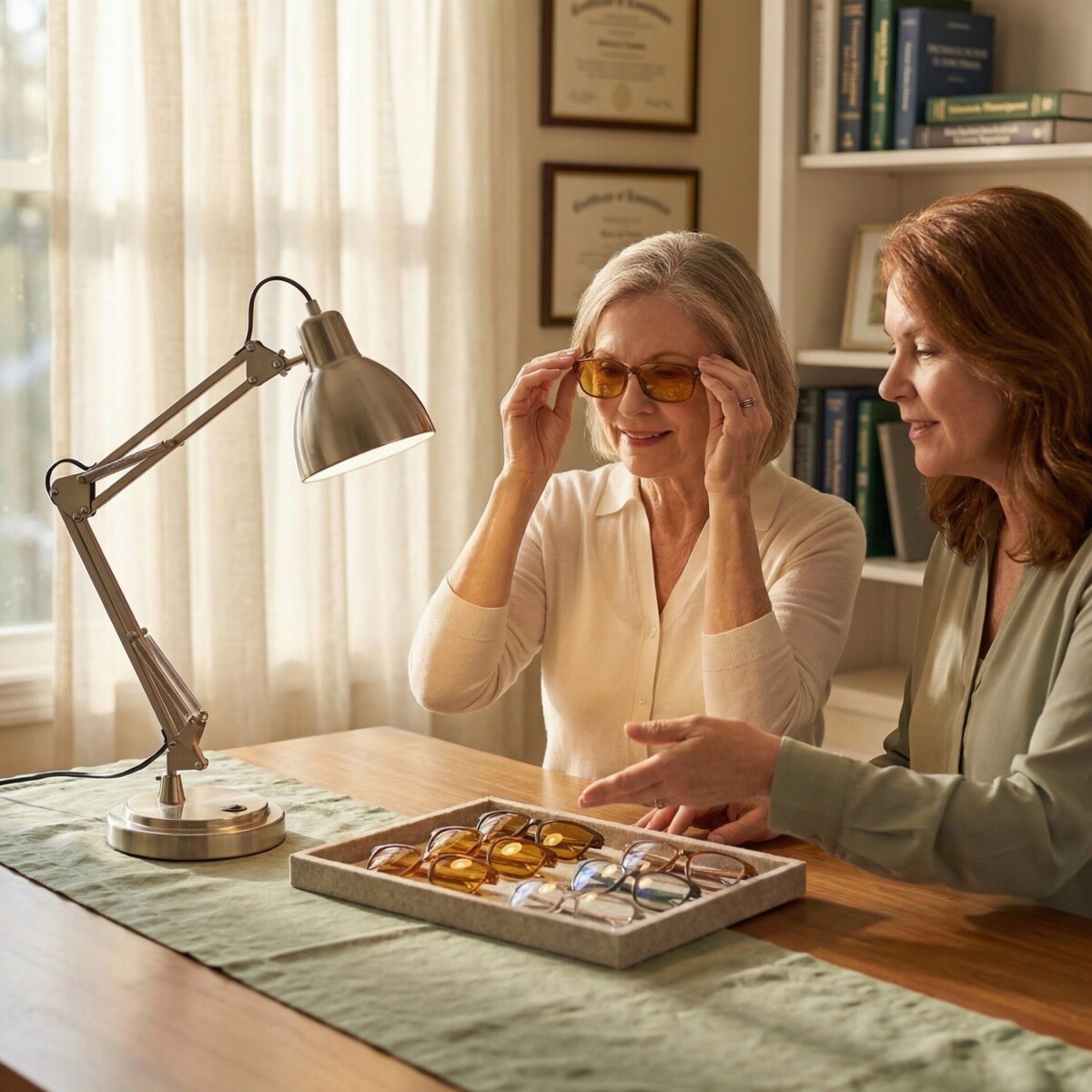
If night driving has become more stressful with low vision, you are not alone. Night driving glasses are one of the most frequently searched tools for people experiencing glare sensitivity, reduced contrast, and halos around headlights. But here’s something most product roundups won’t tell you: the research on night driving glasses is more complicated than the marketing suggests, and the right choice depends heavily on your specific eye condition.
This guide gives you an honest look at five solid options for night driving glasses for low vision, along with the science behind what actually works. We cover what to look for, which products fit which conditions, realistic price ranges, and what to do when glasses alone are not enough.
The short version: night driving glasses can genuinely improve comfort and reduce glare-related fatigue for many people with low vision. They are a tool in a larger toolkit, not a single fix. And for some conditions, a different approach entirely may serve you better. For guidance on the full picture of driving with low vision, see our complete guide to driving with low vision. Let’s get specific about glasses.
Do Night Driving Glasses Actually Work?
The American Academy of Ophthalmology (AAO) published research concluding that yellow-tinted night driving glasses do not meaningfully improve reaction time for drivers in the general population. That finding gets cited often, but it leaves out an important nuance that matters a great deal if you have low vision.
The AAO study measured reaction time and visual performance in people with normal or near-normal vision. For the general population, yellow lenses actually reduce the total amount of light reaching the eye, which can slightly worsen nighttime visibility even as they make things feel more comfortable.
For people with low vision, the calculation is different. Conditions like cataracts, early macular degeneration, and glare sensitivity from diabetic retinopathy involve problems with light scatter, contrast loss, and photophobia. In these cases, glasses that reduce scatter and enhance contrast can meaningfully improve functional comfort even if they do not change the underlying visual acuity measurement.
The distinction matters: night driving glasses generally improve comfort, not raw visual acuity. For people whose biggest challenge is headlight glare making it feel impossible to drive safely, that comfort improvement is real and significant. For people with advanced vision loss or significant peripheral field loss, glasses may offer limited benefit and other strategies deserve priority.
Bottom line: do not dismiss night driving glasses because of a headline. Do understand what they can and cannot do for your specific condition.
What to Look for in Night Driving Glasses for Low Vision
Before getting to product recommendations, here is a breakdown of the features that matter most. Understanding these will help you evaluate any pair, not just the ones listed here.
Anti-Reflective Coating
Anti-reflective (AR) coating is the single most important feature for most low vision drivers. Standard clear lenses reflect about 8 percent of incoming light internally, creating ghost images and lens flare. High-quality AR coatings reduce internal reflections to less than 1 percent, allowing more useful light to reach your eye while reducing the distracting halos around lights.
AR coating works on any lens color and is compatible with prescription lenses. If you are only going to add one feature to your driving glasses, this is the one.
Lens Tint
Tint affects which wavelengths of light are filtered and which pass through. For night driving:
- Yellow tint (light): Enhances contrast in fog and haze, reduces blue light scatter. Best for dusk and overcast conditions. Not ideal in very dark environments where you need maximum available light.
- Amber tint: A stronger contrast enhancer. Useful for people with cataracts who experience significant light scatter. Can cause color distortion and reduces total light transmission more than yellow.
- Rose tint: Particularly effective for people with light sensitivity and macular conditions. Filters high-energy light while maintaining reasonable light transmission.
- Clear with AR coating: For drivers whose primary complaint is lens glare rather than contrast, clear AR lenses may outperform tinted options at night because they do not reduce light transmission at all.
Blue Light Filtering
Modern LED and HID headlights produce significantly more blue-white light than older halogen bulbs. Blue wavelengths scatter more inside the eye, particularly in people with cataracts or media opacities. Lenses with blue light filtering target this specific wavelength, which is why they can feel more effective against modern headlights than older tint-only approaches.
Wraparound vs. Standard Frames
Standard frames leave peripheral vision fully exposed to light sources from the side. Wraparound frames block peripheral glare from streetlights and oncoming traffic in adjacent lanes. For people with significant glare sensitivity, this difference can be substantial. The tradeoff is that very tight wraparound designs can reduce peripheral visual field slightly.
Prescription Compatibility
Two main options exist for people who need corrective lenses. Fitover glasses are designed to wear over existing prescription glasses and are available in most tint and coating options at a fraction of the cost of prescription lenses. Prescription night driving glasses incorporate the tint and coating directly into your corrective lenses, offering better optics and a less bulky profile but at higher cost.
Top Night Driving Glasses for Low Vision
These five options represent a mix of price points, approaches, and use cases. Each is specifically noted for its suitability with common low vision conditions, not just general headlight glare.
1\. NoIR UltraShields (Filters Series)
Type: Clinical-grade absorptive filter
Lens options: Multiple tints including #40 (yellow), #68 (dark amber), and #14 (light yellow-green)
Frame style: Wraparound fitover
Price range: $25-$60
NoIR filters are the workhorses of low vision clinics. They are not glamorous, but they are what low vision specialists have been recommending for decades because they work across a wide range of conditions. The wraparound design blocks peripheral light effectively. The #40 yellow lens is particularly well suited to cataracts and general glare sensitivity. The #14 is preferred by some people with retinitis pigmentosa for its contrast boost.
Best for: Cataracts, general glare sensitivity, retinitis pigmentosa (low vision condition-specific recommendation)
Pros: Affordable, available through low vision providers, wide range of tint options, fits over prescription glasses
Cons: Utilitarian appearance, some tints significantly reduce light in very dark environments
2\. Cocoons Fitovers (Night Vision Series)
Type: Consumer fitover with AR coating and amber tint
Lens options: Amber, copper, and clear
Frame style: Wraparound fitover
Price range: $30-$70
Cocoons has built a strong reputation in the low vision community for combining fitover convenience with better optics than typical drugstore versions. Their polarized versions are designed for daytime use only, but the amber and clear non-polarized options work well for evening driving. The wraparound coverage is excellent, and frames come in multiple sizes to fit over various prescription frame shapes.
Best for: Early to moderate macular degeneration, glare sensitivity, people who already wear prescription glasses
Pros: Good fitover design, AR coating standard, comfortable for extended wear
Cons: Polarized version is not suitable for night use; verify you are purchasing non-polarized for driving
3\. TheraSpecs Indoor Glasses (Rose Tint)
Type: FL-41 rose tint, designed for light sensitivity
Lens options: FL-41 tint (proprietary rose-amber)
Frame style: Standard and wraparound options
Price range: $80-$150 (available as prescription or non-prescription)
TheraSpecs uses a specific FL-41 tint that filters the wavelengths most associated with migraine-triggered and photophobia-driven light sensitivity. For people whose night driving difficulty stems from migraine-associated photophobia or post-surgical sensitivity, this is often the most effective option. The rose tint also works well for people with corneal conditions and dry eye that amplifies glare. Note that TheraSpecs are not marketed specifically as night driving glasses, but the light sensitivity management application maps directly to driving glare problems.
Best for: Migraine-associated photophobia, post-surgical sensitivity (cataract or LASIK recovery), corneal conditions
Pros: Available in prescription, strong evidence base for migraine photophobia, well-made frames
Cons: Higher price point, not widely available in optical retail (order online or through specialist)
4\. ZEISS DriveSafe Lenses (Prescription)
Type: Prescription lens design optimized for driving
Lens options: DriveSafe coating (blue light reduction \+ AR), available in multiple lens materials
Frame style: Any compatible frame
Price range: $150-$350 depending on prescription complexity and frame choice
ZEISS DriveSafe is a premium prescription lens option that combines anti-reflective coating specifically optimized for LED headlight wavelengths with a lens design engineered for driving tasks. Rather than a simple tint, the coating selectively filters the blue-heavy spectrum of modern headlights. These are made through opticians and low vision practices, and they represent the best prescription option currently available for people who drive with a prescription and experience significant headlight glare.
Best for: Prescription wearers experiencing headlight glare, early macular degeneration with prescription needs, diabetic retinopathy with glare sensitivity
Pros: Incorporated into your prescription, best optics quality, LED headlight-specific coating
Cons: Significant cost, requires an optician or low vision provider, not a quick fix
5\. Eschenbach Contra-Schein Filters
Type: Professional-grade contrast filter
Lens options: Multiple selective absorption tints
Frame style: Wraparound fitover
Price range: $40-$90
Eschenbach is a German manufacturer whose optical products are standard in low vision clinics across Europe and the United States. Their contrast filters are designed with a specific focus on clinical low vision needs, not consumer glare reduction. They offer a wider range of spectral absorption profiles than most consumer products, which means a low vision specialist can match the filter to your specific visual profile. Available through low vision providers rather than general retail.
Best for: People working with a low vision specialist who can perform filter evaluation, retinal conditions requiring specific wavelength filtering
Pros: Clinical-grade quality, range of filter options, trusted by low vision professionals
Cons: Not available through general retail, best results when professionally fitted
Quick Reference: Which Glasses Match Your Condition?
The single most important factor in choosing night driving glasses for low vision is matching the lens technology to your eye condition. Here is a practical summary:
Eye Condition
Primary Problem
Best Lens Approach
Recommended Products
Cataracts
Light scatter inside clouded lens
Amber tint \+ AR coating
NoIR #68 (amber), Cocoons amber, Eschenbach
Macular degeneration
Contrast loss, slow light adaptation
Light yellow or clear \+ AR coating
NoIR #40, ZEISS DriveSafe, Cocoons clear
Diabetic retinopathy
Variable scatter, glare sensitivity
Amber or yellow \+ AR coating
NoIR, Eschenbach (specialist-matched)
Migraine photophobia / TBI
Neurological light sensitivity
FL-41 rose tint
TheraSpecs (prescription available)
Post-surgical sensitivity
Adaptation to new lens or corneal surface
Rose or light amber
TheraSpecs, NoIR #14
General LED headlight glare
Blue-spectrum scatter
AR coating \+ blue light filter in prescription
ZEISS DriveSafe
This table is a starting framework, not a final prescription. A low vision specialist can perform functional filter testing to confirm which option works best for your specific visual profile.
Night Driving Tips Beyond Glasses
Glasses address the light reaching your eyes. But the driving environment itself creates many of the conditions that make glare difficult. These practical strategies work alongside better glasses to meaningfully improve your night driving experience.
- Keep your windshield clean inside and out. A film of dust and oil on the inside surface of your windshield scatters every light source into a bloom. Clean the inside with glass cleaner and a microfiber cloth regularly. This single step reduces glare more than most people expect.
- Reduce your dashboard brightness. The contrast between a bright instrument panel and dark surroundings forces your eyes to constantly readjust, increasing fatigue and making exterior glare feel more severe. Set instrument lighting to the lowest comfortable level.
- Use familiar routes at night. Knowing where turns, intersections, and potential hazards are reduces the cognitive and visual load of night driving significantly. If you have low vision, prioritize familiar routes and avoid learning new routes at night.
- Allow extra following distance. Longer following distance gives you more time to process visual information and more time to recover if oncoming headlights cause temporary glare adaptation.
- Look toward the right edge of the road, not at oncoming headlights. This protects your central vision from direct light sources and uses the road edge line as a reference instead of the oncoming vehicle.
- Know your limits honestly. Some conditions make certain night driving situations genuinely unsafe regardless of what glasses you wear. If glare recovery is taking more than 5 seconds after oncoming headlights, or if lane markings are consistently difficult to see between streetlights, it is worth having a professional evaluation of your night driving function.
For a deeper look at managing light sensitivity across all driving conditions, see our guide to managing light sensitivity while driving.
When to See a Low Vision Specialist About Night Driving
Over-the-counter options work well for many people. But there are situations where professional evaluation is not just helpful, it is the right next step.
Consider scheduling an evaluation if:
- Night driving difficulty has worsened noticeably in the past year, even with corrective lenses
- You have been told you have cataracts, early macular degeneration, diabetic retinopathy, or another condition that affects contrast sensitivity
- Glare recovery after oncoming headlights takes more than a few seconds
- You have tried over-the-counter options without improvement
A low vision specialist can perform glare recovery testing, contrast sensitivity assessment, and functional vision evaluation in driving simulation conditions. This goes far beyond what a standard eye exam covers and often reveals which specific type of filter will work best for your visual profile. Clinical-grade filters from NELVB are matched to your evaluation results, not purchased off a retail shelf.
For a comprehensive overview of driving with low vision, including legal requirements and adaptive equipment beyond glasses, visit our complete guide to driving with low vision. For a deeper explanation of how AR coatings, tinted lenses, and blue light filtering each work, see our complete guide to anti-glare glasses for night driving. You can also explore the full range of assistive technology for low vision available through NELVB.
Take the Next Step
Choosing the right night driving glasses for low vision is not a decision that should come down to the best-reviewed option on a general shopping site. Your eye condition, your prescription, and your specific glare pattern all matter. What helps someone with cataracts may not help someone with macular degeneration, and what works for mild glare sensitivity is different from what is needed for significant photophobia.
Our low vision specialists at New England Low Vision and Blindness offer free consultations to evaluate your night driving vision and recommend specific solutions for your needs. We carry clinical-grade filters from NoIR and Eschenbach that are not available in general retail, and we can help you determine whether a fitover, prescription option, or combination approach is right for you.
There is no pressure and no commitment. Just an expert conversation about what might help you drive more safely and comfortably at night.
Schedule your free consultation today
You can also learn more about our assistive technology and low vision products or explore the full range of NELVB products and services designed to support independence with vision loss.