Adaptive Techniques for Daily Living with Low Vision
If the everyday tasks you once did without thinking have started to feel harder, you are not alone, and you are not out of options. Vision loss changes how you do things, not whether you can do them.
Here is what matters most: nearly every daily task can be adapted with a few simple techniques and inexpensive tools. The most effective adaptive techniques for low vision come down to three ideas you can use anywhere in your home: build in contrast, keep things consistent, and label what you cannot easily see. Master those, and the rest follows.
You do not need to change everything at once. Start with the task that frustrates you most, add one adaptation, and build from there. This guide is part of our broader resources on vision loss in seniors, and it walks through daily living room by room. Let us get started.
What Makes Adaptive Techniques for Low Vision Work
Before the specific tips, it helps to understand the few principles behind almost every adaptation. Once you know them, you can solve problems this guide never lists.
Contrast is the big one. Light items on dark surfaces, and dark items on light surfaces, are far easier to find. A white mug on a dark counter, a dark cutting board under pale onions, a strip of bright tape on a step. Contrast does the work your eyes used to do on their own.
Consistency is the next. When everything has a home and stays there, you spend far less time searching. Your keys, your medications, your remote, your favorite mug. Memory and touch take over when sight cannot.
Labeling fills the last gap. When contrast and consistency are not enough, a tactile bump dot or a large-print label tells you what something is by touch or at a glance. The National Eye Institute offers a helpful overview of living with low vision if you want to learn more about your condition.
Adaptive Techniques for the Kitchen
The kitchen is where most people want help first, and it is one of the easiest rooms to adapt.
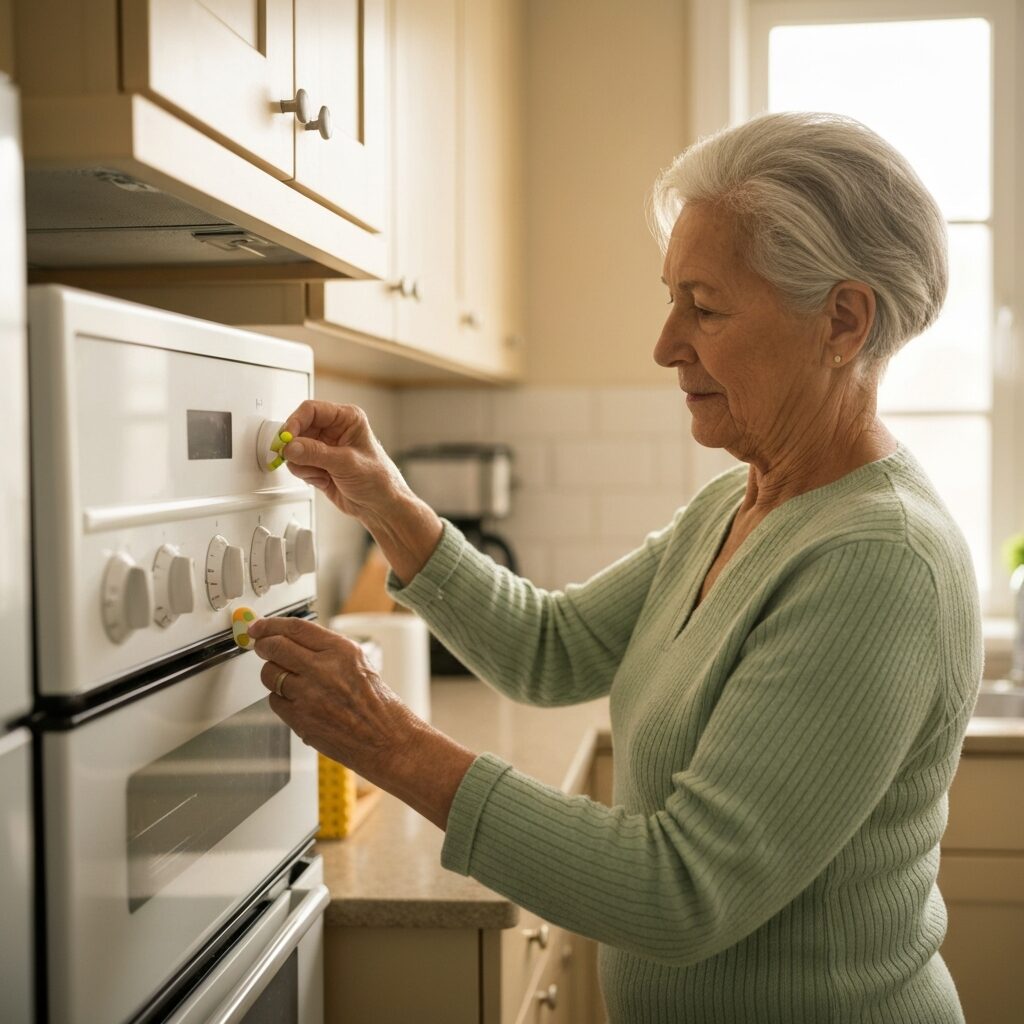
For cooking safely, place a small dot of high-contrast tape or a raised bump dot on the stove and microwave settings you use most. Now you can find the right setting by touch instead of squinting. A talking thermometer and a talking timer let you cook by sound.
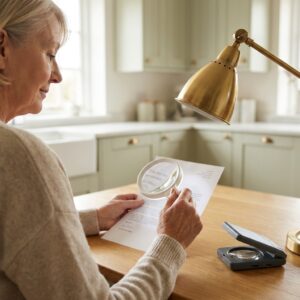
When you pour, rest a clean finger just inside the rim of the cup so you feel the liquid rise, and use cups that contrast with what you are pouring. Dark coffee shows clearly in a white mug. A handheld magnifier kept in a kitchen drawer also helps with recipe cards and fine print; you can compare options in our overview of low vision aids.
For organization, give every item a consistent spot in the pantry and fridge. Wrap a rubber band around one can to tell soup from vegetables, or use bump dots and a simple key. A high-contrast cutting board, dark for pale foods and light for dark foods, helps you see exactly where to cut.
Adaptive Techniques for Personal Care and Grooming
Getting ready in the morning is personal, and a few tools help you stay independent and confident.
A lighted magnifying mirror brings grooming tasks like shaving or applying makeup into clear focus. Toothpaste dispensers control how much comes out, so you are not guessing. If macular degeneration affects your central vision, our guide to magnifiers for macular degeneration can help you choose the right magnification.
For medications, a weekly pill organizer keeps doses sorted, and a talking medication manager reads labels and reminders aloud. This is one of the most important adaptations for staying safe at home.
Getting dressed becomes easier when you organize by outfit rather than by individual piece. Hang a full matching outfit together. To tell similar clothes apart, mark them with a dab of fabric puff paint, a Braille tag, or a smartphone color identifier app.
Adaptive Techniques for Home Organization
A well-organized home reduces the moments that cause stress and lets you move through your day with less searching.
For labeling, bump dots mark appliance settings and controls you use by touch. Large-print or tactile labels identify shelves, files, and containers. A talking label maker creates labels your phone or a reader can speak back to you, so even printed information stays within reach. Our guide to labeling tips for low vision covers these systems in more detail.
For managing money, large-print checks and a check-writing guide keep your finances in your own hands. A signature guide gives you a consistent line to sign on, and online banking with accessibility features lets you pay bills and check balances using enlarged text or a screen reader. Setting up automatic bill payments also cuts down on mail you have to read.
For housekeeping, clean in a consistent pattern, such as left to right and top to bottom, so you never miss a spot or cover the same ground twice. Brightly colored cleaning supplies are easier to spot, and assigning tasks to set days keeps your routine predictable.
Adaptive Techniques for Shopping and Errands
Leaving the house should feel possible, not overwhelming, and a little preparation goes a long way.
A pocket handheld magnifier brings price tags and labels into focus while you shop. Smartphone apps like Seeing AI and Be My Eyes can read product packaging aloud or connect you with a sighted volunteer in seconds.
Organize your shopping list by store section so you move through the aisles in order. And remember, most store staff are glad to help you find or read an item. Asking is a smart strategy, not a last resort. When a trip feels like too much, online shopping with delivery is an accessible alternative, and ride services or volunteer driver programs can handle the travel.
Adaptive Techniques for Communication and Information
Staying connected with the people and information you care about keeps daily life full.
Large-print address books, calendars, and talking clocks keep the basics easy. Bold-line paper and felt-tip pens make your own handwriting easier to read back.
Your smartphone may be the single most powerful adaptive tool you own. Turn on enlarged text, voice commands, and the built-in screen reader, and it handles reading, writing, and navigating for you. Voice assistants like Alexa and Siri can read the news, set reminders, and answer questions hands-free.
For more on these tools, see our guide to assistive technology for older adults and caregivers. For printed mail, a magnifier, a phone-based text scanner, or a trusted person can fill in when you need it.
How to Build Your Own Adaptive Toolkit
You do not have to adopt every technique here. The goal is a personal toolkit that fits your life.
Start with the tasks that matter most to you, and add one new adaptation at a time. Trying to overhaul everything at once is the fastest way to feel overwhelmed and give up. Give each new technique time to become automatic before adding the next.
Keep a short “what works” list to share with family and caregivers, so the people who help you know your system. And consider working with a low vision specialist, who can tailor these adaptive techniques for low vision to your exact needs.
Frequently Asked Questions
What is the easiest adaptive technique to start with?
Start with contrast and consistency. Add high-contrast tape to a stove dial or a step, and give your most-used items a permanent home. Both are free or inexpensive, and they make an immediate difference.
Do I need expensive equipment to live independently with low vision?
No. Many of the most effective adaptive techniques for low vision use simple, low-cost tools like bump dots, rubber bands, contrast tape, and apps you already have on your phone. Specialized devices help, but you can start today with very little.
Can an occupational therapist teach these skills at home?
Yes. Occupational therapists and low vision specialists teach daily living skills in your own home, where you actually use them. They can assess your specific needs and create a personalized plan around the tasks that matter most to you.
Take the Next Step
You do not have to figure all of this out on your own. The most effective plan is one built around your specific home, your vision, and the tasks that matter most in your day.
NELVB occupational therapists teach daily living skills right in your home. We help you identify your priorities, choose the right techniques and tools, and practice until they feel natural. Schedule a no-obligation consultation to build a plan that fits your life.